5 Steps for Hybrid Fleet Integration
Five-step plan to integrate hybrids into fleets: assess readiness, choose telematics-enabled vehicles, install chargers, train staff.
 By Michael Bar11 min read
Fleet operators in the UK face growing pressure to meet stricter emissions rules, like the 2030 ban on new petrol and diesel vans and the expansion of Ultra Low Emission Zones (ULEZs). Hybrid vehicles offer a practical way to cut emissions without the high costs of going fully electric. Here's a quick breakdown of how to integrate hybrids into your fleet:
-
Step 1: Assess Fleet Readiness
Audit your fleet to identify vehicles due for replacement. Use telematics to analyse fuel use, routes, and idling times to pinpoint where hybrids will deliver the most savings. -
Step 2: Develop a Strategy and Budget
Set measurable goals, conduct a cost-benefit analysis, and plan a phased rollout. Start small with a pilot programme to minimise disruptions. -
Step 3: Select Vehicles with Telematics
Choose hybrids that match your fleet's needs (e.g., payload, range). Equip them with telematics systems like GRS Fleet Telematics for tracking and efficiency. -
Step 4: Install Charging and Tracking Infrastructure
Set up charging stations and install telematics devices. Use grants to offset costs and schedule charging during off-peak hours to save on electricity. -
Step 5: Train Staff and Monitor Performance
Train drivers on hybrid-specific techniques and fleet managers on telematics tools. Track key metrics like fuel consumption and electric mode usage to measure success.
Hybrid fleets can cut fuel costs by up to 25%, reduce emissions, and improve operational efficiency. By following these steps, you can make the transition smoother and more cost-effective.
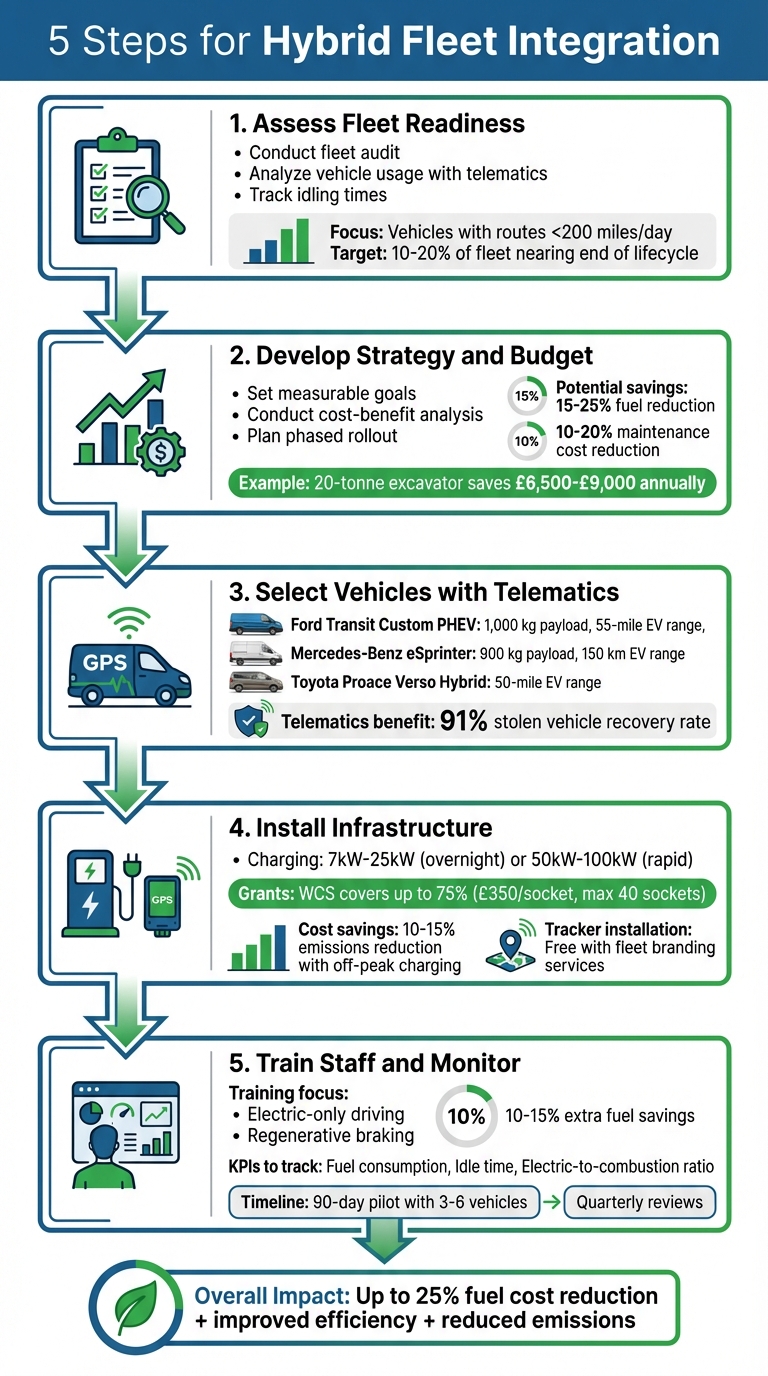
5-Step Process for Hybrid Fleet Integration with Key Metrics
Step 1: Assess Fleet Readiness
Before diving into a hybrid transition, it's crucial to evaluate how your fleet is currently performing. Start with a detailed fleet audit. This means cataloguing each vehicle's type, age, usage hours, fuel consumption, maintenance expenses, and remaining lifespan. This data forms the backbone of your decision-making, pinpointing which vehicles are due for replacement and where hybrids will make the biggest impact. It also lays the groundwork for the route analysis and cost assessments that follow.
Analyse Vehicle Usage and Routes
Telematics is your best friend here. Track metrics like daily mileage, fuel usage, idling time, and driving behaviours such as harsh braking or acceleration. Vehicles with high idling times should be at the top of your list for hybrid replacement, as hybrids are particularly effective at cutting fuel waste during idle periods. Similarly, routes with frequent stop-and-go traffic are ideal for hybrids, as they can recover energy through regenerative braking.
Focus on vehicles operating on routes under 200 miles per day, such as compact excavators, wheel loaders, sedans, or small SUVs. These vehicles are well-suited to hybrids and can deliver the best total cost of ownership (TCO) benefits. Pay close attention to the 10–20% of your fleet nearing the end of its lifecycle - these are prime candidates for hybrid replacement.
Identify Opportunities for Cost Savings
With a clear picture of vehicle usage, it's time to calculate potential savings. Hybrids typically cut fuel consumption by 15–25% and maintenance costs by 10–20%. For instance, a 20-tonne excavator could save between £6,500 and £9,000 annually.
Use telematics data to single out vehicles with the highest fuel consumption or those operating on routes where hybrid efficiency shines. Keep in mind that hybrids often come with a 10–25% higher upfront cost compared to diesel vehicles. To make the investment worthwhile, focus on vehicles where the operational savings will offset this premium within a reasonable period. These findings will shape your strategy and help you allocate your budget effectively in the next phase.
Step 2: Develop Integration Strategy and Budget
Once you've completed your readiness assessment, the next step is crafting a plan that delivers clear results. This strategy should detail which vehicles will be replaced, the timeline for conversions, and how success will be tracked. The goal is to align sustainability objectives with financial considerations, laying the groundwork for a thorough financial analysis and an organised deployment plan.
Set Sustainability and Efficiency Goals
Start by defining specific, measurable goals. Whether you're aiming to lower emissions, reduce fuel expenses, or boost overall efficiency, your targets need to be achievable. Use your Concept of Operations (CONOPS) and actual fleet usage data as a foundation. Additionally, think about whether incorporating hybrid vehicles could provide scalable benefits for your fleet's performance and efficiency.
Conduct Cost-Benefit Analysis
Take a close look at the total investment required, including the additional costs of hybrid vehicles and telematics systems. For instance, GRS Fleet Telematics trackers are available starting at just £7.99 per month, and these can be included in your budget planning. Don't forget to explore any government incentives that might help offset upfront expenses. Compare these costs to the long-term savings in areas like fuel, maintenance, driver safety, and insurance. This analysis will help validate your strategy and ensure it’s financially sound.
Plan a Phased Rollout
A phased rollout can minimise disruptions and allow you to learn from early implementations. Begin with a pilot programme by selecting a small group of vehicles that are best suited for hybrid conversion, based on your operational analysis. Set a realistic timeline for procurement and deployment that aligns with your fleet's natural replacement cycles and budget constraints. Spreading the rollout over time not only eases the financial burden but also provides the opportunity to make adjustments based on real-world performance data as it becomes available.
Step 3: Select and Procure Hybrid Vehicles with Telematics
Now that you've outlined your integration strategy, it’s time to focus on choosing the right hybrid vehicles and equipping them with telematics systems. This step ensures your fleet operates efficiently while being protected from the outset.
Evaluate Vehicle Options
When selecting vehicles, focus on key factors like payload, range, and fuel efficiency. For instance:
- The Ford Transit Custom Plug-in Hybrid offers a 1,000 kg payload, a 55-mile electric range, and approximately 40 mpg in urban settings, making it ideal for city-based deliveries.
- The Mercedes-Benz eSprinter provides a 900 kg payload with a 150 km electric range, suited for medium-distance trips.
- The Toyota Proace Verso Hybrid delivers a 50-mile EV range, making it a strong option for service vehicles.
Verify these figures using UK government data and cross-reference them with your operational needs. To avoid fines of up to £500, ensure your vehicles stay within the 3.5-tonne Gross Vehicle Weight limit. Analysing your existing telematics data can also help determine average load requirements - aim for a 20–30% margin to accommodate unexpected demands.
Integrate GRS Fleet Telematics
Once you’ve chosen the vehicles that meet your needs, the next step is equipping them with GRS Fleet Telematics to enhance security and performance.
Installing GRS Fleet Telematics during procurement provides immediate benefits. The system’s dual-tracker technology, featuring two hidden GPS devices, offers redundancy - an essential feature given the 25% rise in van thefts reported by UK police. Real-time tracking not only boosts security but also optimises routes, cutting hybrid fuel consumption by 15–20% through smarter navigation. Features like motion-activated alerts and engine immobilisation further protect your investment.
Additionally, the system supports compliance with DVSA regulations by automating the tracking of driving time and vehicle location, reducing errors caused by manual data entry. For convenience, you can order telematics kits directly from grsft.com during vehicle procurement, ensuring a streamlined setup process.
Compare GRS Tracker Plans
Select a plan that aligns with your fleet's needs and budget. The Shield plan (from £79) is a popular choice for mid-sized fleets (10–50 vehicles), offering dual-tracking at a competitive cost. All plans include a monthly subscription from £7.99, covering SIM, data, platform access, and recovery support.
| Feature | Track (from £35) | Shield (from £79) | - |
|---|---|---|---|
| Basic Tracking | Yes | Yes | Yes |
| Dual-Tracker | No | Yes | Yes |
| Immobilisation | No | Yes | Yes |
| Recovery Support | Basic | Full | Priority |
| Route Optimisation | Basic | Advanced | Advanced + AI |
Before a full rollout, consider running a pilot programme with 5–10% of your fleet to confirm compatibility with hybrid CAN-bus systems.
Step 4: Install Charging and Tracking Infrastructure
With your hybrid vehicles chosen and telematics plans sorted, the next step is to set up the necessary infrastructure at your depot. This includes installing charging stations and equipping your vehicles with tracking devices - two key components to ensure efficiency and security.
Design Charging Solutions
Start by assessing your depot's electrical capacity. Contact your District Network Operator (DNO) to determine your Agreed Supply Capacity (ASC) and conduct a site survey to review your electrical needs. If you’re leasing the depot, make sure to get written consent from your landlord as early as possible - delays here could set your project back by weeks.
For charging, consider fast chargers (7kW–25kW) for overnight use and rapid chargers (50kW–100kW) for quicker sessions. Opt for smart chargers with features like load balancing and dynamic load management to make the best use of available power.
Interestingly, you don’t necessarily need one charger per vehicle. For fleets covering around 30–50 miles daily, a rota system can reduce the number of charge points needed by half. To cut costs, take advantage of schemes like the Workplace Charging Scheme (WCS), which covers up to 75% of installation costs (up to £350 per socket for a maximum of 40 sockets). Small and medium-sized enterprises (SMEs) can also apply for the EV infrastructure grant, which offers up to £15,000 per grant. Even if you’re not installing all charge points immediately, you can use these grants to fund wiring and posts for future expansion.
To save on electricity costs and reduce emissions by 10–15%, schedule charging during off-peak hours, avoiding the period from 6am to 11pm. Once your charging setup is in place, you can move on to installing telematics devices.
Install GRS Fleet Telematics Trackers
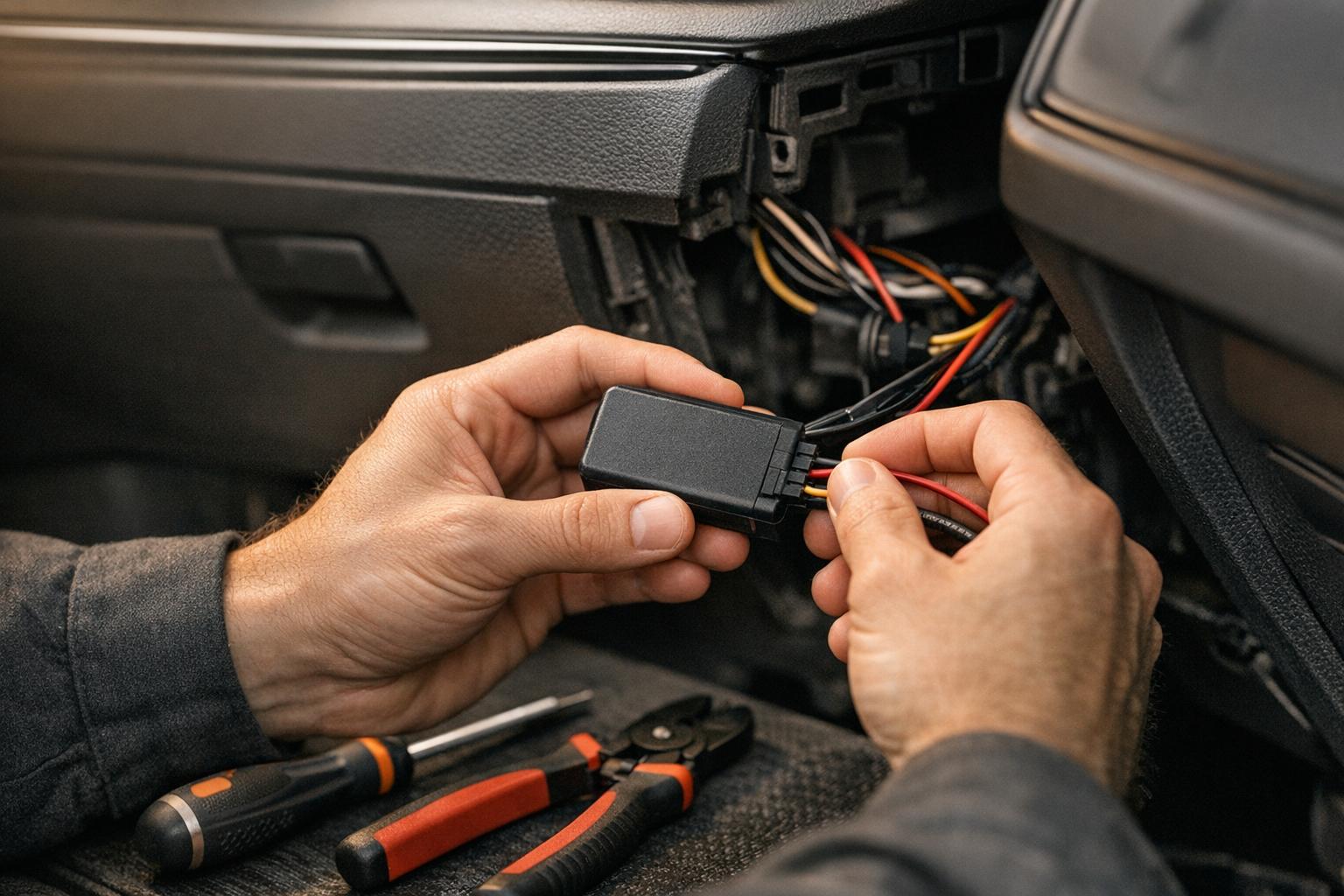
Equip all hybrid vehicles with GRS Fleet Telematics devices. Wired trackers require professional installation since they connect directly to your vehicle’s electrical system. The good news? Installation is free when you also take GRS Fleet Graphics or GRS's electrical services; otherwise it is quoted per job.
To prevent tampering, install the trackers in concealed locations after disconnecting the vehicle’s battery. Each device should be registered using its IMEI number, and activation typically takes 15–30 minutes. Configure UK-specific settings, such as the 24-hour clock and DD/MM/YYYY date format, and set up geofencing with a 50–100 metre radius. Speed alerts should be set 3–5 mph above your fleet’s speed limits.
After installation, carry out a 10–15 minute test drive to ensure real-time tracking and alerts are working as expected. For added accountability, consider integrating driver identification tools like key fobs or driver tags. These help track which employee is driving each vehicle, which can be useful for insurance claims and monitoring performance. To keep everything running smoothly, schedule monthly checks on battery health and software updates.
Step 5: Train Staff and Monitor Performance
The success of a hybrid fleet heavily relies on how well your team is trained and how closely performance is monitored. With proper education and regular evaluations, your integration efforts can achieve measurable results.
Train Drivers and Fleet Managers
Provide training tailored to hybrid vehicles, focusing on techniques like maximising electric-only driving and mastering regenerative braking. These skills can help drivers achieve an extra 10–15% in fuel savings by capturing energy during braking. Highlight the importance of using hybrids in urban, stop-heavy routes, where frequent stops can cut idling fuel consumption by 60% or more.
Fleet managers should also be trained to use the GRS Fleet Telematics platform. This tool enables them to monitor hybrid-specific performance metrics and ensure vehicles are being operated as intended. When both drivers and managers are equipped with the right knowledge, your fleet can operate more efficiently.
Track Key Performance Indicators (KPIs)
Tracking performance is crucial to ensure your hybrid fleet operates at its best. Use the GRS Fleet Telematics platform to monitor key metrics such as fuel consumption, idle time, engine hours versus mileage, and regenerative braking events. Pay close attention to the ratio of electric-to-combustion engine hours to confirm hybrids are being used effectively.
Start with a 90-day pilot programme using 3–6 vehicles to establish baseline data for fuel consumption, idle time, and maintenance incidents. Then, conduct quarterly reviews to compare actual results against your expectations. These reviews help you stay on top of your fleet's performance and uncover opportunities for improvement.
With support and dedicated account management via the GRS platform, you can quickly address any issues, refine your fleet strategy, and optimise your operations for maximum efficiency.
Conclusion
Switching to hybrid vehicles in your fleet requires careful planning and execution. By following the five steps outlined earlier - evaluating fleet readiness, forming a clear strategy, choosing vehicles equipped with telematics, setting up charging and tracking infrastructure, and training your team - you can ensure a smooth transition while improving efficiency and reducing emissions.
Telematics plays a crucial role in achieving these goals. From the initial procurement phase to everyday operations, GRS Fleet Telematics provides the real-time insights necessary to cut fuel costs, lower emissions, and safeguard your assets. The platform's advanced tools monitor vehicle performance, highlight maintenance needs, and enable proactive adjustments to enhance fleet efficiency. With support and a dedicated account manager, you can quickly adapt your strategies based on actionable data.
Designed to support businesses of all sizes, GRS Fleet Telematics offers flexible hardware options, making it easier to adopt the technology needed for a modern and efficient fleet. Start with a phased rollout, track progress closely, and rely on data to refine operations continuously.
FAQs
Should my fleet choose hybrids or plug-in hybrids?
When deciding between hybrids and plug-in hybrids (PHEVs), it all comes down to what suits your fleet and the resources you have. Hybrids are a great option if you want a straightforward shift without needing charging stations. They pair a petrol or diesel engine with an electric motor, offering improved efficiency without the need to plug in.
On the other hand, PHEVs require external charging but provide the advantage of extended electric-only driving. This can help cut down on fuel expenses and lower emissions. To choose the right option, think about your fleet's daily operations, access to charging infrastructure, and long-term environmental targets.
How do I calculate payback for adding hybrids to my fleet?
To figure out the payback period for hybrid vehicles, take the total extra cost of purchasing and installing them and divide it by the yearly savings they provide. These savings usually stem from lower fuel expenses, reduced maintenance needs, and other operational benefits. This simple calculation shows how many years it will take for the hybrids to recoup their initial investment, helping you assess whether they make financial sense for your fleet.
How many depot chargers do I actually need?
The number of depot chargers you'll need hinges on several factors: the size of your fleet, how far your vehicles travel each day, how they're used, and their specific charging requirements. Analysing these aspects - often with the help of telematics data - can guide you in figuring out the ideal number of chargers. Taking the time to thoroughly examine your fleet's operations and existing infrastructure is key to setting up an efficient charging system and smoothly integrating EVs into your operations.