
Ultimate Guide to IoT Fuel Monitoring
Real-time fuel tracking for fleets: reduce costs, detect theft, and improve efficiency with IoT sensors and telematics.
 By Michael Bar10 min read
IoT fuel monitoring systems are transforming fleet management by providing real-time data on fuel levels, consumption patterns, and refuelling events. These systems use sensors to deliver accurate insights, helping managers reduce costs, detect theft, and improve efficiency. Key benefits include:
- Cost Savings: Reduce fuel expenses by 25–35% within the first year.
- Theft Detection: Identify 70–90% of theft incidents within 24 hours.
- Efficiency Tracking: Improve fuel usage by linking data to driver behaviour and routes.
- Predictive Maintenance: Spot issues early through fuel and engine diagnostics.
How IoT Fuel Monitoring Systems Work
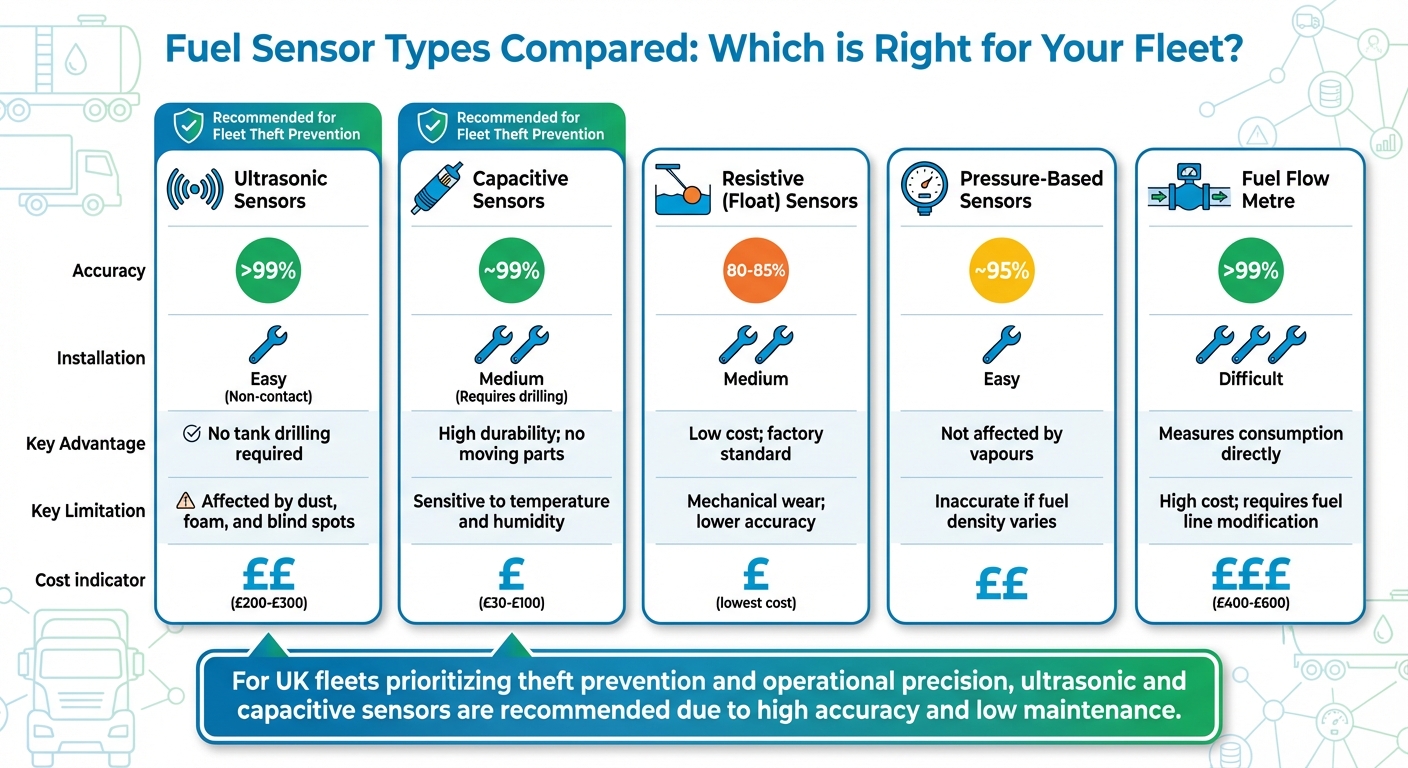
IoT Fuel Sensor Types Comparison Chart - Accuracy, Installation & Cost
IoT fuel monitoring systems transform raw fuel measurements into usable insights through a combination of sensing, data processing, and visualisation. Sensors placed in the fuel tank measure fuel levels using methods like ultrasonic waves or changes in capacitance. These readings are then converted into electrical signals - such as voltage, resistance, or frequency - by a microcontroller. The data is transmitted wirelessly via technologies like cellular networks, LoRaWAN, or Bluetooth Low Energy to a cloud platform. Here, the system processes the raw data, filters out noise caused by fuel movement, and presents the results on a user-friendly dashboard. This dashboard provides real-time visuals, including fuel level charts and anomaly alerts for issues like theft or leaks. Continuous monitoring is key to quickly identifying irregularities and ensuring operational efficiency.
Key Components of IoT Fuel Monitoring Systems
IoT fuel monitoring systems consist of five essential components:
- Fuel Level Sensor: Positioned inside or on the tank, this sensor uses technologies such as ultrasonic, capacitive, or pressure-based methods to continuously measure fuel levels.
- Signal Processing Unit: Usually a microcontroller, this unit converts physical readings into electrical signals.
- Communication Module: Handles data transmission wirelessly, with cellular networks being ideal for long-range applications and LoRaWAN suited for remote areas.
- Cloud-Based Platform: Processes raw data using calibration tables to convert signals into precise volume measurements and filters out noise caused by vehicle movement.
- User Interface: Accessible via web or mobile dashboards, this interface displays the processed data and sends alerts for unauthorised refuelling or unexpected drops in fuel levels.
Some modern systems also integrate with OBD CANBus data to link fuel readings with engine diagnostics and van tracking solutions. This combination ensures accurate, real-time data processing and delivery.
Data Flow and Real-Time Monitoring
The data flow in an IoT fuel monitoring system is almost instantaneous. When fuel levels change - whether through consumption, refuelling, or theft - the sensor detects the variation immediately. The microcontroller processes this information, and the communication module transmits it to the cloud platform. Here, calibration logic converts raw signals into exact volume measurements, which are then updated on the dashboard in real time. Fleet managers can quickly spot anomalies and respond accordingly. These systems typically achieve an accuracy of 98–99%. Proper sensor placement, such as mounting near the tank's geometric centre, helps minimise errors caused by fuel sloshing during movement. Regular calibration is also necessary to maintain accuracy and ensure the dashboard reflects actual fuel levels.
Fuel Sensor Types Compared
The choice of sensor significantly impacts the system's performance. Below is a comparison of sensor types based on accuracy, installation complexity, and cost.
- Ultrasonic Sensors: These use sound waves for non-contact measurement, making installation simple and avoiding the need for tank modifications. However, they can be affected by foam, dust, or blind spots.
- Capacitive Sensors: These measure changes in dielectric properties as fuel levels shift, offering excellent durability and precision. They do, however, require immersion and are sensitive to temperature and humidity.
- Resistive Float Sensors: Commonly found in factory settings, these are cost-effective but less accurate (80–85%) and prone to mechanical wear.
- Pressure-Based Sensors: These measure fuel pressure and are unaffected by vapours, but their accuracy can drop if the fuel density changes.
- Fuel Flow Metres: These measure consumption directly with high precision but are expensive and require modifications to the fuel line.
For fleets prioritising theft prevention and operational precision, ultrasonic and capacitive sensors are often recommended due to their high accuracy and low maintenance needs.
| Sensor Type | Accuracy | Installation | Key Advantage | Key Limitation |
|---|---|---|---|---|
| Ultrasonic | >99% | Easy (Non-contact) | No tank drilling required | Affected by dust, foam, and blind spots |
| Capacitive | ~99% | Medium (Requires drilling) | High durability; no moving parts | Sensitive to temperature and humidity |
| Resistive (Float) | 80–85% | Medium | Low cost; factory standard | Mechanical wear; lower accuracy |
| Pressure-Based | ~95% | Easy | Not affected by vapours | Inaccurate if fuel density varies |
| Fuel Flow Metre | >99% | Difficult | Measures consumption directly | High cost; requires fuel line modification |
Benefits of IoT Fuel Monitoring for Fleet Management
IoT fuel monitoring brings measurable improvements to cost management, security, and operational oversight. Fleet managers often see a return on investment within 6–18 months, with benefits continuing to grow over time.
Fuel Cost Reduction and Efficiency
Tracking fuel consumption with IoT systems eliminates the delays of manual audits, helping to identify inefficiencies in real-time. These systems also analyse driving habits, flagging behaviours like harsh acceleration, excessive idling, or inconsistent speeds. Addressing these issues through driver training can improve fuel efficiency by 5–8% per vehicle. Additionally, predictive refuelling strategies help fleets avoid peak fuel prices, further cutting costs.
Some fleets using IoT fuel monitoring have reported up to a 20% reduction in fuel expenses by combining consumption tracking with eco-driving data. For instance, in early 2023, DHL UK rolled out IoT fuel sensors across 500 vans. Over six months, they reduced fuel consumption by 18%, dropping from 12.5L/100km to 10.2L/100km, thanks to monitoring and driver coaching. The initiative also led to a 92% decrease in theft attempts, saving the company approximately £450,000 annually.
Theft Prevention and Security
IoT fuel monitoring also provides a robust defence against theft. In the UK, fuel theft costs businesses £1.5 billion annually, but systems with real-time alerts can reduce these incidents by as much as 85%. Features like geofencing create virtual boundaries around authorised refuelling stations or depots. If a vehicle exits these zones or experiences a sudden drop in fuel levels, managers are notified immediately. Combining fuel sensors with GPS tracking platforms like GRS Fleet Telematics adds another layer of security, enabling quick action against unauthorised access or theft.
In 2022, Tesco Logistics equipped 300 HGVs with IoT fuel monitoring integrated with telematics. This resulted in a 22% improvement in fuel efficiency and prevented theft-related losses totalling £250,000. For UK operators managing vehicles parked overnight or at remote locations, this dual-layered approach is particularly useful given rising fuel prices and the logistical challenges of dispersed fleets.
Better Fleet Visibility and Decision-Making
IoT systems also enhance operational efficiency by delivering detailed insights into fleet performance. These insights can lead to 15–25% better fleet utilisation and a 10% reduction in downtime through data-driven maintenance strategies. By integrating fuel data with GPS tracking, vehicle diagnostics, driver behaviour, and maintenance schedules, IoT systems consolidate everything into a single dashboard. This unified view helps optimise routes by factoring in traffic patterns alongside fuel consumption, reducing travel distances and overall costs.
Predictive maintenance is another key benefit, using anomalies in fuel consumption and engine diagnostics to flag potential issues before they cause breakdowns. Additionally, driver performance scoring combines fuel efficiency data with safety metrics, highlighting top performers and identifying areas for improvement. These capabilities allow fleet managers to make informed decisions and implement proactive strategies to maximise fleet performance.
How to Implement IoT Fuel Monitoring in Your Fleet
Rolling out IoT fuel monitoring in your fleet involves selecting the right sensor technology, ensuring smooth integration, and planning a quick deployment. Small fleets can be up and running in 1–2 weeks, while a 50-vehicle fleet can complete installation within a week. With projected fuel savings of 15–25%, the return on investment typically occurs within 6–12 months.
Selecting the Right Sensors and Equipment
Choosing the right sensors for your fleet is essential. Ultrasonic sensors, which cost between £200 and £300 per unit, offer an accuracy of ±1%. These sensors are ideal for retrofitting UK vans and can be installed in 30–60 minutes. They are particularly effective for diesel, the most common fuel type in UK commercial fleets. Capacitive sensors, priced at £30 to £100 per unit, provide lower accuracy (±2–5%) and may face challenges with biodiesel due to foaming. For high-value HGVs where precision is critical, radar sensors deliver an impressive ±0.3% accuracy but come at a higher cost of £400–£600.
To ensure reliable performance in the UK’s variable weather, opt for IP67-rated equipment. Communication modules with 4G/5G or LoRaWAN connectivity are essential for consistent data transmission, especially in rural areas. Wireless models with up to five years of battery life can also help reduce maintenance needs. Start with a pilot programme involving 5–10 vehicles before rolling out to the entire fleet. Once you’ve selected the sensors and communication modules, integrate them with your telematics system for a seamless experience.
Integrating IoT Fuel Monitoring with Telematics
By connecting fuel sensors to your telematics platform, you can create a unified dashboard for real-time monitoring. Use API or MQTT protocols to sync fuel data with platforms like GRS Fleet Telematics, which offers plug-and-play connectivity and dual-tracker technology starting at £7.99 per month. Map critical data fields such as fuel levels, consumption rates, and refuelling events. Ensure data latency is minimal - ideally under 5 seconds - to enable theft alerts and other time-sensitive notifications.
Compliance with GDPR is crucial for UK fleets, meaning data should be stored on UK-based servers. Dashboards should use metric units (litres, l/100km) and en-GB formatting, including DD/MM/YYYY dates and £ symbols for costs. Geofenced alerts can also be configured around authorised refuelling stations, sending notifications if vehicles leave designated zones or experience sudden fuel drops of more than 5 litres. One logistics company in Manchester reduced integration time by 40% using pre-built GRS APIs, demonstrating how efficient deployment can be achieved.
Deployment and Configuration
After selecting and integrating your sensors, prioritise a smooth and efficient deployment. Schedule installations during routine maintenance or MOTs to avoid disrupting operations. Installation is straightforward, taking just 30–60 minutes per vehicle using non-invasive mounts - no need to drain fuel tanks. Sensors can be paired via Bluetooth or a mobile app, and drive-cycle tests should be conducted to confirm accuracy. For a fleet of 50 vehicles, a focused rollout can be completed in about a week.
Once installed, configure dashboards to display real-time fuel gauges, efficiency metrics (e.g., l/100km), and alerts for issues like low fuel (below 20%), theft (sudden drops), or consumption spikes (15% above baseline). For instance, an alert might read: "Fuel theft detected on van AB12 CDE – estimated loss £150." Staff training on dashboard navigation is essential, along with setting KPIs - such as litres per 100km - to track performance improvements. Monthly auto-calibrations should also be scheduled to prevent sensor drift. This setup ensures your fleet benefits from reduced costs, theft prevention, and enhanced operational visibility.
Conclusion
IoT fuel monitoring is transforming how UK fleets manage fuel expenses. With real-time tracking, companies are seeing dramatic reductions in fuel theft and overall costs. Early data reports theft reductions of 75–95% and fuel savings of 25–35% within the first year.
Success in IoT fuel monitoring relies on integrating advanced sensor technology with reliable telematics. For instance, systems like GRS Fleet Telematics provide an affordable solution starting at just £7.99 per month. These systems combine fuel monitoring with dual-tracker technology.
But it’s not just about preventing theft. IoT fuel monitoring also aids in predictive maintenance by identifying efficiency drops that could indicate mechanical problems, helping to avoid expensive breakdowns.
Starting with a pilot programme for 10–15% of your fleet is a smart move. Use dashboards configured with metric units like litres and litres per 100 kilometres (l/100km), set geofenced alerts for authorised refuelling stations, and define clear KPIs. By adopting a phased approach, UK fleets can gain the operational insight and predictive tools needed to enhance performance and reduce costs consistently.
FAQs
Which fuel sensor type is best for my vehicles?
Selecting the best fuel sensor depends on a mix of factors like the type of tank, operating conditions, and the level of accuracy you need. Here’s a quick rundown of the most common types:
- Resistive sensors: These are budget-friendly but tend to have a shorter lifespan and may not handle harsh conditions well.
- Capacitive sensors: Known for their accuracy and ability to resist contamination, making them a dependable choice for many applications.
- Ultrasonic sensors: These work without direct contact, offering durability and reliability in tough environments.
- Pressure-based sensors: These measure fuel height indirectly by detecting pressure, which can be useful in certain setups.
The right sensor for your fleet will depend on your specific requirements. Once chosen, pairing it with an IoT fuel monitoring system can help optimise fuel management and improve overall operational efficiency.
How accurate are IoT fuel monitoring readings in real driving?
IoT fuel monitoring systems boast an impressive accuracy rate of 98–99% when tested in real-world driving scenarios. This precision enables fleet managers to monitor fuel consumption closely, leading to better control over usage and reduced operational expenses.
What do I need to integrate fuel monitoring with GRS Fleet Telematics?
To connect fuel monitoring with GRS Fleet Telematics, you’ll require specific telematics hardware like fuel sensors, GPS modules, and other compatible devices. Additionally, you’ll need software capable of syncing the data seamlessly. It’s important to focus on correct installation, thorough testing, and training your team to ensure precise tracking of fuel data, such as consumption, miles per gallon (MPG), and purchase records. The system operates on GDPR-compliant platforms, enabling real-time monitoring and smooth data transmission.