How Weight Distribution Impacts Fleet Efficiency
Balanced loads cut fuel use, reduce tyre and suspension wear, improve braking and lower DVSA fines — telematics helps monitor axle loads.
 By Michael Bar11 min read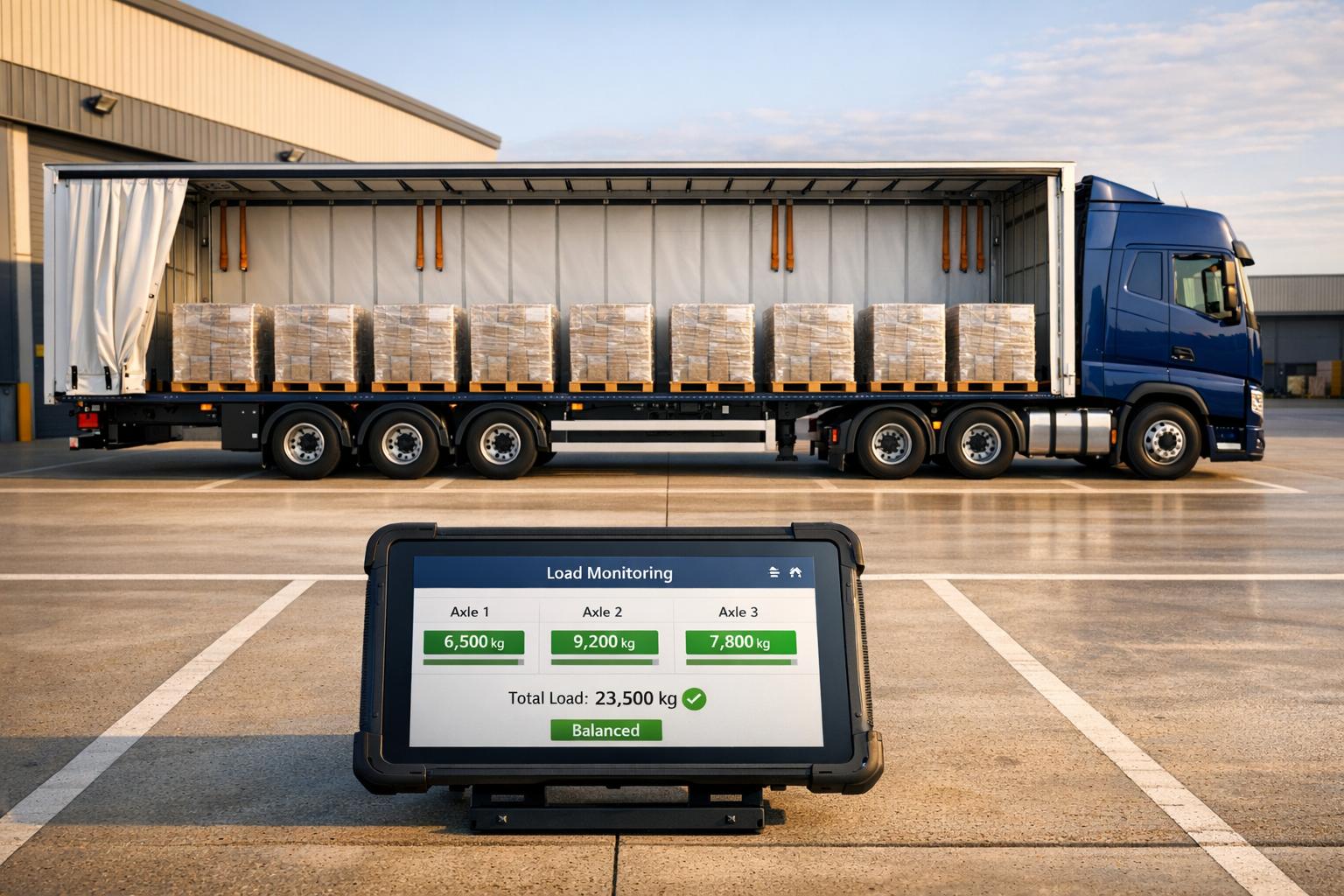
Proper weight distribution is critical for fleet efficiency, safety, and compliance. Mismanaged loads can increase fuel consumption by 5–10%, raise stopping distances by 15–30%, and heighten rollover risks by 40%. Balanced loads improve fuel efficiency, reduce wear on tyres and suspension, and minimise costly breakdowns.
Key Takeaways:
- Fuel Costs: Poor distribution forces engines to work harder, increasing fuel usage.
- Tyre and Component Wear: Side-to-side imbalances can reduce tyre life by 25% and raise suspension-related repairs by 15–25%.
- Safety Risks: Overloading axles compromises braking and steering, increasing accident risks.
- Compliance: Exceeding axle weight limits can result in fines up to £5,000 or vehicle impoundment.
Solutions:
- Load Planning: Distribute weight evenly, keeping heavier items low and central.
- Route Optimisation: Avoid steep gradients to prevent weight shifts.
- Telematics Tools: Monitor loads in real time to prevent imbalances.
Using tools like GRS Fleet Telematics can help track and manage weight distribution effectively, reducing non-compliance rates by up to 40%. With pricing from £7.99/month, it's an affordable way to improve fleet efficiency and safety.
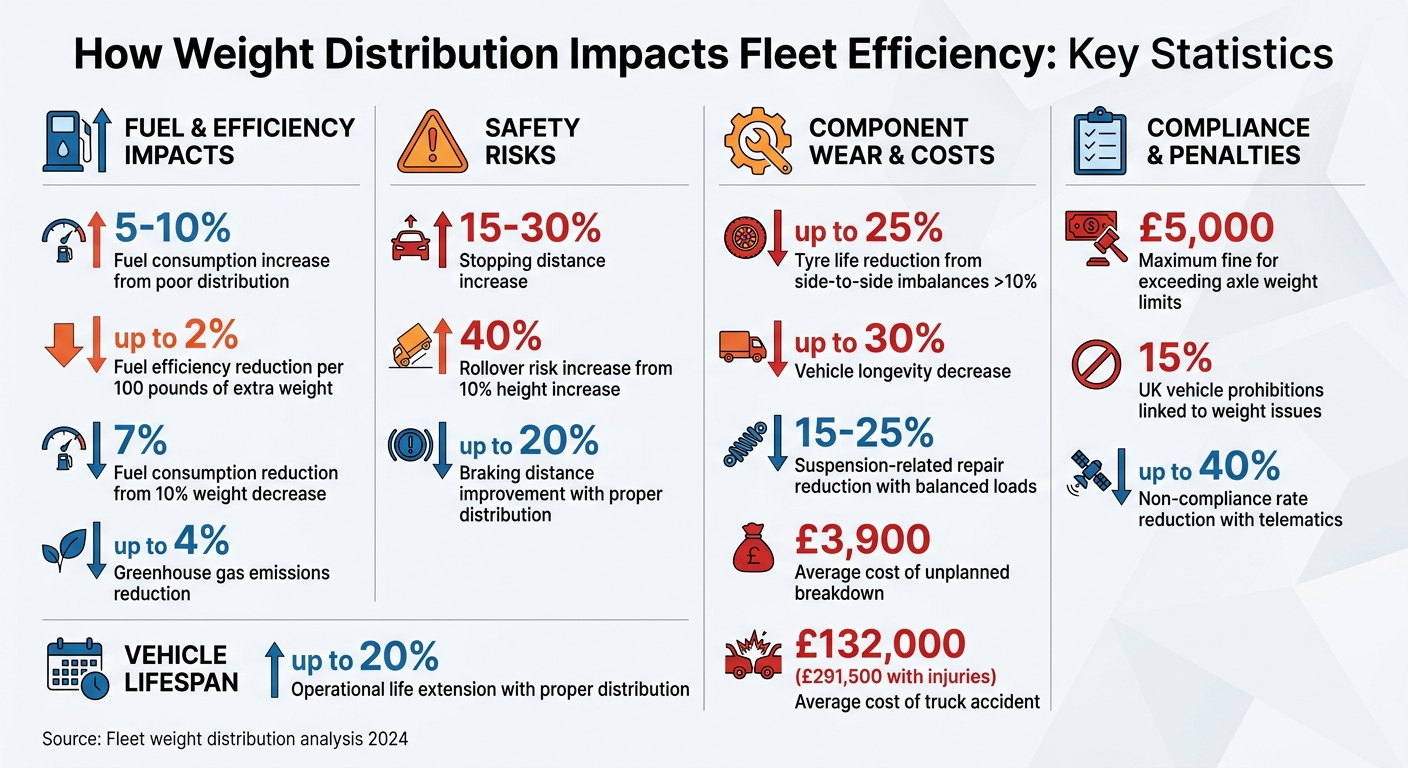
Impact of Poor Weight Distribution on Fleet Efficiency: Key Statistics
Problems Caused by Poor Weight Distribution
Poor weight distribution can lead to several operational challenges, including higher fuel costs, accelerated wear on vehicle components, and increased safety risks.
Higher Fuel Consumption
When a vehicle's load is unevenly distributed, it creates extra drag and forces the engine to work harder, which increases fuel usage. Tata Motors highlights this issue:
When a truck's weight isn't evenly distributed, it creates uneven drag, requiring more power (and thus more fuel) to maintain speed.
Even small weight imbalances can have a noticeable effect. For example, every additional 100 pounds of weight can reduce fuel efficiency by up to 2%. This happens because uneven loads contribute to irregular tyre wear, which increases rolling resistance. Additionally, the extra strain on the transmission and drivetrain and changes to the vehicle's rake - affecting its aerodynamic profile - further reduce efficiency.
Faster Component Wear
Beyond wasting fuel, uneven weight distribution wears out key vehicle components faster. When side-to-side imbalances exceed 10%, tyre lifespan can drop by up to 25%, and overall vehicle longevity may decrease by as much as 30%. Properly balanced vehicles, on the other hand, typically require 15–25% fewer suspension-related repairs during their service life.
Overloading the front axle can lead to brakes overheating, causing quicker brake fade and faster wear on brake pads. The drivetrain, including the transmission, differential, and driveshaft, also bears additional stress when managing unbalanced loads. Over time, this can lead to premature fatigue in the frame and chassis.
Safety Risks
Improper weight distribution isn't just costly - it can also compromise safety. Overloading the front axle reduces steering control, while rear-heavy loads can create a "pendulum effect", reducing traction on the front wheels and impairing responsiveness. Stopping distances may increase by 15–30%, and vehicles may pull to one side during hard braking, which can undermine the effectiveness of anti-lock braking systems.
Top-heavy loading is particularly dangerous, as it raises the vehicle's centre of gravity. Even a 10% increase in height can raise the risk of a rollover by 40% during sudden manoeuvres. Side-to-side imbalances can worsen body roll and reduce cornering grip, while weight concentrated on a single axle risks tyre blowouts or axle failure, especially at high speeds on motorways. Furthermore, unbalanced vehicles are more affected by strong crosswinds and may experience reduced tyre contact in wet or snowy conditions.
How Weight Distribution Affects Fleet Performance
Effective load management plays a key role in improving fleet performance, especially when addressing the challenges of poor weight distribution. The way cargo is positioned within a vehicle has a direct impact on fuel consumption and determines how well vehicles handle the demands of UK roads across various industries - from smooth motorways to tight urban streets.
Fuel Efficiency and Emissions
When loads are balanced, fuel consumption decreases because the engine doesn't have to work as hard. Evenly distributed weight reduces rolling resistance and helps maintain aerodynamic balance. For instance, a 10% reduction in vehicle weight can lead to approximately 7% lower fuel consumption and cut greenhouse gas emissions by up to 4%. Additionally, avoiding unnecessary fuel weight for routes that don’t require a full tank further improves efficiency. Beyond saving fuel and reducing emissions, balanced loads also enhance handling and overall vehicle performance.
Vehicle Performance
Proper weight distribution can improve braking distances by up to 20%, which is crucial during emergency stops in heavy traffic or bad weather. It also ensures predictable handling, smoother acceleration, and better stability when navigating corners, roundabouts, and dual carriageways. Balanced loads place less strain on critical components, leading to up to 15–25% fewer suspension-related repairs over a vehicle’s lifespan. These benefits translate to reduced maintenance costs, improved safety, and less downtime, keeping your fleet running smoothly and reliably.
Benefits of Proper Weight Distribution
Proper weight distribution isn't just about keeping things balanced; it’s a smart move for fleet operators looking to save money, enhance safety, and maximise the lifespan of their vehicles. Let’s break it down.
Lower Operating Costs
When loads are balanced, operating expenses can take a noticeable dip. Uneven weight causes tyres to wear out in patches, leading to premature replacements. But with proper distribution, tyres wear evenly, saving money on replacements. Plus, balanced loads reduce strain on suspension systems, cutting suspension-related repair costs by up to 25% over a vehicle's service life.
Fuel economy also gets a boost. Even weight means less drag and better efficiency, which adds up fast. And here’s a stark reminder: the average cost of an unplanned breakdown is £3,900. Many of these costly breakdowns are linked to component failures caused by uneven weight distribution - something that can easily be avoided.
Improved Safety
Safety on the road improves significantly when weight is evenly distributed. Balanced loads ensure tyres maintain better contact with the road, resulting in better steering and handling. This helps prevent scenarios where the rear of a vehicle sags under uneven weight, which can lead to loss of control.
Front-end overloading is another danger that balanced loads help avoid. Overloading at the front can cause brakes to overheat, reducing their effectiveness during sudden stops. By keeping the weight even, stopping distances can be reduced by about 20%, making a big difference in emergency situations. Balanced loading also helps prevent trailer sway and reduces the risk of jackknifing, as the truck and trailer can brake more proportionally during sudden manoeuvres.
Longer Vehicle Lifespan
Balanced loads don’t just save money and improve safety - they also help vehicles last longer. Uneven weight puts extra stress on critical components like suspension systems, drivetrains, and the vehicle frame, leading to faster wear and tear. By keeping loads even, these components experience less strain, extending their lifespan.
In fact, proper weight distribution can extend a vehicle's operational life by up to 20%. This is because balanced loads prevent excessive stress on parts like transmissions and driveshafts, while also protecting the structural integrity of the vehicle frame from fatigue caused by lopsided loading.
How to Improve Weight Distribution in Your Fleet
Balancing weight distribution in your fleet doesn’t have to be a headache. With a few practical strategies, fleet managers can ensure loads are evenly distributed, vehicles stay within legal limits, and efficiency takes centre stage.
Load Planning and Axle Limits
Understanding axle load limits is essential. In the UK, the Road Vehicles (Construction and Use) Regulations specify the following limits: 10.17 tonnes for a single non-drive steer axle, 11.45 tonnes for a single drive axle, and up to 18 tonnes for tandem axles on lorries. For vans, gross weight typically ranges from 3.5 to 7.5 tonnes, with front and rear axle limits of 1.85 tonnes and 2.8 tonnes respectively. Breaching these limits can lead to fines of up to £5,000 or even vehicle impoundment.
To keep things balanced, place heavier items centrally and low, ideally over the axles. For vans, aim for 50–60% of the load to rest on the rear axle. For example, in a 3.5-tonne van, distributing 60% of the load over the rear axle ensures the front axle stays within the 1.85-tonne limit. Tools like load diagrams or apps can simulate axle weights before departure, and portable scales can verify payloads against the vehicle’s GVW (Gross Vehicle Weight) to avoid costly mistakes.
Once the load is properly distributed, fine-tune your route to complement the setup.
Route Planning
Inclines and uneven terrain can cause weight to shift forward, potentially overloading front axles and creating instability. To avoid this, use GPS to plan routes with gradients under 5% when transporting heavy loads. Favouring flat motorways and adjusting cargo placement before hitting the road can make a big difference. For example, repositioning cargo rearward when tackling uphill stretches, such as those on the M6, can help maintain stability.
According to DVSA data, 15% of UK vehicle prohibitions are linked to weight-related issues, often worsened by poor route planning. Using route optimisation software can reduce fuel consumption by 5–10% and lower axle stress. In one fleet study, terrain-adjusted routes led to 12% fewer breakdowns. Prioritising flat terrain and avoiding steep gradients whenever possible is a smart move.
For ongoing adjustments, real-time monitoring can provide valuable insights.
Real-Time Monitoring with Telematics
Telematics systems combine axle sensors, GPS, and onboard scales to track load distribution in real time. These systems alert drivers to imbalances, such as when axle deviation exceeds 10%. For instance, GRS Fleet Telematics offers real-time van tracking, dual-tracker technology for added security, and load monitoring features that help fleets make on-the-go adjustments.
Subscription plans start at £7.99 per month, with hardware options starting from the Track tracker (from £35 for a single wired unit). To make the most of these systems, calibrate them with baseline weights, set alerts at 90% of axle limits, and train drivers to use the app dashboards effectively. One UK company reduced overload incidents by 40% within three months by adopting this approach. Telematics can detect overloads with 95% accuracy, helping monitored fleets lower non-compliance rates by 40%.
With these tools and strategies, maintaining proper weight distribution becomes far more manageable, ensuring smoother operations and fewer compliance issues.
Using GRS Fleet Telematics for Load Management

When it comes to managing weight distribution effectively, GRS Fleet Telematics provides a dynamic solution for real-time load management. By combining live tracking, driver behaviour insights, and strong security measures, this platform helps fleet operators maintain balanced loads while staying compliant with regulations.
Real-Time Tracking and Monitoring
The platform offers live GPS updates, geofencing, and route optimisation, enabling managers to quickly spot inefficiencies. It goes a step further by integrating weight-sensitive analytics. For example, it uses accelerometer data to distinguish between alerts caused by risky driving - like harsh braking - and those triggered by heavy payloads. By tracking behaviours such as speeding, idling, and eco-driving, the system not only supports targeted driver coaching but also shifts maintenance practices from reactive to proactive. These features make fleet management more efficient and cost-effective.
Affordable Pricing
GRS Fleet Telematics is accessible, starting at just £7.99 per vehicle per month. This price includes SIM/data, a dedicated account manager, and full access to the platform. For hardware, options range from the Track wired tracker (from £35) to the Shield tracker (from £79), which includes a secondary Bluetooth backup, plus optional remote immobilisation. Installation is free when you also take GRS Fleet Graphics or GRS’s electrical services; otherwise it is quoted per job.
Security Features
To safeguard both vehicles and cargo, the system uses a dual-tracker setup - a hardwired GPS combined with a concealed Bluetooth backup. This ensures uninterrupted monitoring, even if the primary device is tampered with. Additionally, immobilisation features prevent unauthorised engine starts, offering an extra layer of protection. Considering that the average cost of a truck accident can reach £132,000, or even £291,500 when injuries are involved, these security measures are invaluable for operational continuity and maintaining load balance efficiency.
Conclusion
Proper weight distribution isn’t just about meeting regulations - it’s a key factor in boosting fleet efficiency and cutting costs. By keeping loads centred and staying within axle limits, fleet operators in the UK can minimise fuel consumption and reduce wear and tear on vehicle components. This means fewer breakdowns, lower repair expenses, and vehicles that stay on the road longer.
Balanced loads also improve braking and steering performance. For instance, overloading the rear axle can lead to longer braking distances and increase the risk of fishtailing, while front-heavy vehicles may experience poor steering control.
With GRS Fleet Telematics, UK operators gain tools to track fuel usage, monitor driver behaviour, and manage maintenance in real time, helping to avoid expensive issues. With pricing starting at just £7.99 per month, it provides an affordable way to manage loads effectively while staying compliant with DVSA standards.
FAQs
How can I quickly check axle weights before a vehicle leaves the depot?
To check axle weights efficiently, you can use axle weight calculators or axle scales. Calculators let you estimate weight distribution by entering details like the total vehicle weight. On the other hand, axle scales give you exact measurements. Both tools are useful for staying within weight regulations and boosting safety.
By verifying axle weights before heading out, you can avoid overloading, maintain legal compliance, and keep fleet operations running smoothly.
What are the early warning signs that a load is unbalanced while driving?
When driving, early indicators of an unbalanced load can include instability in the vehicle, uneven handling, and excessive swaying. These problems often stem from poor weight distribution, which can compromise both safety and efficiency. Tackling these warning signs quickly helps ensure smoother performance and minimises potential hazards while on the road.
How can telematics help prevent overloading and DVSA penalties?
Telematics plays a crucial role in helping fleet managers stay on top of vehicle compliance and avoid penalties from the DVSA. By providing real-time monitoring, these systems make it easier to spot overloading issues before they become a problem. This reduces the chances of hefty fines or roadside prohibitions.
One of the standout features of telematics is its ability to automate data collection. It keeps tabs on key factors like vehicle weight, load distribution, and mechanical condition. This not only helps ensure compliance with regulations but also boosts safety and keeps fleet operations running smoothly.