Carbon Footprint Calculator
Estimate your annual carbon footprint from travel, home energy and food choices with a simple calculator and clear category breakdown.
 By Michael Bar2 min read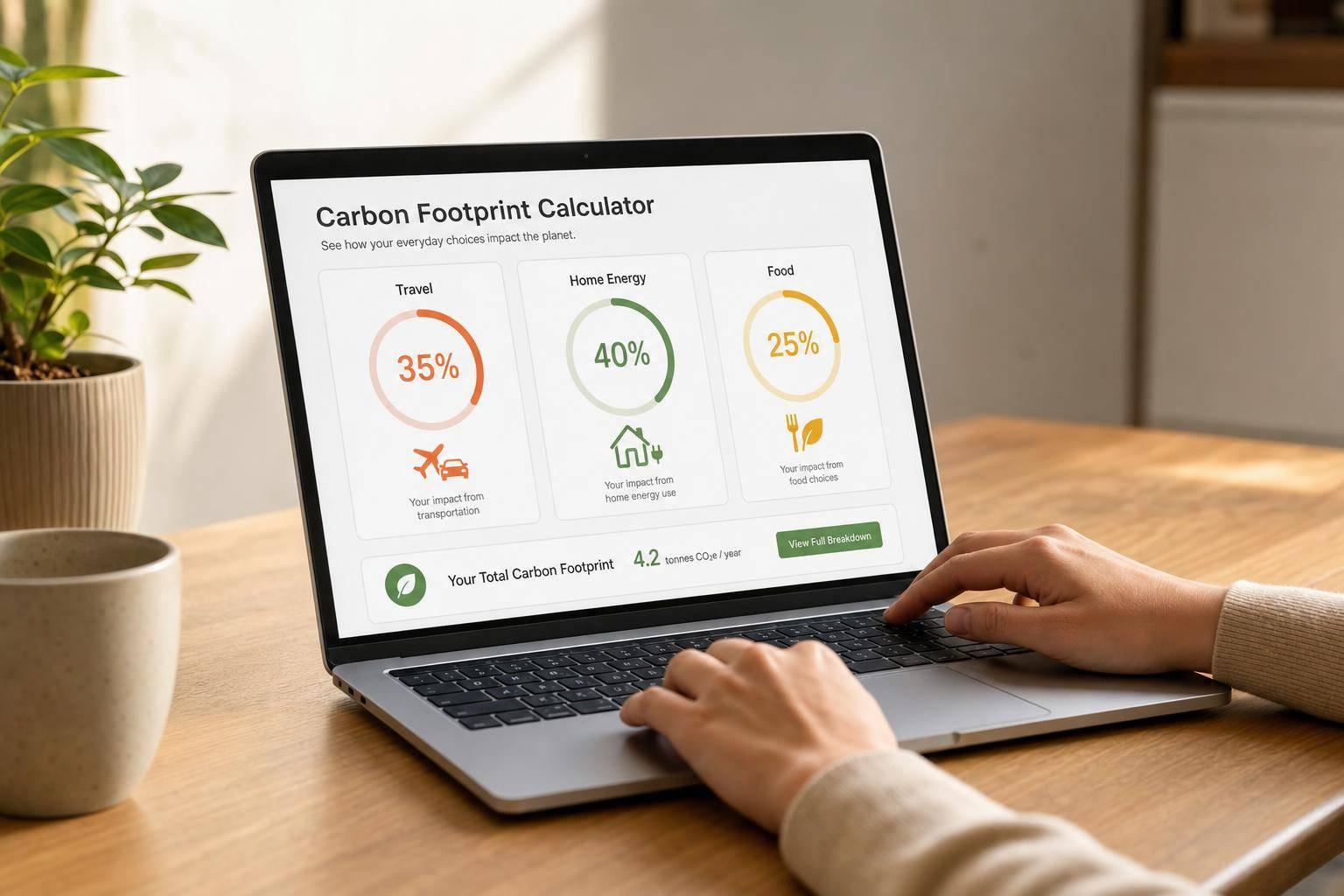
Estimate Your Annual Impact
A carbon footprint calculator helps turn everyday habits into a simple annual emissions estimate. Instead of asking for complicated data, this tool focuses on the things most people can answer quickly: car travel, public transport, flights, household electricity, gas use and a rough food choice. The result is a personal snapshot of your yearly impact in both kg CO2e and tonnes CO2e.
Built for Real-Life Decisions
The aim isn’t to produce a perfect scientific audit. It’s to give you a practical view of where your emissions are likely coming from. By converting weekly, monthly or yearly inputs into annual values, the calculator makes it easier to compare different parts of your lifestyle on the same basis.
Clear Breakdown, Useful Insight
A good personal carbon footprint calculator should do more than show one total. This one also breaks your estimate into transport, flights, home energy and food, then shows the percentage share for each category. That makes it easier to spot patterns, whether your footprint is driven by commuting, frequent flying or household energy use. If you want a straightforward carbon emissions estimate without unnecessary extras, this is a practical place to start.
FAQs
How accurate is this carbon footprint calculator?
It’s designed to give a useful estimate rather than a laboratory-precise result. The calculator uses reasonable emissions factors for car travel, public transport, flights, electricity, gas and food patterns, then converts your entries into an annual total. That makes it very helpful for spotting the biggest sources of your emissions, even though real-world impacts can vary depending on your exact vehicle, energy tariff, route, household efficiency and spending habits.
Why does the tool ask for household size?
Electricity and gas are usually shared across everyone living in a home, so dividing those emissions by the number of people gives a more realistic personal footprint estimate. Without that step, someone in a larger household could look as though they use far more home energy on their own than they actually do. It’s a simple way to make the result fairer and more useful.
What counts most in a typical personal footprint?
For many people, the biggest categories are usually car travel, flights and home energy, although food can also be significant depending on diet. Someone who drives long distances every week may see transport dominate their total, while a household with high electricity or gas use may find home energy is the main factor. That’s exactly why the category breakdown matters: it shows where your footprint really comes from instead of leaving you with one headline number.