
Fuel Efficiency Estimator for Smarter Driving
Estimate your vehicle’s fuel efficiency with our free tool! Input distance and fuel used to get MPG or L/100km, plus tips to save on fuel.
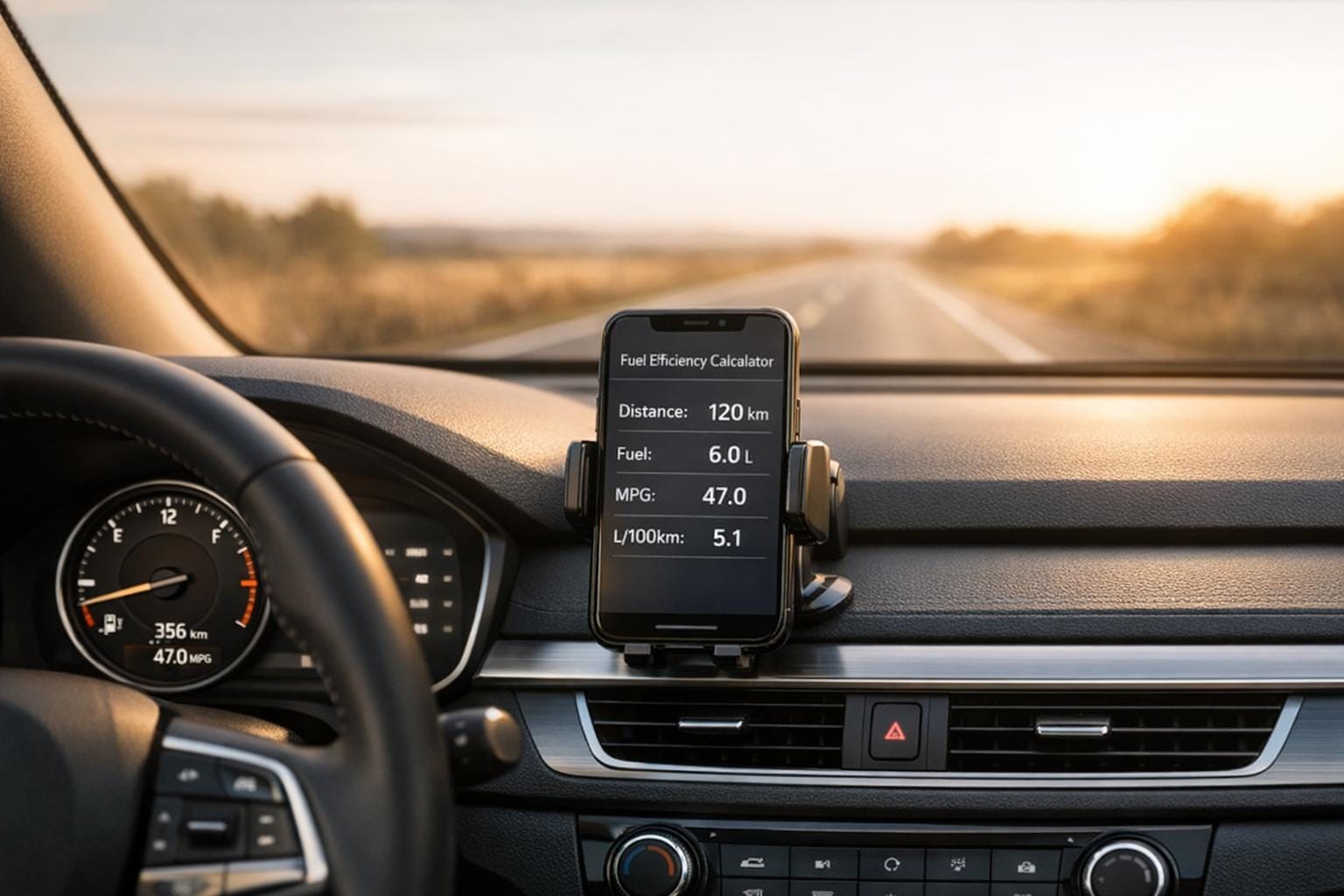
Fuel efficiency is a hot topic for drivers looking to save money and reduce their environmental footprint. With rising fuel prices, understanding how your vehicle performs on the road is more important than ever. Our Fuel Efficiency Estimator offers a quick, user-friendly way to calculate your car’s consumption, whether you measure it in miles per gallon or litres per 100 kilometres. But why does this matter? Knowing your vehicle’s performance helps you spot inefficiencies and make smarter driving choices.
Why Track Your Vehicle’s Fuel Consumption?
Tracking how much fuel your car uses isn’t just about numbers—it’s about taking control. A simple calculation can reveal whether your driving habits or road conditions are costing you more at the pump. For instance, frequent city stops can burn through fuel faster than steady highway cruises. Armed with this insight, you can tweak your habits, like easing off the accelerator or planning routes with less traffic.
Practical Tips for Better Mileage
Beyond using a tool to measure efficiency, small adjustments can make a big difference. Regular maintenance, such as oil changes and air filter checks, keeps your engine running smoothly. Planning trips to avoid peak traffic hours also helps. By staying mindful of how far you go on each tank, you’ll not only save cash but also contribute to a greener planet.
FAQs
How is fuel efficiency calculated in this tool?
It’s pretty straightforward! We take the total distance you’ve travelled and divide it by the amount of fuel used. So, if you’ve driven 300 miles on 10 gallons, your efficiency is 30 MPG (miles per gallon). If you’re using metric units, we convert it to litres per 100 kilometres. The tool also adjusts the output based on your selected units for clarity.
Why do driving conditions affect fuel efficiency?
Driving conditions play a big role in how much fuel your car burns. City driving often involves frequent stops and starts, which guzzles more fuel due to idling and acceleration. Highway driving, on the other hand, tends to be steadier, so your car can sip fuel more efficiently. Mixed conditions fall somewhere in between, and our tips are tailored to help you adapt your habits accordingly.
What can I do to improve my vehicle’s fuel economy?
There are loads of ways to boost your fuel economy! Start with smooth driving—avoid rapid acceleration or hard braking, especially in the city. Keep your tyres properly inflated, as underinflated ones create more drag. If you’re on the highway, try using cruise control to maintain a steady speed. Also, ditch unnecessary weight in your car; extra stuff in the boot can drag down efficiency. Small changes add up over time!