
How Predictive Analytics Cuts Fleet Downtime
Use telematics and fault data to spot issues early, schedule repairs and reduce hire costs to cut unplanned fleet downtime.

If I can spot faults before a van stops, I cut downtime, hire spend, and missed jobs. That is the core point here.
In plain terms, the article shows that fleet data can help me act before a breakdown. It points to a few warning signs - such as fault codes, battery voltage, coolant temperature, engine hours, and warning lights - and explains how repeated alerts help me decide what to fix, when to book it in, and how to keep vehicles on the road for longer.
A few numbers make the case clear:
- LCV downtime costs the UK £2.4 billion a year
- A lost day can cost about £800
- Short-term van hire often runs from £60 to £180 a day
- 43% of fleet operators said some breakdowns could have been stopped with earlier fault reporting
- One avoided day off road saved £2,000 in hire and overtime in one utility example
If I boil it down, the article says predictive analytics helps me:
- spot fault patterns early
- move from roadside repair to planned workshop visits
- book parts and labour before a van fails
- track whether downtime, call-outs, and hire costs fall after rollout
The main shift is simple: stop relying on mileage and driver reports alone, and start using vehicle data to time maintenance with more care.
| Area | Reactive approach | Predictive approach |
|---|---|---|
| Faults found | After a problem or breakdown | Before failure through data alerts |
| Repair timing | Urgent and unplanned | Booked in ahead of time |
| Time off road | Longer | Shorter |
| Hire spend | Higher | Lower |
| Daily disruption | More missed work and reshuffling | Less disruption |
So when I read the full piece, I’m not looking at theory. I’m looking at a straightforward way to turn vehicle data into fewer breakdowns and lower fleet costs.
Stop Waiting for Fault Codes – The Predictive Maintenance Revolution is Here!
sbb-itb-499a7f0
How Telematics Data Detects Faults Before Breakdowns
Telematics turns raw vehicle data into early warning signs. Connected devices pull information from the onboard diagnostics system and flag problems before they turn into breakdowns. The trick is knowing which signals tend to shift first.
The Vehicle Data Points That Matter Most
The most useful signals for spotting faults early come from a small set of core data points. They show how hard a vehicle is working and whether its main systems are starting to slip.
| Data Point | What It Reveals |
|---|---|
| Diagnostic fault codes (DTCs) | Faults logged by the vehicle's diagnostics system - misfires, sensor failures, emissions issues |
| Engine performance data | Rising fuel use or irregular RPM patterns, which can point to injector wear or air-intake faults |
| Battery voltage | Gradual degradation, slow cranking events, or poor alternator charging before a flat battery strands a driver |
| Coolant temperature | Marginal cooling issues - sticking thermostats, partially blocked radiators, or failing water pumps - before they cause serious engine damage |
| Mileage and engine hours | Real-world usage that determines when a service is actually due, not just when the calendar says so |
| Dashboard warning alerts | Warning lights logged centrally, turning isolated driver reports into structured, trackable data |
For urban delivery vans that spend long periods idling, engine hours can matter more than mileage on its own.
Taken one by one, these signals may not look like much. Put them together, and a pattern starts to form.
How Repeated Alerts Point to a Developing Fault
A single warning light might mean very little. Repeated alerts are where things get interesting. If the same fault code keeps coming back, or coolant temperature keeps edging above its normal range under load before dropping again, the vehicle is signalling that something is starting to go wrong.
Predictive analytics does this by comparing current readings with past data - both for that vehicle and for similar vans across the fleet. So if several identical vans show the same gearbox sensor code at about the same mileage, that points to a shared issue rather than plain bad luck.
Modern van tracking solutions that monitor key sensors can detect anomalies 47% faster than manual inspections. That gives maintenance teams a much larger window to step in early.
The payoff comes from how the software reads the pattern. It can spot that coolant temperature is inching up for that specific vehicle, or that fuel consumption has climbed even though the route and load haven't changed. That's the difference between a roadside failure and a booked workshop visit.
That extra time lets fleets schedule maintenance before the vehicle drops out of service.
How Predictive Analytics Supports Earlier Maintenance Action
Once an alert pattern is confirmed, predictive analytics helps turn that signal into a maintenance decision: what to fix first, when to book the vehicle in, and how long it can stay on the road safely. That shift matters. It moves the team from spotting a warning to actually scheduling the work.
Vehicle Health Alerts and Service Timing
Severity tiers and simple thresholds help cut through noise. For example, a trigger like three fault codes in seven days can flag a case that needs attention without sending the team chasing every minor issue.
Condition-based servicing works in much the same way. Instead of relying on mileage alone, it uses wear data to decide when checks should happen. Two vans might both hit 20,000 miles, but the one with harsher braking and higher brake-disc temperatures will need brake checks sooner. Once that timing is clear, the next job is to book the repair before the vehicle drops out of service.
Planning Repairs Before a Vehicle Goes Off Road
This is where predictive alerts start to pay off. When the system spots an emerging fault, the fleet team can act before the vehicle fails on the road.
They can:
- pre-order parts based on the fault code and vehicle model
- book workshop time around route plans or quieter periods
- bundle the repair with other planned work, such as a service, tyre rotation, or MOT prep
That changes a breakdown into a planned workshop visit. The result is less time off the road and no scramble for short-notice hire. That’s the difference between predictive maintenance and reactive repair.
Reactive vs Predictive Maintenance in Day-to-Day Fleet Operations
Reactive maintenance deals with faults after something has gone wrong. Predictive maintenance uses telematics to spot trouble earlier, before it turns into a roadside stop. Once the same alerts start showing up, the decision becomes pretty simple: fix it now, or wait for the vehicle to fail.
That choice affects day-to-day fleet work in a very direct way. It changes how faults are spotted, how workshop time is booked, and how repairs are handled.
Acting early helps fleets avoid recovery, overtime, and last-minute vehicle hire. United Utilities found that avoiding just one unplanned day off the road saves the business £2,000 in hire costs and driver overtime.
Comparison Table: Reactive vs Predictive Maintenance
The difference shows up across day-to-day fleet operations:
| Area | Reactive maintenance | Predictive maintenance |
|---|---|---|
| Fault detection | After a warning light, fault, or breakdown | Before failure, using telematics data |
| Repair planning | Ad hoc and urgent | Scheduled in advance with parts and labour arranged |
| Vehicle off-road time | Longer - the vehicle is already out of service | Shorter - intervention happens before a roadside stop |
| Emergency labour | More likely - urgent call-outs or overtime | Less likely - work is pre-booked |
| Hire vehicle spend | Higher - the vehicle may fail without warning | Lower - fleets can plan around maintenance windows |
| Daily operations | More disruption, missed jobs, and rescheduling | Better continuity and fewer service interruptions |
That’s the gap a predictive maintenance workflow is meant to close.
Where GRS Fleet Telematics Fits Into the Workflow
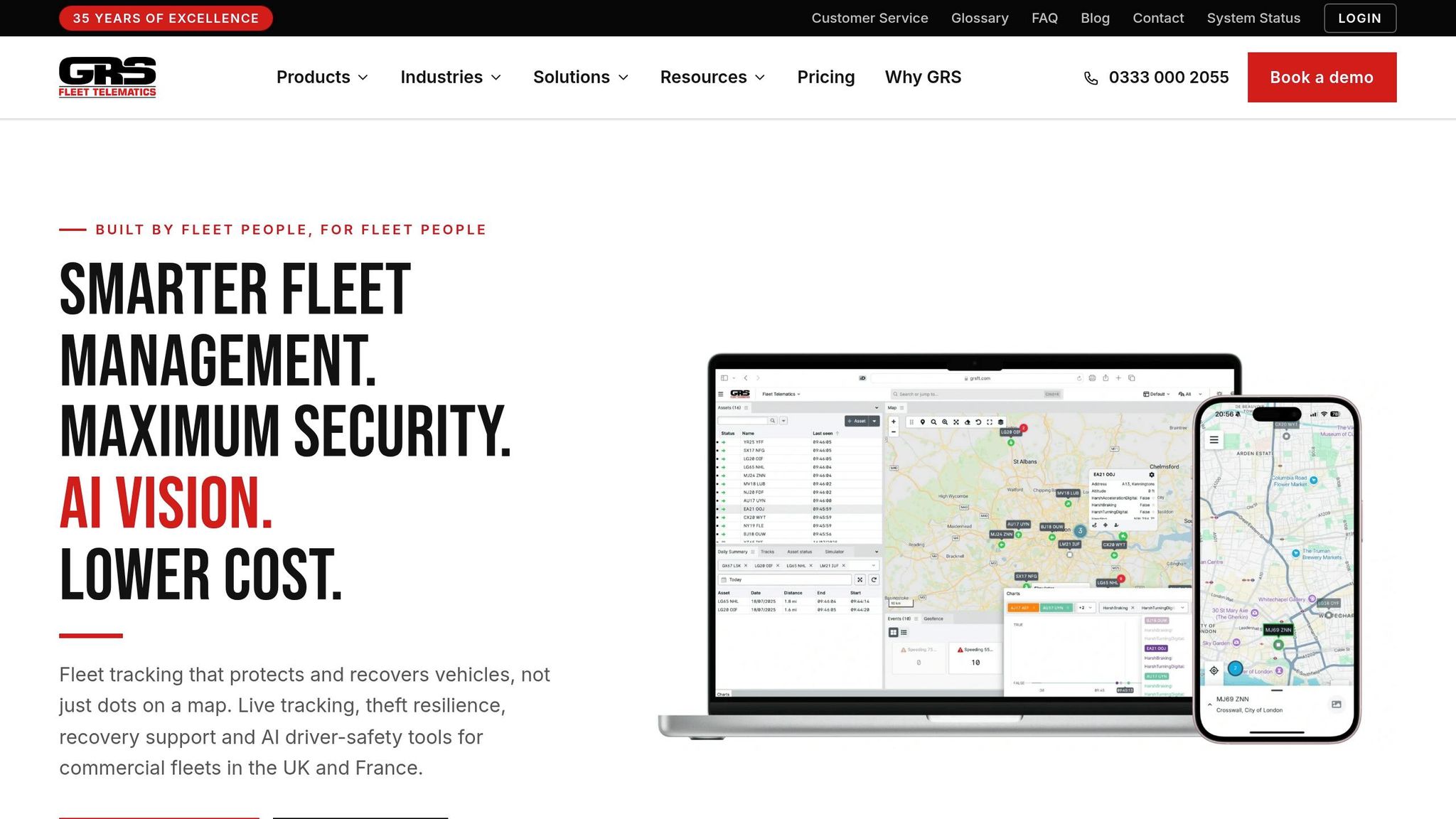
GRS Fleet Telematics sits in the visibility layer. It helps turn telematics data into earlier maintenance action and more accurate service timing.
How to Build and Measure a Predictive Maintenance Workflow
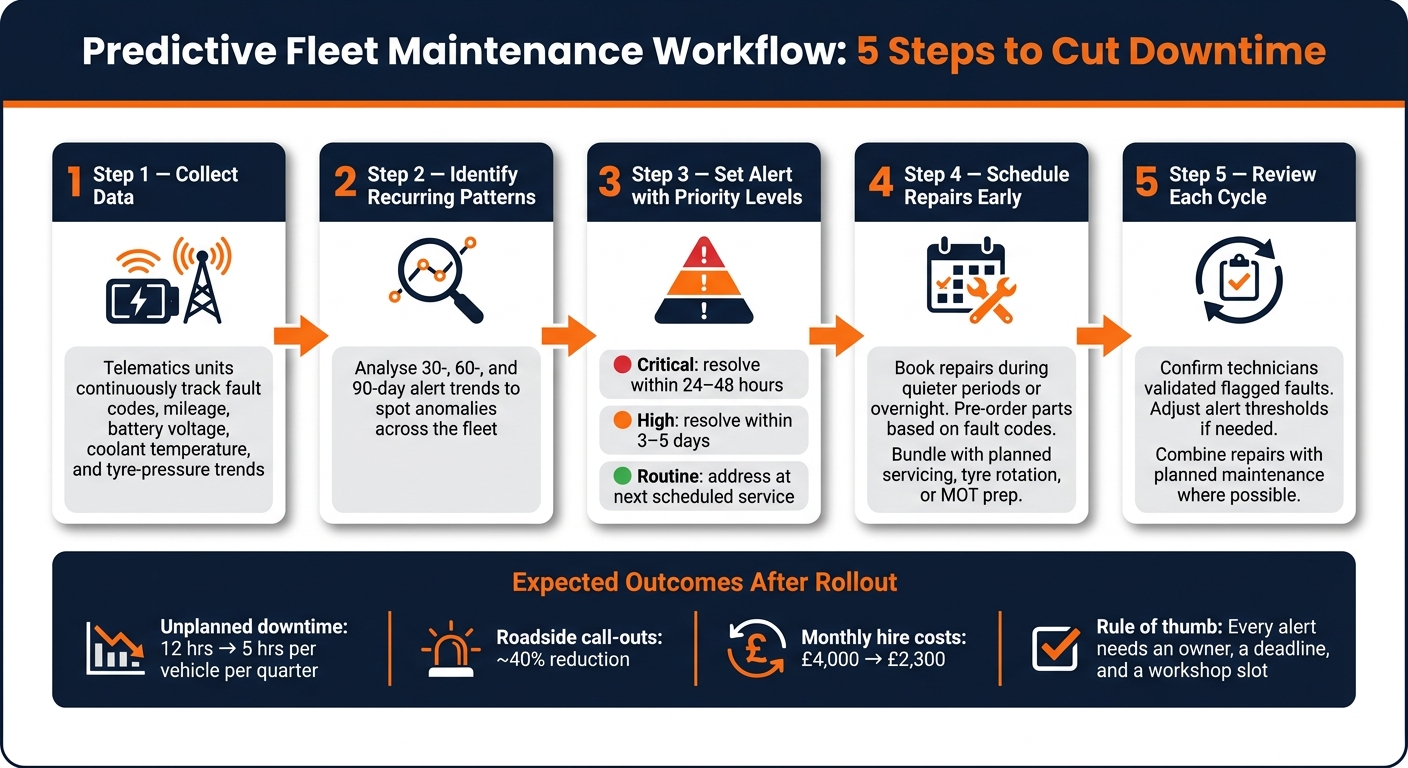
Predictive Fleet Maintenance Workflow: 5 Steps to Cut Downtime
A Simple Workflow for Fleet Teams
Most fleet teams can shift from reactive work to predictive maintenance without tearing up the way they already operate.
Start by documenting your current baseline. Record planned service intervals, average repair times, how often vehicles come off the road without warning, and what you usually spend on short-notice hire. That baseline gives you something solid to compare against later.
Once alerts are coming through, the job is to turn them into a set routine. In plain terms, alerts should guide what gets fixed, when it gets booked in, and who is responsible for making it happen.
- Collect data - telematics units track fault codes, mileage, battery voltage, coolant temperature and tyre-pressure trends all the time.
- Identify recurring patterns - look at 30-, 60- and 90-day alert trends to spot anything out of the ordinary.
- Set alert rules with priority levels - group alerts into critical, high or routine, and give each one a written response process. For example, critical alerts should be dealt with within 24–48 hours, high-priority issues within 3–5 days, and routine issues at the next scheduled service.
- Schedule repairs early - book repairs during quieter periods or overnight, and order parts ahead of time to cut downtime.
- Review each cycle - after each round of telematics-led servicing, check whether technicians confirmed the flagged issues. Where possible, combine the repair with planned servicing, tyre work or MOT checks. If alerts turned out to be off the mark, adjust the thresholds.
Every alert needs an owner, a deadline and a workshop slot.
Key Metrics to Track After Rollout
The main thing to watch is whether earlier action is cutting breakdowns, hire spend and lost working hours.
| Metric | What It Shows |
|---|---|
| Unplanned downtime hours per vehicle per quarter | Whether fewer vehicles are coming off road unexpectedly |
| Roadside call-outs per 10,000 miles | Direct measure of breakdown frequency |
| Repairs completed before breakdown | How often early action prevented a failure |
| Average hire vehicle spend per month | Financial effect of fewer unplanned outages |
| Vehicle availability rate | Percentage of fleet ready for use on any given day |
| Jobs completed on schedule | Operational knock-on effect of better vehicle reliability |
For fair comparisons, track the same metrics over matching periods - year-on-year Q1 versus Q1, for example - so seasonal changes don't skew the picture. It also helps to normalise figures by mileage, such as incidents per 100,000 miles, especially if workload changes as the business grows.
A fleet, for instance, might see unplanned downtime drop from about 12 hours to 5 hours per vehicle per quarter. Roadside call-outs could fall by roughly 40%, while monthly hire costs might come down from around £4,000 to £2,300 within the first year.
An alert is useless without an owner and deadline.
FAQs
How does telematics spot faults early?
Telematics helps spot faults early by collecting data all the time from a vehicle’s Controller Area Network and onboard sensors. That includes engine performance, brake wear, tyre pressure and emissions.
When sensors pick up a problem, they generate Diagnostic Trouble Codes (DTCs). Predictive analytics then looks for unusual patterns, such as vibration or temperature spikes, and alerts fleet managers so they can plan repairs before a roadside breakdown happens.
Which vehicle alerts matter most?
Prioritise a colour-coded system: red for critical issues that need immediate action, yellow for smaller issues to deal with at the next scheduled service, and green for healthy systems.
Pay close attention to DTCs and unusual readings in engine temperature, battery voltage, tyre pressure and brake wear. Predictive analytics can also flag early failure patterns before they turn into roadside breakdowns.
How soon can predictive maintenance save money?
Predictive maintenance can start cutting costs almost straight away by shifting your fleet from reactive, last-minute repairs to proactive, data-led planning.
Many businesses see clear savings within 3 to 6 months, and some reach ROI in as little as 0.3 months. Over time, the gains can add up fast: maintenance costs can drop by 10% to 40%, fuel costs by 20% to 25%, and unplanned downtime by as much as 50%.