
Real-Time Van Tracking for UK Fleets
Live van tracking transforms fleet control and theft response with real-time location, behaviour alerts and backup tracking.
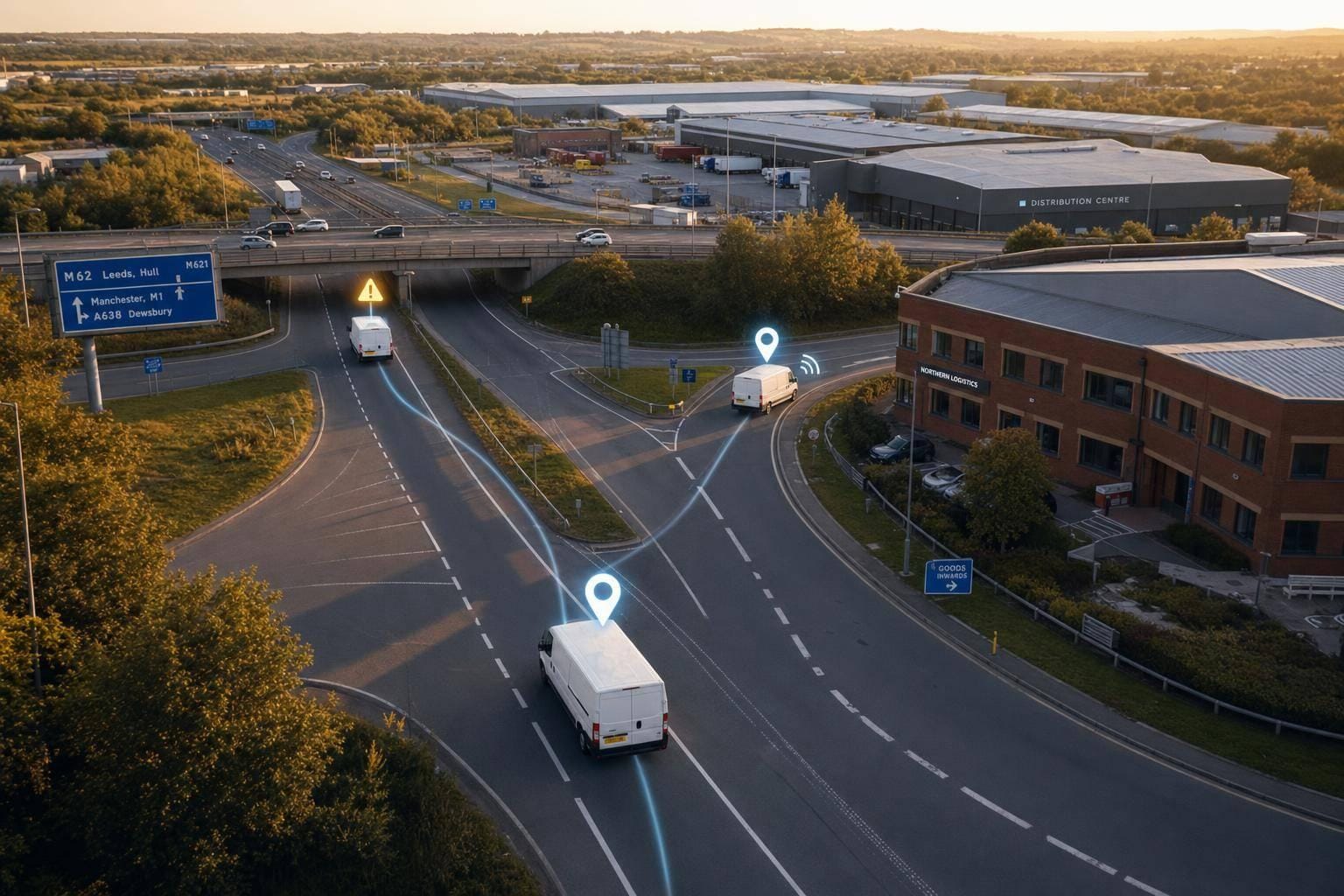
If I need tighter control of a van fleet, live tracking does two jobs at once: it helps me run the day and it helps me react if a van is stolen.
In simple terms, the article shows that real-time tracking lets me see where each van is, whether it is moving or idling, and where it has been. That helps with job allocation, ETA checks, fuel use, mileage records, and theft response. It also explains that theft is not a small issue in the UK: 11,273 vans were stolen in 2024, or about 31 a day.
Here’s the whole article in brief:
- I get live GPS location through a tracker linked to mobile data
- I can view map position, speed, stops, and trip history
- Dispatch teams can use it for nearest-van decisions and route changes
- Fleets can cut waste by watching idling, speeding, and detours
- Security tools such as geofences, tamper alerts, dual tracking, and immobilisation can help after odd movement or theft
- Setup should match the van’s risk, value, overnight parking, and load type
- GRS offers three hardware levels from £35 to £119, plus software from £7.99 per vehicle per month
One point stands out for me: this is not just about watching dots on a map. It is about using live data to make fewer phone calls, send the right van to the next job, and give police a current location if a vehicle goes missing.
| Item | What the article says |
|---|---|
| Main use | Day-to-day fleet control and theft response |
| Core data | Location, speed, heading, ignition state, stop times |
| Daily fleet tasks | Dispatch, ETA checks, route changes, mileage review |
| Cost control | Lower idling, fewer detours, less fuel waste |
| Security tools | Geofencing, tamper alerts, dual trackers, immobilisation |
| UK theft figure | 11,273 stolen vans in 2024 |
| Fuel stat | Around 7% of fuel use can be lost to non-productive idling |
| GRS pricing | £35 / £79 / £119 hardware, plus £7.99 per month |
If I were reading this to make a buying choice, the main takeaway is simple: pick the lightest setup that still covers the fleet’s daily tracking needs and theft risk.
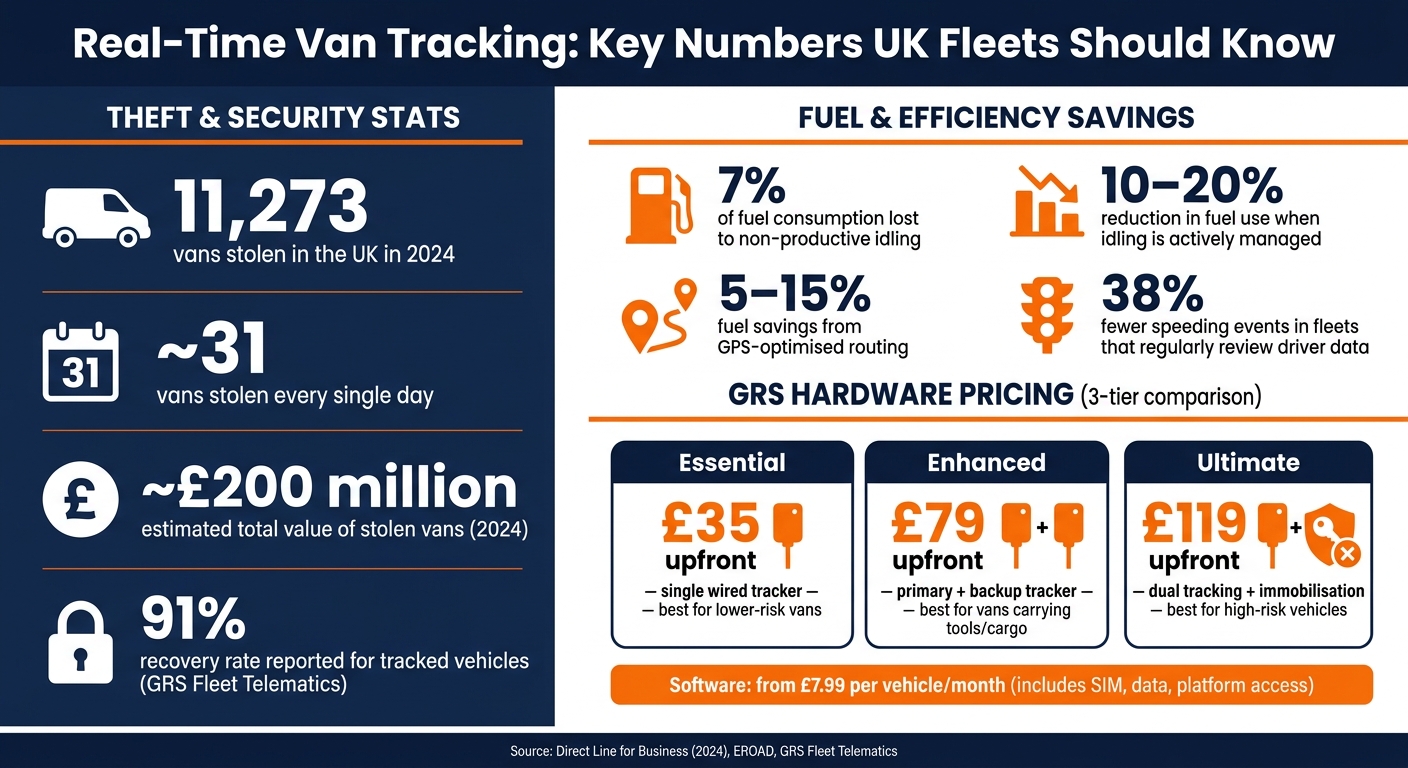
UK Van Fleet Tracking: Key Stats & Cost Savings at a Glance
Track Any Vehicle in Real Time with IVMS – Game-Changer for Fleets!
sbb-itb-499a7f0
How Live Van Tracking Works
A tracker fitted to the van uses satellite signals to work out the vehicle’s location, speed and direction. It then sends that data over the mobile network to a secure online platform. Fleet teams can view the live feed in a web dashboard or mobile app. That’s what lets dispatchers watch vehicle movement, reroute vans and react fast when plans change.
Tracker Hardware, GPS Updates and Mobile Data Transfer
Most fleet-grade trackers are hard-wired into the van, often through the ignition feed or fuse box, so the device switches on by itself whenever the van is being used. The unit connects to signals from multiple satellites to calculate the van’s location, speed and heading. It also logs journey events such as ignition on and off, along with idling periods.
That information is sent as small, encrypted data packets to the provider’s cloud servers. Each packet includes a timestamp, GPS coordinates, speed, heading and ignition state. Many units also include a small backup battery, so they can keep reporting even if the main power supply is cut.
Live Map Views, Vehicle Status and Trip History
On the platform, fleet managers see each van as an icon on a live map, with colours showing whether the vehicle is moving, idling with the engine running, or stopped with the ignition off. Click into a van and you can usually see its current speed, road name and postcode area, plus a route trail showing where it has travelled during the shift.
Trip history tools let managers pick a date and time range and replay all journeys for a chosen van. That makes it easy to check a delivery, deal with a customer query or review driver behaviour.
| Platform View | What It Shows |
|---|---|
| Live Map | Current position, speed and direction for every van |
| Vehicle Status | Moving, idling or stopped, updated in near real time |
| Route Trail | Breadcrumb path showing the route taken during a shift |
| Stop Records | Location, arrival time and dwell time at each stop |
| Journey Replay | Full visual replay of past trips for auditing or service checks |
Dual Tracking and Signal Resilience for Higher Security
Signal jamming is a known theft tactic, and it can block the main GPS or mobile signal.
GRS Fleet Telematics uses a primary hard-wired unit and a hidden, battery-powered secondary tracker. If the primary unit is found or tampered with, the secondary device keeps reporting the van’s location on its own. That means location reporting can stay active even if the main unit is damaged, removed or blocked. For fleets that need constant visibility during the working day, that extra layer can make all the difference.
How UK Fleet Teams Use Tracking Day to Day
Once live tracking is switched on, fleet teams use it all day to assign jobs and keep van movement under control. The live map becomes the main screen for dispatch, helping teams see where each vehicle is, who’s free, and what needs to change when the day doesn’t go to plan.
Driver Visibility and Route Control During the Working Day
Instead of ringing round to find out who’s available, dispatchers use nearest-vehicle tools to see which van can get to a new job first. And that decision is based on live traffic, not just mileage on paper. A van that looks closest isn’t always the one that arrives first.
If a customer cancels or a delay knocks a driver off schedule, controllers can reshuffle the day almost at once. They can reassign the time slot, change the order of the remaining drops, and send an updated route to the driver. Out-of-hours alerts also show when a van moves outside agreed working times, which helps teams spot unauthorised use or possible theft.
The same live feed can also show poor driving habits and routes that waste time.
Using Tracking Data to Improve Mileage, Fuel Use and Productivity
The main things to watch are route time, idling, speeding, and detours. Research by EROAD found that around 7% of fuel consumption is burned through non-productive idling. That’s fuel spent getting nowhere. Fleets that act on idling reports often see 10–20% cuts in fuel use.
Speeding data tells its own story. Organisations that regularly reviewed driver data recorded 38% fewer speeding events than those that did not. On top of that, GPS-supported route optimisation can cut fuel consumption by 5–15% overall.
Tracking Features and Their Operational Outcomes
These features help turn live data into faster decisions and lower operating costs.
| Feature | Daily Use | Operational Outcome |
|---|---|---|
| Live map view | Monitor all van positions and status in real time | Faster job allocation, shorter response times, clearer workload overview |
| Trip history | Check job completion, stops and delays | Resolve customer queries, verify proof of visit, spot inefficient patterns |
| Route reports | Compare planned versus actual mileage and journey time | Lower mileage, better route design, more accurate scheduling |
| Driver status | See whether each driver is available, active, on break or returning | Fair job distribution, reduced overloading, smoother shift planning |
| Idling and speed alerts | Get notified of prolonged idling or speed threshold breaches | Reduced fuel use, safer driving behaviour, lower wear and tear |
| Out-of-hours alerts | Detect van movement outside agreed working times | Prevent unauthorised use and strengthen security |
Security Alerts, Theft Prevention and Stolen Van Recovery
The same live data that helps with dispatch can also act as a security tool when a van moves and no one expected it to.
Van theft in the UK remains a serious problem. According to Direct Line for Business, 11,273 vans were stolen in 2024 - about 31 a day - with an estimated total value of around £200 million. In that dataset, the Ford Transit made up the bulk of thefts.
Geofencing, Tamper Alerts and Unauthorised Movement Warnings
Geofencing sets virtual boundaries around depots, work sites or approved operating areas. If a van crosses one of those boundaries at the wrong time, the system can send an instant alert by SMS, email or platform notification. That gives the fleet team a fast way to spot movement outside approved locations or shift hours.
Tamper alerts add another check. If someone disconnects the tracker’s power, removes the battery or interferes with the hardware, the system flags it straight away. If you see a lost signal, no movement and a tamper alert at the same time, treat it as a security incident rather than a routine signal drop.
How Live Tracking Supports Stolen Van Recovery
Once an alert comes in, speed matters. So do clear responsibilities.
The fleet team first checks whether the movement is allowed and, where suitable, contacts the driver. If the van is confirmed stolen, the next step is to report it to the police with the key details: registration number, make, model, colour, tracker ID, last confirmed location, timestamp and direction of travel.
Live tracking is most useful in the first few minutes after a theft is reported. That’s when the van may still be moving, and police can use real-time location updates to coordinate a response. GRS Fleet Telematics reports a 91% recovery rate for stolen vehicles, though that should be read as a provider-reported figure, not a market-wide benchmark. It also supports a recovery process in which the team verifies the incident, liaises with the police and coordinates with recovery agents using live data.
On suitable packages, remote immobilisation is also available. This lets the fleet team disable the vehicle once it is safe and lawful to do so. Use it only after theft has been confirmed and only if it will not create a road safety risk.
Security Features Matched to Real Fleet Risks
| Security Feature | Risk Addressed | Practical Effect |
|---|---|---|
| Real-time tracking | Losing sight of a van during unauthorised movement | Live GPS updates let the fleet team share accurate location data with police straight away |
| Geofencing | Boundary breaches outside approved locations or shift windows | Sends instant alerts if a van leaves an approved area unexpectedly |
| Tamper alerts | Tracker interference or deliberate disabling | Tells the fleet team if the device loses power or is physically interfered with |
| Remote immobilisation | Continued movement after theft is confirmed | Disables the vehicle remotely once it is safe and lawful to do so |
| Dual tracking | Signal jamming or primary tracker discovery | A hidden backup unit keeps reporting if the main tracker is removed or blocked |
Choosing a Real-Time Tracking Setup for a UK Fleet
What to Assess Before Rolling Out Tracking Across Your Fleet
Once you know how live tracking helps with day-to-day oversight and security, the next step is choosing van tracking solutions that fit the risk level of each van.
Start with risk, not the device. Count your vans, note their age and value, and flag whether they are owned, leased or used by subcontractors. Then look at where they stay overnight and which ones carry high-value tools or goods. Vans working in theft hotspots or parked overnight at home addresses will often need more protection than vehicles kept in a secure depot.
Next, ask four simple questions:
- How much live visibility do you need each day?
- Which vans need immobilisation?
- Which reports matter most?
- How will the trackers be fitted?
Hard-wired devices are usually the better fit for long-term fleet assets. They support features such as immobilisation and are harder for thieves to find and remove. Plug-in units make more sense for leased vans, where the hardware may need to be moved from one vehicle to another. Professional fitting usually costs £50–£150 per vehicle, depending on how complex the install is.
That risk profile should guide the setup. Some vans may only need a basic tracker. Others may call for backup tracking or immobilisation.
GRS Fleet Telematics Options and Pricing
GRS Fleet Telematics splits its hardware into three tiers, which makes it easier to match protection to the risk level of each van.
| Hardware Tier | Upfront Cost | What It Includes | Best For |
|---|---|---|---|
| Essential | £35 | Single wired tracker | Lower-risk vans, budget-conscious fleets |
| Enhanced | £79 | Primary tracker plus backup tracker | Vans with tools or cargo, higher theft exposure |
| Ultimate | £119 | Dual tracking plus immobilisation | High-risk or mission-critical vehicles |
Software starts from £7.99 per vehicle per month. That includes SIM and data costs, platform access, and an account manager.
Key Takeaways for Better Live Van Control
The best setup is the one your team will use every day.
Go for the lightest setup that still covers your risk, reporting and security needs. Higher hardware tiers add backup tracking and immobilisation for vans where theft would hurt the most. In practice, the right choice comes down to fleet size, risk exposure and how your team actually works day to day, not just picking the option with the longest feature list.
FAQs
How accurate is live van tracking?
Live van tracking is very precise, with location updates usually coming through every 5 to 60 seconds. It uses GPS to show a van’s position, speed and direction on digital maps.
That live feed also helps fleets estimate arrival times and keep an eye on driving behaviour, such as harsh braking or speeding. For fleet managers, that means reliable, up-to-date visibility at any given moment.
Which vans need dual tracking or immobilisation?
Dual tracking and immobilisation are a smart fit for fleets that want to maximise security - especially those with high-value vans, onboard equipment, or loads that would be costly to lose.
This setup makes even more sense for fleets working in high-risk areas, where theft is a bigger concern. If you want the top level of protection, dual tracking with remote immobilisation can help put thieves off and stop the engine from starting.
How quickly can tracking help after theft?
Tracking can help with an immediate response when theft happens, which can improve the odds of getting the vehicle back. Instant alerts for unauthorised movement or geofence breaches give fleet managers a chance to step in fast, instead of finding out hours later.
GRS Fleet Telematics works with law enforcement through its recovery service. It reports a 91% recovery rate, and most stolen vans are recovered within 24 hours.