
How Much Does Van Tracking Cost?
Estimate van-tracking upfront, installation and monthly fees in the UK; compare hardware, SIM, support and three-year total costs.

If I were budgeting for van tracking in the UK today, I’d start with £6–£30 per van per month and £0–£250 upfront per van. That covers the two big parts of the bill: the device and the monthly plan.
Here’s the short version:
- Basic trackers often cost £25–£80 upfront and £6–£12 a month
- Hardwired trackers often cost £80–£200 upfront plus £50–£120 fitting
- High-security trackers can cost £200–£400+ upfront and £20–£35+ a month
- Some suppliers include SIM/data, portal access, support, or fitting
- Extra charges can include setup fees, exit fees, call-out fees, dash cams, and replacement units
- A cheap monthly deal can cost more over 24–60 months once add-ons are included
A simple way I’d look at it is this: you’re paying for hardware, installation, subscription, and sometimes security support if a van is stolen. For many industries, the best check is not the month-one price. It’s the full three-year cost per van.
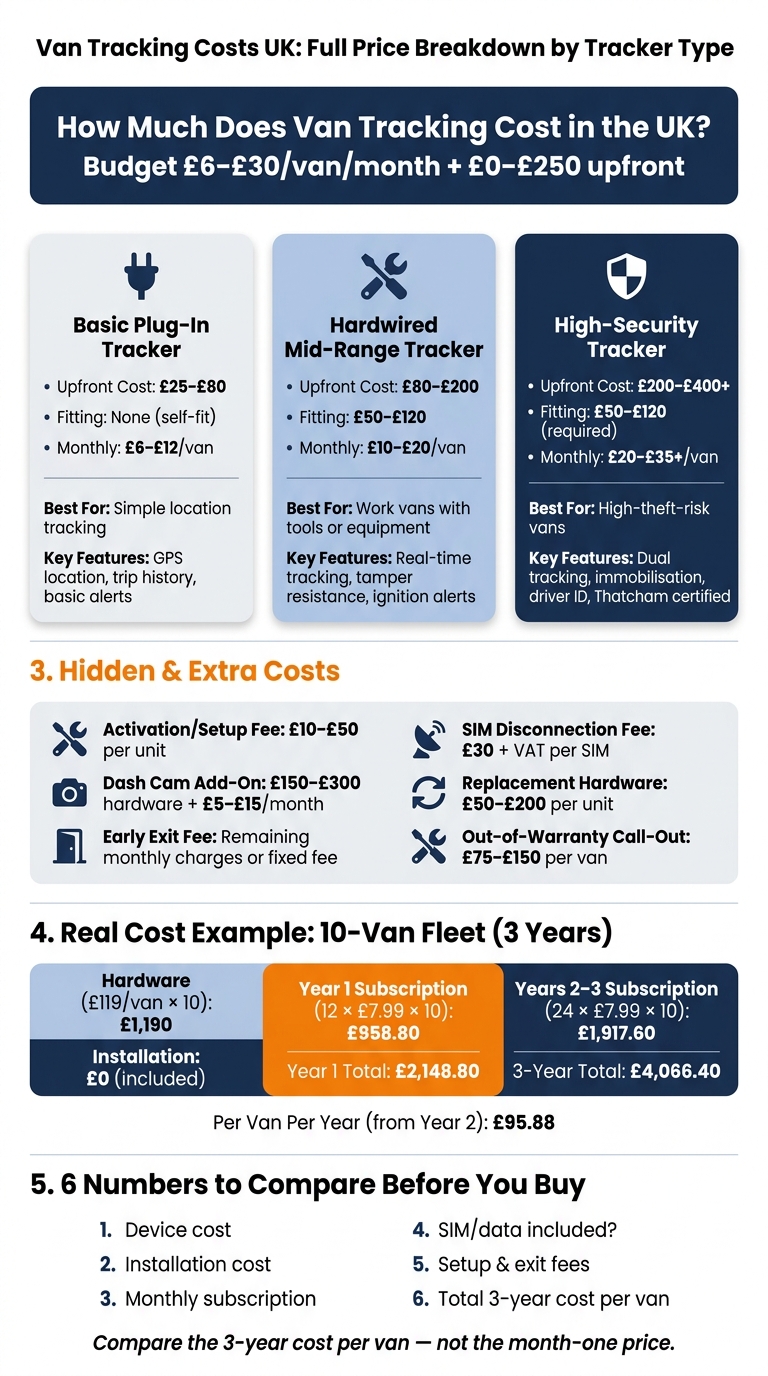
Van Tracking Costs UK: Full Price Breakdown by Tracker Type
Quick comparison
| Option | Upfront cost | Monthly cost | Best for |
|---|---|---|---|
| Basic plug-in | £25–£80 | £6–£12 | Simple location tracking |
| Hardwired tracker | £80–£200 + fitting | £10–£20 | Work vans needing hidden tracking |
| High-security tracker | £200–£400+ + fitting | £20–£35+ | Vans at higher theft risk |
One worked example in the article puts a 10-van fleet at £2,148.80 in year one and £4,066.40 over three years, using £119 hardware and £7.99 per van per month with fitting included.
If I were comparing quotes, I’d check six numbers first: device cost, fitting, monthly fee, SIM/data, extra charges, and total contract cost.
sbb-itb-499a7f0
How much does a van tracking device cost?
The hardware is usually the biggest one-off cost. And the jump in price can be steep once you move from a simple plug-in unit to a hidden or security-focused system. After that, the next thing to check is fitting, because installation can shift the total upfront spend more than people expect.
Price bands for basic, hardwired, and high-security trackers
Basic plug-in trackers - usually OBD-II or battery-powered self-fit units - tend to cost £25–£80 per device upfront. They cover the basics: live location, journey history and basic alerts. The trade-off is simple. They’re easier to remove and don’t offer much tamper resistance.
Hardwired mid-range trackers usually fall into the £80–£200 hardware band. These are fitted behind the dashboard or in another hidden spot and wired straight into the vehicle’s power supply. Because they’re out of sight and harder to switch off, they’re often a better match for working vans carrying tools or equipment.
High-security systems - including dual-tracker technology, remote immobilisation, driver ID or Thatcham S5/S7 certification - can cost £200 to £400+ per vehicle for hardware alone. These systems are aimed at higher-risk fleets or vans where insurers ask for a certain type of install. Dual tracking, immobilisation, certification, driver ID and CAN-bus integration all push the price up.
GRS Fleet Telematics lists three hardware tiers: Essential (£35), Enhanced (£79) and Ultimate (£119), with the higher tiers adding dual-tracker security and immobilisation.
For lower-risk vans, the basic band may do the job. If a van carries tools or operates in theft-prone areas, paying more upfront can make a lot more sense.
Installation costs and when fitting is included
Fitting can change the true upfront cost more than the tracker itself. Self-fit devices don’t come with labour charges, so you or one of your drivers can handle setup. Hardwired and high-security trackers, though, usually need a professional installer.
In the UK, professional fitting usually costs £50–£120 per vehicle, depending on how involved the job is and whether the installer comes to your site or you bring the van to a workshop.
Some firms roll fitting into the hardware price or include it in a fleet package. GRS Fleet Telematics offers free installation when bundled with GRS Fleet Graphics. That’s worth checking at the start, because a £79 device with free fitting is a very different deal from a £79 device plus a £100 installation charge.
Device types, upfront costs, and fitting requirements: comparison table
| Tracker type | Typical upfront cost | Key features | Fitting required? |
|---|---|---|---|
| Basic plug-in (OBD/battery) | £25–£80 | GPS location, trip history, basic alerts | No - self-fit |
| Hardwired mid-range | £80–£200 | Real-time tracking, tamper resistance, ignition alerts | Usually yes |
| High-security / dual-tracker | £200–£400+ | Dual tracking, immobilisation, driver ID, insurance-approved options | Yes - required |
Once the device is fitted, monthly subscription costs become the main ongoing spend.
How much does a monthly van tracking subscription cost?
Once you've paid for the hardware, the monthly subscription is usually the main cost you'll keep paying for.
What a monthly plan usually includes
Most UK van tracking subscriptions include portal access through a web dashboard and, in many cases, a mobile app too. You’ll usually also get live GPS tracking, alerts for things like speeding, geofencing, harsh driving and tamper detection, plus journey reports and customer support.
In many cases, the SIM card and mobile data are bundled into the monthly fee as well. That matters more than it might seem at first glance. It means you’re not stuck managing separate data contracts for every van in the fleet.
The next thing to look at is what sits outside that monthly price.
Monthly price ranges and a UK pricing example
Monthly plans are usually split by feature level: basic, standard and advanced.
Basic plans tend to cost around £6 to £12 per vehicle per month. These usually cover live location, simple journey history and standard alerts. Standard fleet plans often sit in the £10–£20 range, with added reporting, driver behaviour monitoring and stronger support. Advanced or security-focused plans start at about £20–£35+ per vehicle per month and often include more frequent updates, dual-tracker options, immobilisation and theft recovery.
Bundled plans are often easier to budget for because SIM/data and support stay under one monthly price. At this level, you’re not only paying for live tracking. You’re also paying for the support and security features wrapped into the plan.
A useful UK example is GRS Fleet Telematics at £7.99 per vehicle per month. That price includes SIM/data, portal access and customer support. It also supports dual-tracker technology and has a 91% recovery rate for stolen vehicles, which makes it a strong example of a bundled, security-focused monthly plan at this price point.
Monthly plan tiers and included features: comparison table
| Plan tier | Indicative monthly price | Key features | SIM/data & support |
|---|---|---|---|
| Basic | £6–£12 | Live location, journey history, standard alerts | SIM/data included; support included |
| Standard | £10–£20 | Real-time tracking, driver behaviour, utilisation reports, geofencing | SIM/data included; support included |
| Advanced / security | £20–£35+ | Higher update frequency, dual tracking, immobilisation and theft recovery | SIM/data included; support included |
Longer 24- or 36-month terms can bring the monthly rate down, but they also lock you in for longer. It’s also worth checking for setup fees, replacement costs and upgrade charges before you sign up.
What extra fees and ongoing costs should buyers expect?
Van tracking often costs more than the headline monthly fee. Activation, fitting, early exit charges and add-ons can all push up the first-year bill.
Once you’ve got the monthly price, the next step is simple: look at everything around it.
Setup fees, contract terms, and upgrade charges
Activation and setup fees usually cover tracker activation and initial configuration. Larger fleets may also get hit with onboarding fees. In the UK, these charges tend to sit in the £10–£50 range per unit for standard telematics services.
Contract length also shapes what happens if you want out early.
UK van tracking agreements often run for 24–60 months, with 36 months a common middle ground for fleet buyers. Many contracts also include auto-renewal clauses. That means the service keeps rolling unless you give notice, usually 30–90 days before the end date. Leave early, and you may have to pay the remaining monthly charges for the minimum term, or a fixed exit fee.
Upgrades can bump the cost up fast. A dash cam usually adds £150–£300 per van for hardware, plus £5–£15 per month for video storage. A remote immobiliser or secondary tracker can add another £50–£200 per vehicle upfront.
Then there are the admin fees. Moving a device to another van, reactivating a dormant unit, or cancelling an engineer appointment with less than 48 hours’ notice can all come with a charge. Some installation contracts apply a £75 + VAT late-cancellation fee and £30 + VAT per SIM to disconnect at contract end.
Maintenance, replacements, and warranty cover
Hardwired trackers are usually dependable, but problems still happen. Battery issues, wiring faults or changes made to the vehicle can all lead to engineer visits. Out-of-warranty call-out fees often land between £75–£150 per van, though some higher-tier support packages include a small number of free visits each year.
Warranty cover can be a bit of a minefield. Accidental damage, tampering, or faults caused by other work on the vehicle are often excluded. Late payment can void the warranty straight away, and installation or maintenance by an unauthorised person can wipe it out altogether.
If the hardware needs replacing outside warranty, a rough budget is £50–£200 for the device itself. If it has to be fitted again, check whether that labour is included or charged separately. Providers with strong recovery results may also help cut tracker loss over time by recovering stolen vehicles before the unit is gone for good.
The table below splits one-off charges from ongoing costs.
| Potential extra cost | Typical UK range | When it applies |
|---|---|---|
| Activation / setup fee | £10–£50 per unit | Start of contract |
| Late cancellation fee | £75 + VAT | Cancelled installation or service call with less than 48 hours' notice |
| SIM disconnection fee | £30 + VAT per SIM | Contract end |
| Engineer call-out (out of warranty) | £75–£150 per van | Wiring faults, damage, modifications |
| Replacement hardware | £50–£200 | Tracker fails outside warranty |
| Dash cam add-on | £150–£300 hardware + £5–£15/month | Optional security upgrade |
These extras shape the total cost of ownership, which matters more than the sticker monthly rate.
What is the total cost of owning a van tracking system?
Once you've covered hardware, fitting and the monthly fee, the next thing to look at is the full contract cost. The monthly price is only one part of the bill. Hardware and fitting can shift the total quite a bit, while recovery support can help cut theft-related losses.
Worked cost example for a 10-van fleet
A simple fleet example makes it much easier to compare the full spend. Here’s a plain-English illustration using GRS Fleet Telematics' Ultimate package: £119 hardware per van and £7.99 per month, with SIM/data and platform access included. Installation is included in this example.
| Cost component | Per van | 10-van fleet |
|---|---|---|
| Hardware (Ultimate) | £119 | £1,190 |
| Installation | £0 | £0 |
| Subscription - year one (12 × £7.99) | £95.88 | £958.80 |
| Year one total | £214.88 | £2,148.80 |
| Subscription - years two and three (24 × £7.99) | £191.76 | £1,917.60 |
| Three-year total | £406.64 | £4,066.40 |
Hardware is a one-off cost. From year two onwards, the repeat cost is just the subscription, which comes to £95.88 per van per year.
How security and recovery support affect overall value
Cost isn’t just about what you pay. Theft risk changes the maths.
One total-loss theft can wipe out many months of subscription fees in a single hit. GRS Fleet Telematics deals with this through dual-tracker technology and immobilisation capability on its Ultimate hardware. Its reported 91% recovery rate for stolen vehicles means most theft cases do not end in total loss. That can cut theft-related losses without adding separate recovery fees.
Key numbers to compare before you buy
When you're looking at quotes, it helps to compare them on a like-for-like basis. Use these six figures for each option:
- upfront device cost
- installation cost
- monthly subscription
- whether SIM/data are included
- extras such as setup fees and early exit fees
- total spend over the full contract term
A low headline price can lose its appeal once installation, SIM charges and maintenance are added. Recovery performance and maintenance costs can also shift the overall value across a full contract term. Compare the three-year cost per van, not the month-one price.
Compare hardware, fitting, subscription, SIM/data, setup fees and exit terms on a three-year basis.
FAQs
What is included in the monthly fee?
At GRS Fleet Telematics, the £7.99 per vehicle monthly fee is all-inclusive, which makes fleet budgeting much simpler.
It includes SIM and data connectivity, access to the tracking platform, software updates, and dedicated account management. So you’re not dealing with hidden fees or surprise costs later on.
Are there any hidden costs to watch for?
Yes - some van tracking providers charge extra for SIM data, platform access, software updates, account management, or professional installation. Those add-ons can push costs up by £50 to £150, depending on the setup.
GRS Fleet Telematics keeps pricing simple at £7.99 per month per vehicle. That includes data, platform access, software updates, and account management, with no hidden charges. Some qualifying orders may also come with free professional installation.
How do I compare the true cost over three years?
Add the upfront hardware cost to 36 months of subscription fees. With GRS Fleet Telematics, that means a one-off £35, £79 or £99, plus £7.99 per month.
For example, the Essential package comes to £322.64 over three years (£35 hardware + £287.64 in subscription fees). It also helps to stack that up against possible savings, like 10% to 25% lower insurance premiums and fuel efficiency gains of up to 20%.