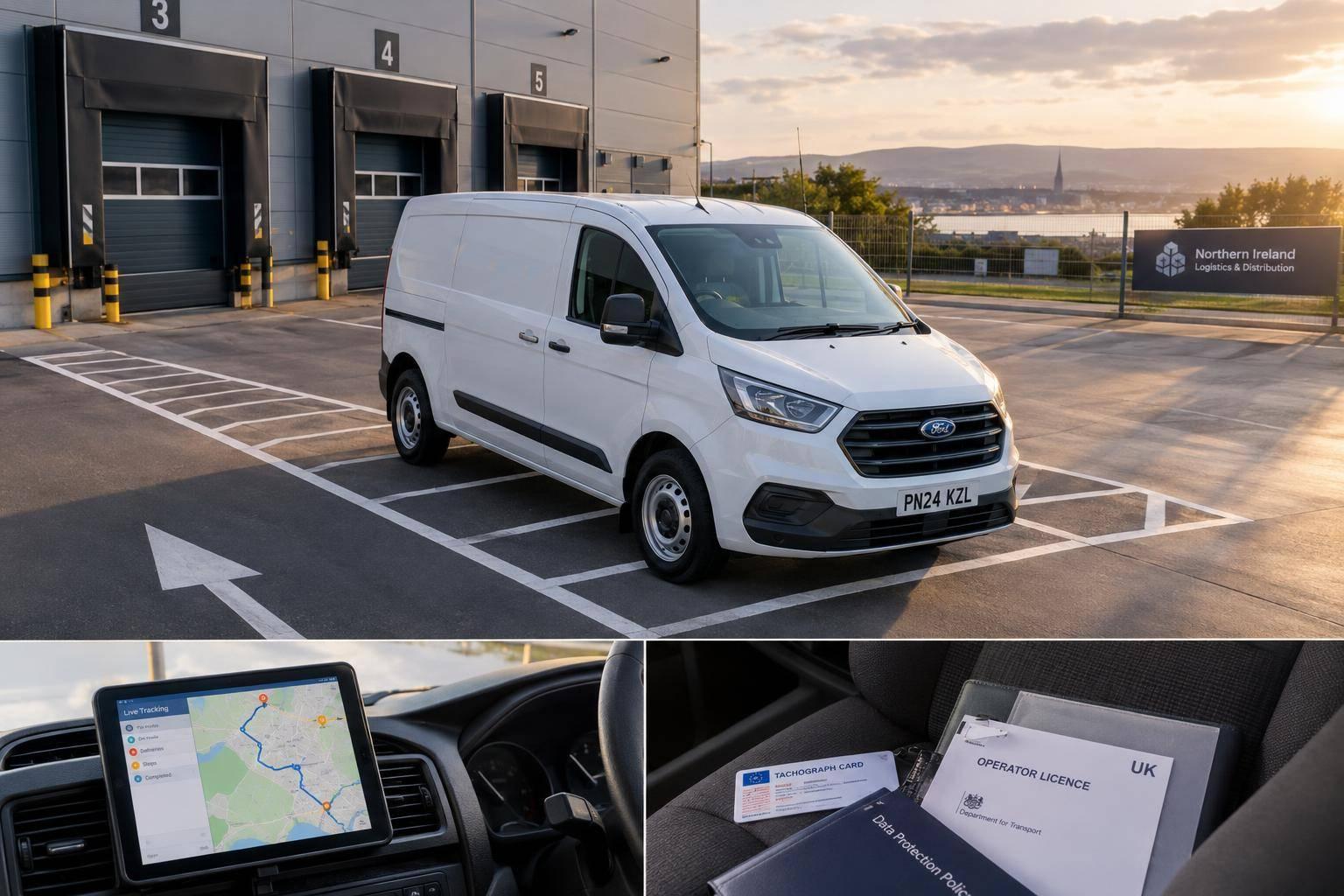
Fleet Tracking Regulations Explained: A Guide for Field Service Companies in Northern Ireland
Guide for NI field service firms on using GPS, telematics and tachographs while meeting UK GDPR, DVA and drivers'‑hours rules.
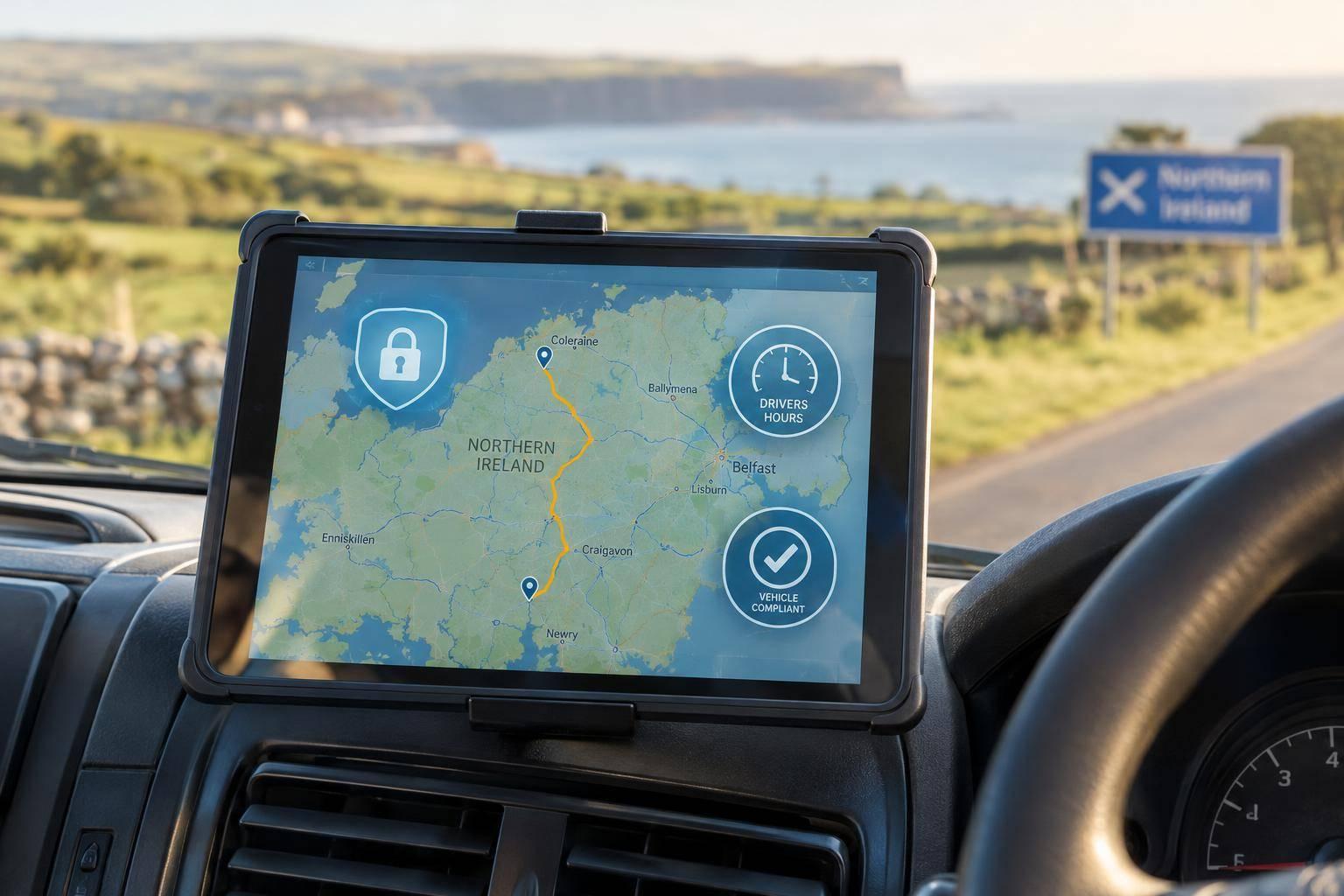
Jurisdiction Scope
Northern Ireland, including DVA-enforced drivers’-hours, tachograph, and transport-record requirements.
Overview of Fleet Tracking Laws
Applicable Business Type
Field service companies (mobile engineers, maintenance and repair teams, and other businesses operating work vehicles).
Country or Region
United Kingdom — Northern Ireland.
A Northern Ireland-focused compliance guide for field service companies using GPS, telematics, and potentially tachographs. It explains how to use vehicle tracking for dispatch, route management, safety, site-visit verification, vehicle security, and operational oversight while complying with UK GDPR, the Data Protection Act 2018, and applicable drivers’-hours and tachograph requirements.
Legal Requirements Summary
Field service companies in Northern Ireland may use fleet tracking, but location data linked to an identifiable driver is personal data. They should establish a lawful basis, provide transparent notices, minimise and secure monitoring, complete a DPIA where required, restrict tracking during private use, and delete ordinary GPS data when no longer necessary. There is no blanket statutory retention period for ordinary GPS data. Vehicles subject to tachograph and drivers’-hours rules have separate obligations for approved recording equipment, periodic downloads and analysis, inspections, and retention of relevant records for at least 12 months; the DVA is the relevant Northern Ireland enforcement authority.
Main Regulatory Topics
- Data Privacy and UK GDPR
- Lawful Basis and Transparency
- Driver Consent and Employee Monitoring
- Data Minimisation and Security
- DPIAs and Intrusive Monitoring
- Retention and Deletion
- Tachographs and Drivers’ Hours
- Record-Keeping
- DVA Inspection and Enforcement
- Private-Use and Off-Duty Tracking
Key Compliance Obligations
- Document a lawful UK GDPR basis for collecting location, telematics, and driving-behaviour data.
- Tell drivers, passengers, and other affected people what is monitored, why, who controls the data, how it is used, and their rights.
- Limit monitoring to defined, necessary, and proportionate business purposes; avoid unjustified continuous or private-use tracking.
- Complete and document a data protection impact assessment where monitoring is likely to be high risk, especially for intrusive analytics, cameras, or behavioural scoring.
- Apply data minimisation, access controls, security measures, processor controls, and a documented retention/deletion schedule.
- Handle data-subject access and other UK GDPR rights requests and lawful disclosures to insurers, police, customers, or contractors.
- For vehicles within tachograph/drivers’-hours scope, use compliant recording equipment, download and analyse digital tachograph data at the required intervals, and retain required records for at least 12 months.
- Maintain relevant operator-licensing and transport records and make them available for DVA inspection or enforcement where applicable.
Driver Consent Requirement
Consent Rule: Prior driver consent is not universally required. The employer must identify and document an appropriate UK GDPR lawful basis, provide clear advance privacy information, and ensure monitoring is necessary and proportionate. Employee consent is usually inappropriate because of the employment power imbalance; if private or off-duty use is permitted, tracking should normally be disabled or separately justified, with freely given consent considered only where workers genuinely have a choice.
Data Retention Period
Minimum Retention: No fixed minimum for ordinary GPS/telematics data: retain only as long as necessary under a documented, purpose-based schedule. Where tachograph/drivers’-hours rules apply, the relevant records must generally be retained for at least 12 months.
Enforcement Authorities
- Information Commissioner’s Office (ICO) — UK data-protection enforcement and guidance
- Driver & Vehicle Agency (DVA), Northern Ireland — roadside, vehicle, drivers’ hours and tachograph enforcement
- Police Service of Northern Ireland, where applicable to drivers’ hours and road-traffic enforcement
- Department for Infrastructure Northern Ireland / Transportation Regulation Unit (TRU) — operator-licensing regulation
Penalties for Non-Compliance
Non-compliance can lead to ICO regulatory action for unlawful or excessive worker monitoring, including enforcement notices and monetary penalties under UK data-protection law; the exact outcome depends on the breach and circumstances. Transport breaches can result in DVA or police action, roadside prohibitions or fixed penalties, and prosecution or operator-licensing consequences for serious or repeated failures. Missing, inaccurate or unavailable tachograph and drivers’ hours records can expose the operator and driver to enforcement. This article should not promise a single standard fine: penalties vary by offence, vehicle, operator and enforcement route.
Implementation Best Practices
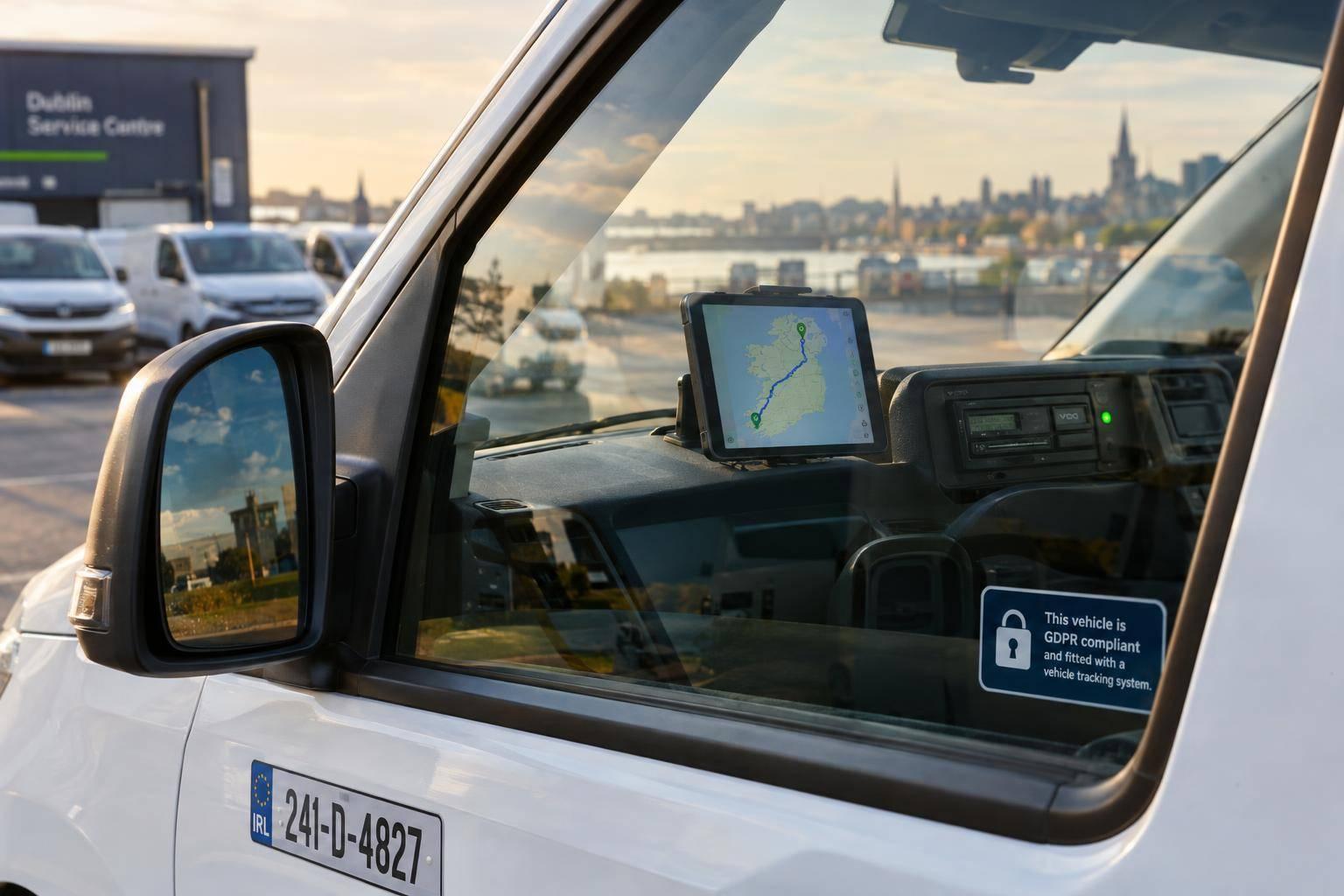
Adopt a written fleet-telematics policy covering purpose, lawful basis, data fields, retention, access, disclosures, private use and complaints. Carry out a DPIA before deployment where monitoring is likely to be high risk, consult workers where appropriate, and configure the system for data minimisation (for example, work-hours tracking or a driver-controlled privacy mode). Display clear notices in vehicles and issue a worker-facing privacy notice. Contractually define responsibilities with the tracking provider and insurer, test deletion and access controls, and audit the configuration and retained data periodically. Keep tachograph downloads, analysis and remedial records on the required schedule, and maintain evidence ready for DVA inspection.
Compliance Checklist
- Define and document a specific, lawful purpose for tracking; do not use tracking as general staff surveillance.
- Identify the UK GDPR lawful basis and provide clear privacy information to drivers and passengers before monitoring begins.
- Tell workers what data is collected, why it is needed, how long it is retained, who can access it and whether suppliers or insurers process it.
- Use prominent vehicle signage where appropriate.
- Complete and document a Data Protection Impact Assessment (DPIA) for high-risk monitoring, including location, driving-behaviour, camera, audio or analytics-based monitoring.
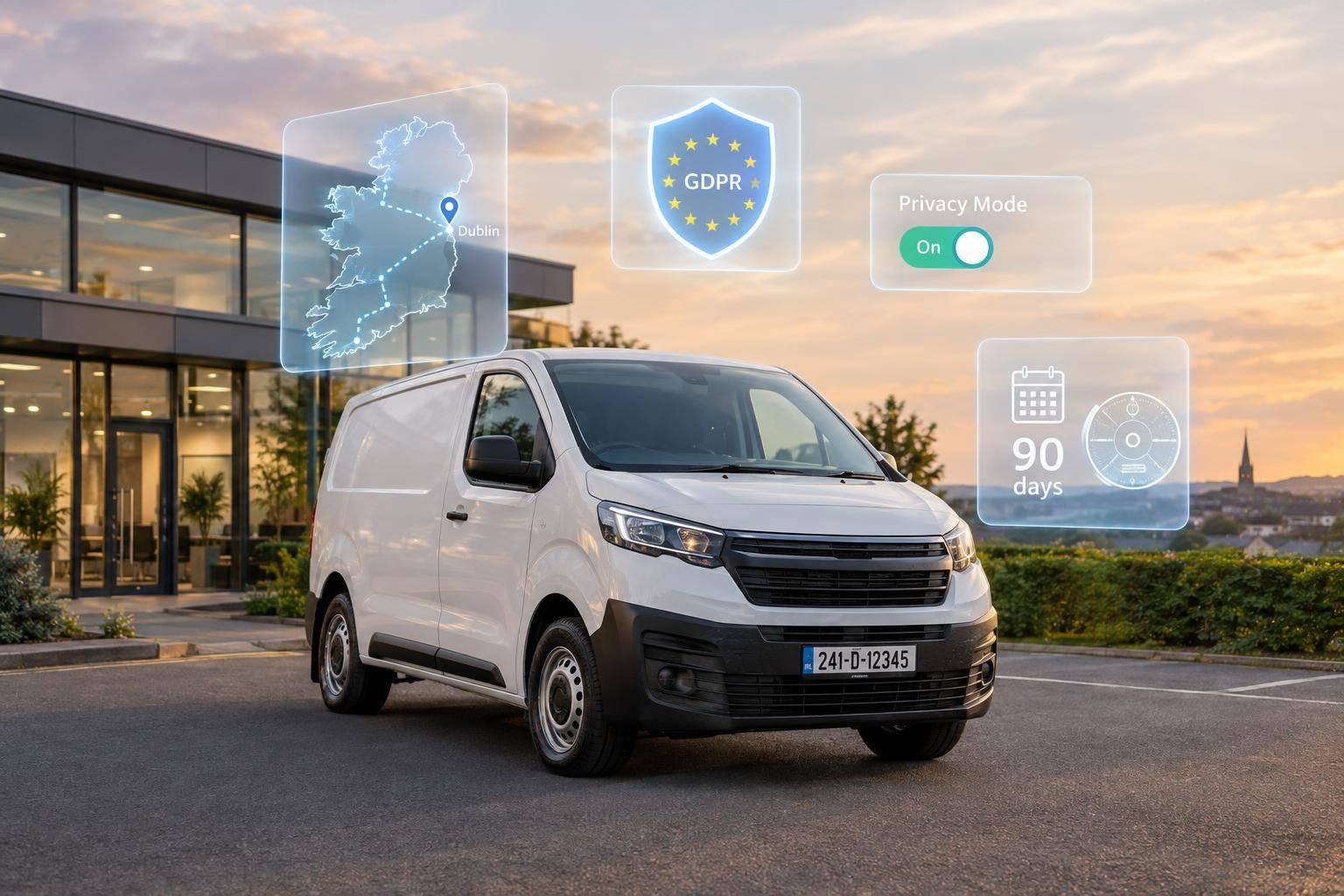
- Disable tracking or provide an effective privacy mode during authorised private use; monitoring private journeys will rarely be justifiable.
- Restrict access, retention and secondary use of location and telematics data; review supplier/controller-processor arrangements.
- Where applicable, install and use a compliant tachograph and download vehicle-unit data at least every 90 days and driver-card data every 28 days.
- Retain and analyse drivers’ hours and tachograph records so they can be produced during DVA or police checks.
- Check whether the vehicle and operation require goods-vehicle operator licensing and comply with Northern Ireland-specific requirements.
Industry-Specific Guidance
For Northern Ireland field service companies, tracking can support dispatch, route planning, customer arrival estimates, vehicle security and proof of attendance, but location data linked to an identifiable technician is personal data. The system should not become continuous behavioural surveillance. If technicians may take vehicles home or use them privately, switch off tracking or provide a reliable privacy mode outside working time and explain its operation. Passenger data and visitors’ data may also be captured, so notices and access controls should cover them. Ordinary vans used only for field visits may not be subject to tachograph rules; however, vehicles and journeys falling within applicable goods-vehicle drivers’ hours rules must use tachographs and maintain records. Cross-border work involving the Republic of Ireland requires a separate check of the applicable international tachograph regime and deadlines. Operator-licensing and enforcement arrangements are devolved in Northern Ireland, so businesses should use DfI/TRU and DVA guidance rather than assume England, Scotland or Wales procedures apply.
Recent Legal Updates
Northern Ireland’s current operational focus includes smart-tachograph enforcement and international journeys. Department for Infrastructure guidance states that a retrofit requirement is enforced from 1 July 2026 for Republic of Ireland-registered vehicles crossing Northern Ireland without loading or unloading when travelling between two points in the Republic of Ireland; vehicles transporting goods between the UK and Republic of Ireland may have an applicable implementation date under the published table. DVA has also invested in equipment capable of remotely reading smart-tachograph data, with evaluation and deployment intended to target serious misuse. As at 14 October 2026, field service operators should verify whether any cross-border goods journeys and vehicle categories bring them within these requirements. No general Northern Ireland mandate requiring all field-service vans to use real-time GPS tracking was identified in the authoritative sources reviewed.
Authoritative Resources
- Information Commissioner's Office (ICO): Surveillance in vehicles and worker-monitoring guidance
- nidirect / Driver & Vehicle Agency (DVA): Roadside compliance
- Department for Infrastructure Northern Ireland, Transportation Regulation Unit (TRU)
- GOV.UK: Drivers’ hours and tachographs
- UK legislation: Goods Vehicle (Licensing of Operators) Act (Northern Ireland) 2010 framework
Related Blog Posts
- Fleet Tracking Regulations Explained: A Guide for Delivery Firms in Northern Ireland
- Fleet Tracking Regulations Explained: A Guide for Van Rental Companies in Northern Ireland
- Fleet Tracking Regulations Explained: A Guide for Vehicle Leasing Companies in Northern Ireland
- Fleet Tracking Regulations Explained: A Guide for Construction Contractors in Northern Ireland