Fleet Tracking Regulations Explained: A Guide for Maintenance Providers in England
Practical England guide for maintenance providers on UK GDPR, telematics, record-keeping and DVSA roadworthiness rules.
Jurisdiction Scope
England, with UK-wide data-protection principles and Great Britain commercial-vehicle operator guidance relevant to the article
Overview of Fleet Tracking Laws
Applicable Business Type
Vehicle maintenance providers and maintenance contractors supporting commercial goods-vehicle operators
Country or Region
United Kingdom (England-specific article scope)
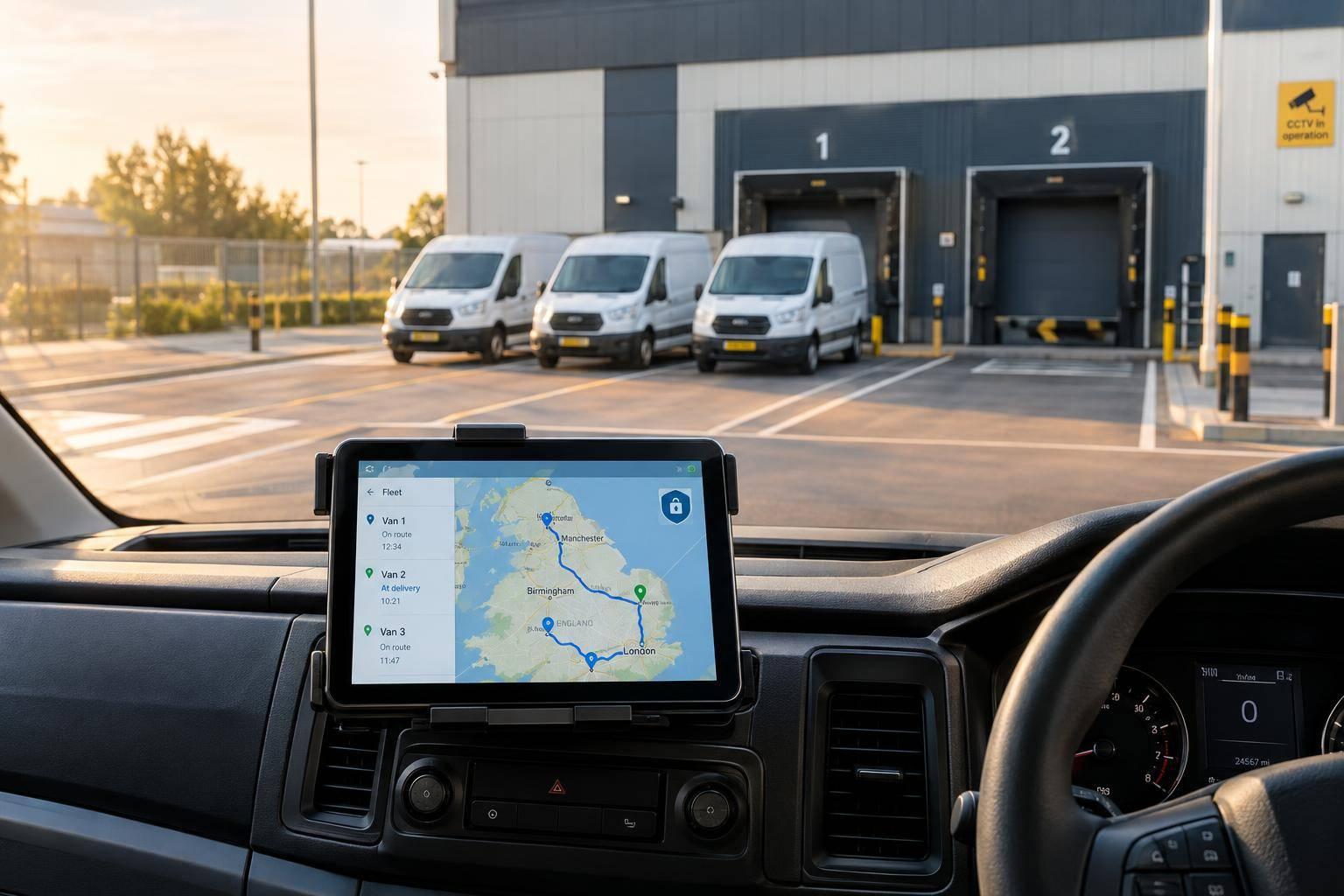
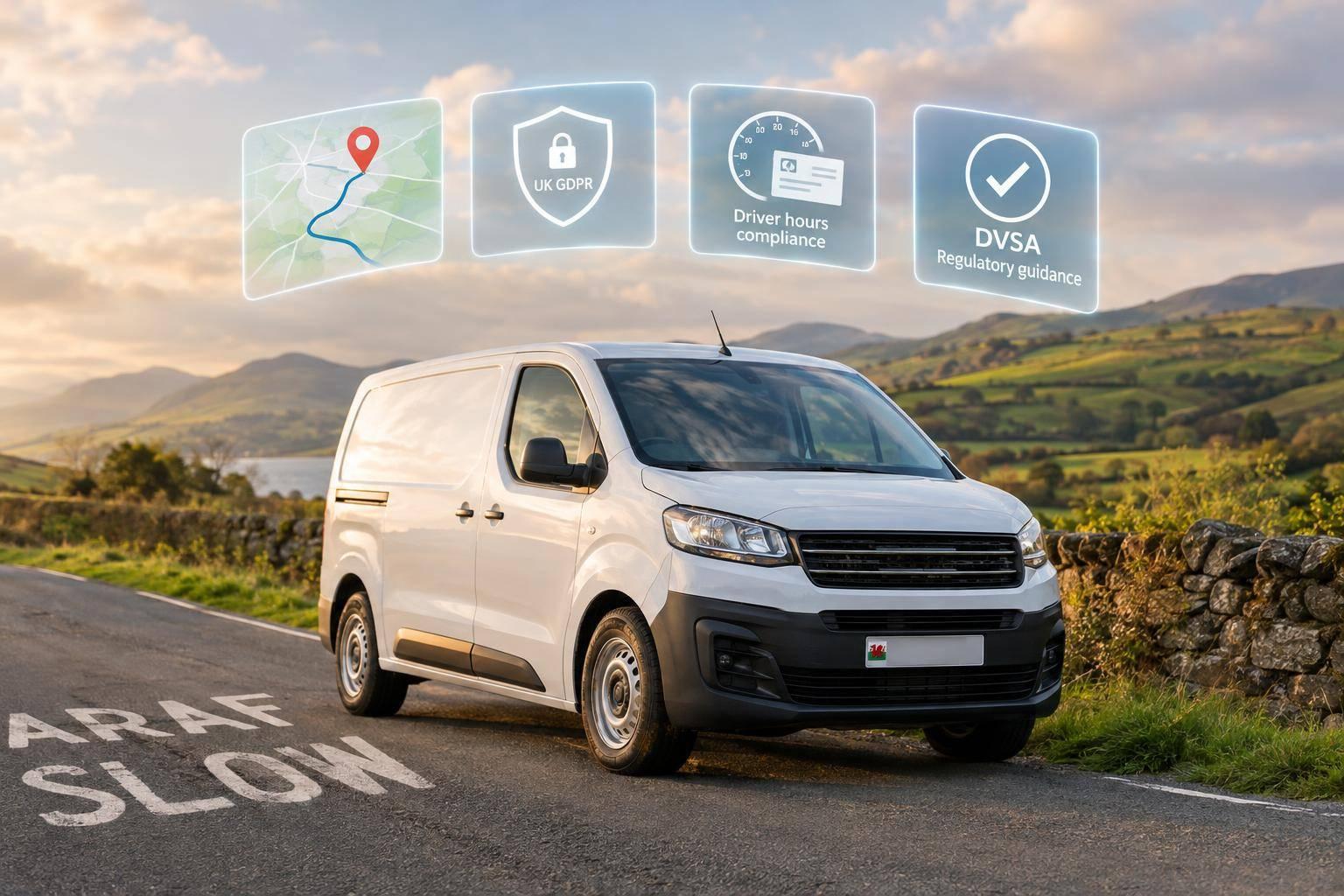
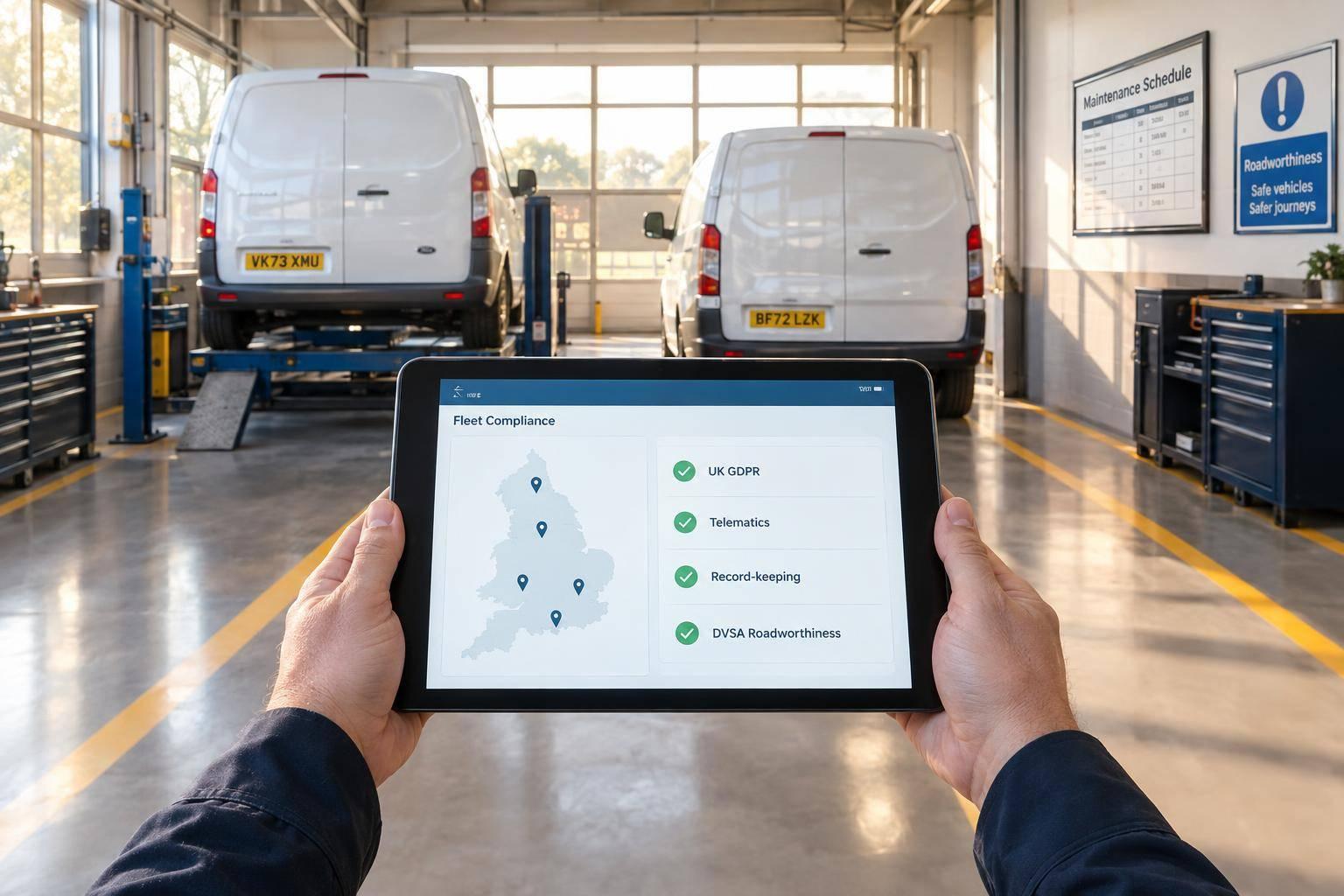
A practical England-focused guide to fleet tracking and connected maintenance compliance for maintenance providers. It combines UK GDPR requirements for vehicle and worker monitoring with commercial-vehicle roadworthiness, maintenance-record, audit-trail and contractor obligations.
Legal Requirements Summary
Maintenance providers must support operators’ continuing legal responsibility for vehicle roadworthiness by preserving accurate safety-inspection and repair histories for at least 15 months, using auditable and accessible records, and documenting outsourced work through a written contract. Fleet tracking and telematics data relating to drivers or passengers is personal data: organisations need a lawful basis, clear privacy information, proportionate purposes, suitable security and a documented retention policy. Worker consent is not automatically required, but private-use monitoring is difficult to justify and high-risk or intrusive monitoring may require a DPIA.
Main Regulatory Topics
- UK GDPR and data privacy
- Worker and passenger transparency
- Lawful basis and driver consent
- DPIA and proportionality
- Private-use tracking controls
- Telematics and vehicle surveillance
- Maintenance and safety-inspection record-keeping
- Roadworthiness and operator responsibility
- Written maintenance-provider contracts
- Tamper-proof audit trails, backups and record access
- Regulatory inspection and enforcement
Key Compliance Obligations
- Keep commercial-vehicle safety-inspection, maintenance and repair records for at least 15 months.
- Maintain complete, accessible and preferably tamper-proof electronic records with a clear audit trail, backups and disaster-recovery arrangements.
- Ensure records identify the vehicle, inspection date, inspector, defects, repairs and responsible maintenance provider.
- Use a formal written contract when safety inspections or maintenance are outsourced, specifying covered vehicles, intervals and contractor work.
- Meet UK GDPR principles when tracking vehicles or processing driver/telematics data, including a lawful basis, transparency, necessity, proportionality and appropriate security.
- Inform workers and passengers that vehicle monitoring is taking place and provide privacy information, including controller/contact details where applicable.
- Carry out a DPIA before high-risk monitoring, such as driver-behaviour analytics, cameras, audio or other intrusive surveillance.
- Prevent or disable monitoring during authorised private use unless a compelling, documented justification exists; audio should normally be off by default.
- Ensure tracking and maintenance systems support production of records on request and do not undermine the operator’s continuing responsibility for vehicle roadworthiness.
Driver Consent Requirement
Consent Rule: Driver consent is not presented as a blanket prerequisite for business-vehicle tracking. The organisation must identify and document a lawful basis, inform workers and passengers about monitoring, and make monitoring necessary and proportionate. Where vehicles are available for private use, tracking should normally be disabled outside work or otherwise technically limited; relying on employee consent is subject to the UK GDPR requirement that consent be freely given, specific, informed, unambiguous and opt-in.
Data Retention Period
Minimum Retention: At least 15 months for vehicle safety-inspection, maintenance and repair records. No separate universal statutory minimum for ordinary GPS/telematics tracking data is established by these sources; employers should define and document a proportionate retention schedule.
Enforcement Authorities
- Driver and Vehicle Standards Agency (DVSA)
- Traffic Commissioners for Great Britain
- Information Commissioner’s Office (ICO)
Penalties for Non-Compliance
Non-compliance can expose the operator and, depending on the issue, staff or contractors to fines or prosecution; unsafe vehicles may receive delayed or immediate prohibitions and can be immobilised. DVSA may investigate maintenance systems and refer findings to the Traffic Commissioners. Operator-licence action can include restriction, suspension, revocation or a public inquiry. DVSA offence bands range from a verbal warning and fixed penalties of £50, £100, £200 or £300 to court prosecution. Separately, unlawful or excessive employee/vehicle monitoring can trigger ICO investigation and UK GDPR/Data Protection Act enforcement, including corrective orders and potential fines.
Implementation Best Practices
Use a documented telematics and maintenance-data governance policy that separates vehicle-safety purposes from employee-performance monitoring. Configure data minimisation, role-based access, retention and deletion rules; provide an off-duty/privacy mode for permitted private use; and link tracking events to the maintenance workflow without treating location data as a substitute for legally required inspections. Use an electronic maintenance system with immutable audit trails, backups, exportable reports and driver defect reporting. Keep service-level agreements requiring contractors to return complete inspection and repair records promptly, and audit the system and providers against the Guide to Maintaining Roadworthiness and DVSA expectations.
Compliance Checklist
- Identify the lawful basis and purpose for each tracking use; document a legitimate-interest assessment where applicable.
- Inform drivers and passengers clearly that vehicle monitoring is taking place, what data is collected, why it is used, retention periods, access arrangements and relevant rights.
- Complete and document a DPIA where monitoring is high risk, particularly where driver behaviour, cameras, audio or detailed location history is used.
- Provide a privacy/off-duty control where vehicles are permitted for private use; do not monitor private journeys unless a lawful, justified basis exists.
- Keep safety-inspection and repair records, including work performed by external maintenance providers, for at least 15 months.
- Ensure electronic records are complete, secure, tamper-proof, backed up, readily retrievable and have a clear audit trail showing what was checked and by whom.
- Maintain a forward maintenance planner, defect-reporting process, inspection schedule and documented process for returning inspection sheets and repair evidence from contractors.
- Define contractual responsibilities with fleet operators and maintenance customers: the operator remains responsible for vehicle roadworthiness and must be able to produce records during DVSA checks.
- Review external maintenance providers periodically and retain evidence of calibration, inspections, repairs, brake testing and corrective actions where relevant.
Industry-Specific Guidance
For a maintenance provider serving commercial fleets in England, fleet tracking is primarily a supporting control rather than a replacement for scheduled safety inspections, defect reporting or repair records. Location and vehicle-status data can help allocate engineers, evidence attendance, identify vehicles due for servicing and manage vehicle-off-road events, but maintenance providers should avoid collecting or repurposing driver-behaviour data unless necessary and transparently explained. When acting for an operator, agree who is controller or processor for telematics and maintenance data, who supplies privacy notices, and how records are returned. The operator remains responsible for roadworthiness and must retain accessible maintenance evidence, including work contracted out. If staff drive tracked service vehicles, ICO workplace-monitoring requirements apply; private use substantially increases the privacy risk.
Recent Legal Updates
The current GOV.UK Guide to Maintaining Roadworthiness page is dated 5 November 2024 and expressly recognises electronic vehicle-maintenance systems, while requiring inspection and repair records to be kept for at least 15 months and to remain complete, available, tamper-proof and auditable. DVSA maintenance-investigation guidance remains the key operational benchmark, including scrutiny of outsourced maintenance arrangements. No later England-specific change to a mandatory fleet-tracking device, universal real-time tracking requirement or fixed telematics retention period was identified in the reviewed official sources as at 15 October 2026. Businesses should nevertheless recheck ICO monitoring guidance, DVSA publications and their operator-licence conditions before implementation.
Authoritative Resources
- ICO — Monitoring workers: vehicle monitoring guidance
- GOV.UK — Guide to maintaining roadworthiness: commercial goods and passenger-carrying vehicles
- DVSA — Operator Compliance Audits
- DVSA — Vehicle operator maintenance investigations