Bus vs Coach Fleet Tracking Systems
Buses need stop-level, high-frequency tracking; coaches need journey ETAs, driver-hours alerts and stronger theft protection.
 By Michael Bar10 min read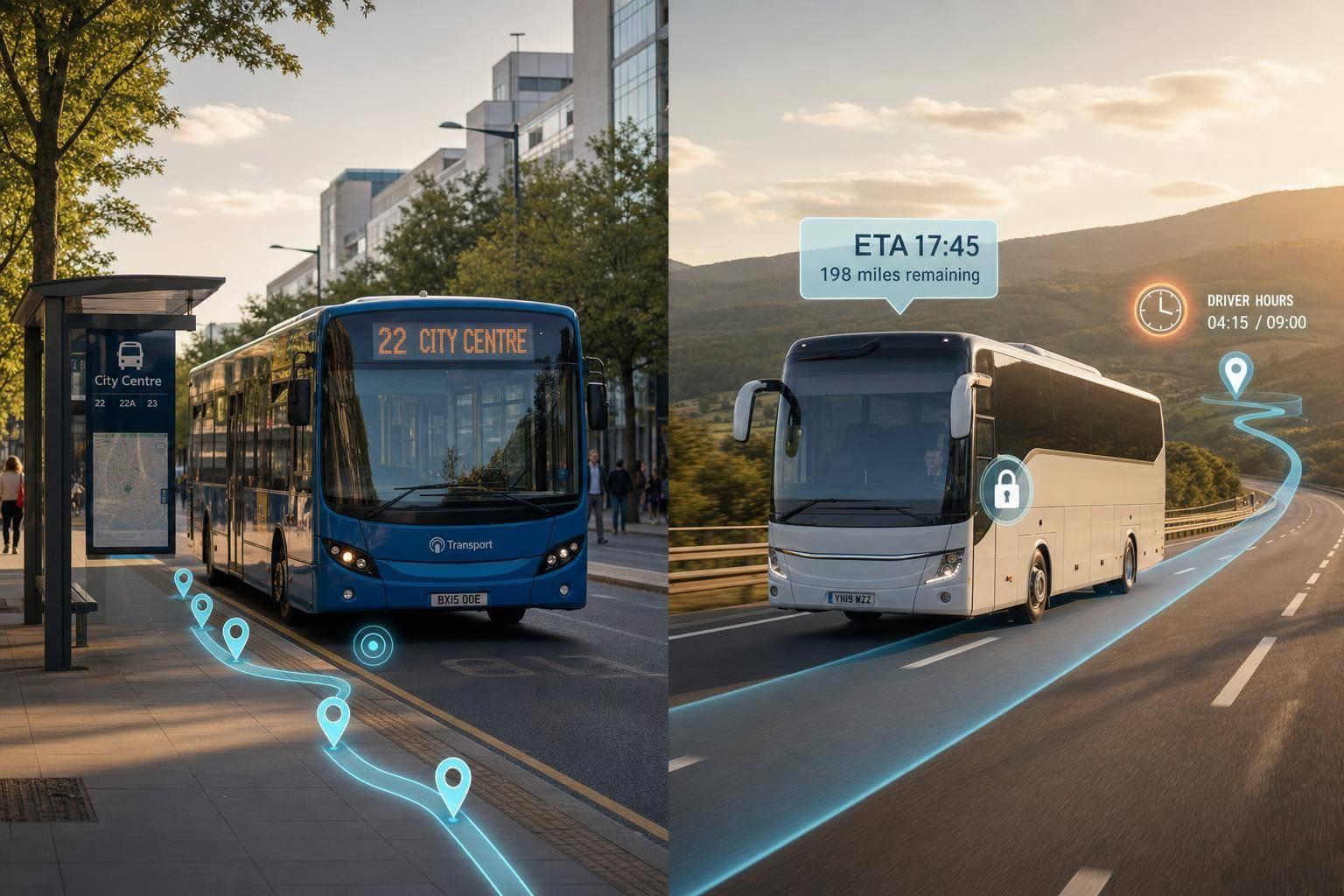
Bus and coach fleets may use the same GPS kit, but they need different tracking rules. In the UK, buses need stop-by-stop control, while coaches need trip tracking, driver-hours checks and stronger theft protection.
If I had to boil it down, it’s this:
- Bus fleets focus on timetable adherence, stop arrivals, dwell time, route changes and passenger ETAs.
- Coach fleets focus on journey ETAs, tachograph-linked duty tracking, parked vehicle security and recovery if a vehicle moves when it should not.
- Mixed fleets work best on one system with separate settings for each vehicle type.
A few facts from the article make the split clear:
- Around 98% of the UK’s 32,000 local service buses have basic AVL fitted.
- Bus tracking needs high-frequency updates because stops are close together and delays can stack up fast.
- Coach tracking can use fewer location updates, but it needs stronger alerts for parking, ignition events and driver-hours limits.
- For coach security, dual-tracker setups and remote immobilisation can matter more than stop-level reporting.
- Coach tracking costs in the example given run from £35 for hardware and from £7.99 per month for software.
What changes from one fleet type to the other is simple:
- Buses: stop frequency, bunching risk, short shifts, handovers, door cycles
- Coaches: long routes, fewer stops, long duties, overnight parking, theft risk
The main point: if you run buses, track the service at stop level. If you run coaches, track the whole trip and protect the asset when it is parked.
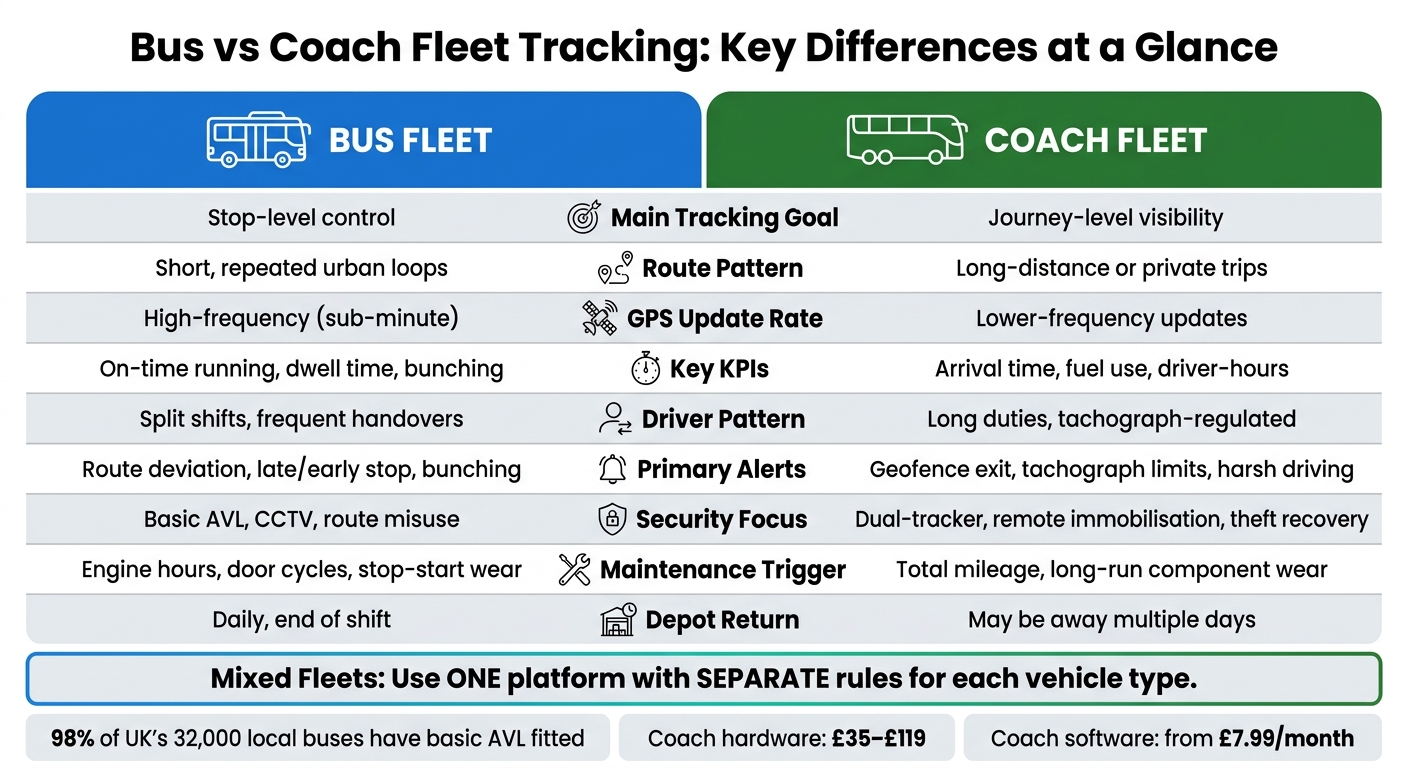
Bus vs Coach Fleet Tracking: Key Differences at a Glance
Quick Comparison
| Area | Bus Fleet | Coach Fleet |
|---|---|---|
| Main tracking goal | Stop-level control | Journey-level visibility |
| Route pattern | Short, repeated routes | Long-distance or private trips |
| Key KPI | On-time running, dwell time, bunching | Arrival time, fuel use, driver-hours status |
| Update rate | High | Lower |
| Driver pattern | Split shifts, frequent changes | Long duties, tachograph-led (requiring automated compliance) |
| Main security concern | Route misuse, incidents, vandalism | Theft, after-hours movement, and parked vehicle risk |
| Maintenance trigger | Engine hours, stop-start wear, door cycles | Mileage and long-run wear |
So when I compare bus vs coach fleet tracking, I don’t see a hardware question first. I see a setup question: what does each vehicle do all day, and what does the team need to act on first?
Bus fleet tracking: stop-level control and service reliability
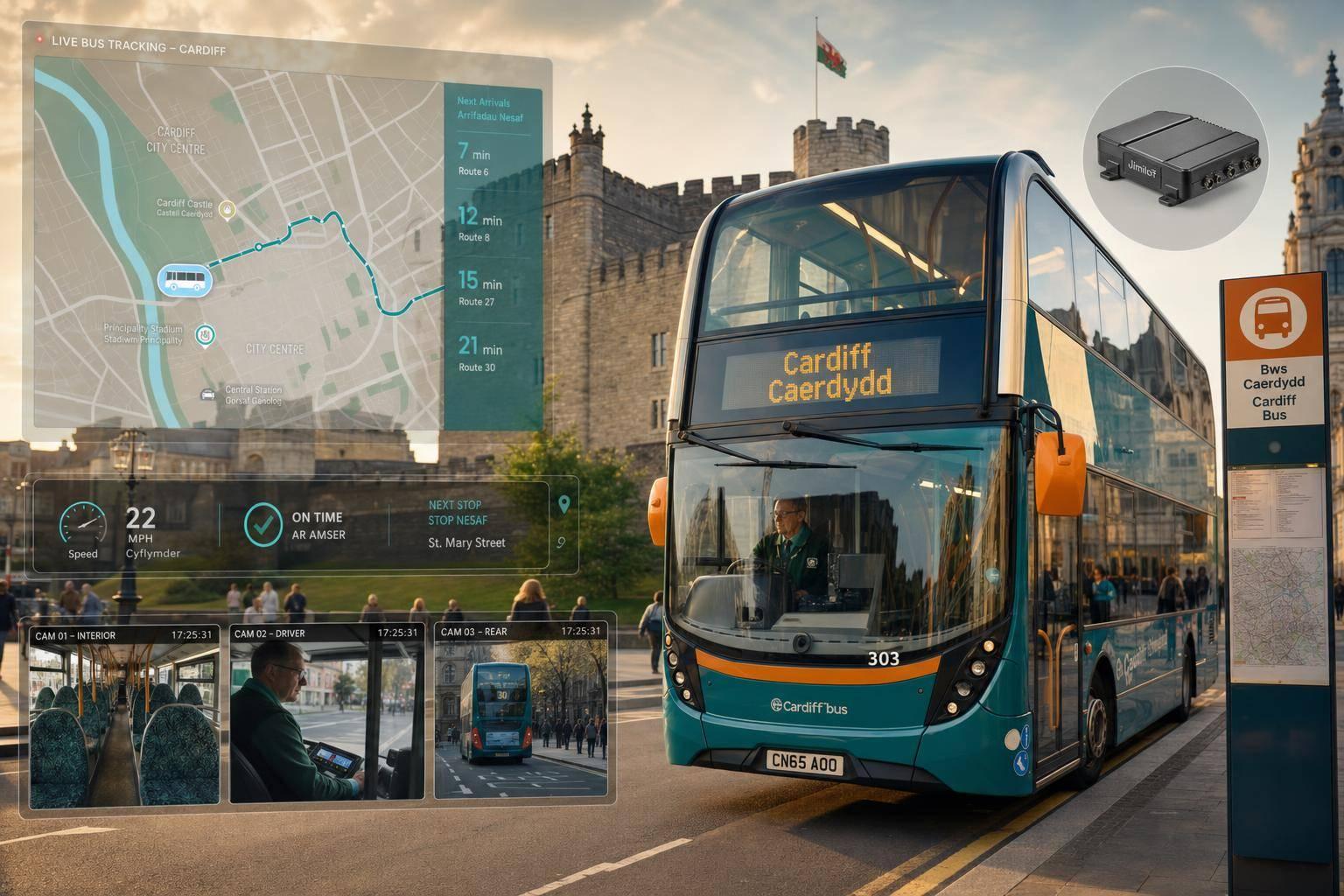
Bus tracking needs to work at stop level. Even a small delay can snowball fast and lead to bunching, where two or more buses turn up together and the route is left with a long gap behind them.
Stop tracking, route adherence and depot return timing
A bus tracking system should log arrival, dwell time and departure at every stop. Dwell time matters a lot here. It shows where time is being lost, stop by stop, so operators can spot pressure points and adjust schedules based on actual demand, not guesswork. The same stop-level data also makes it easier to keep track of driver handovers.
Route deviation alerts matter just as much. If a bus moves off its assigned route, the system should flag it at once so a dispatcher can step in. Live tracking also gives dispatchers room to react when traffic builds up, whether that means changing stop times or sending rerouting instructions.
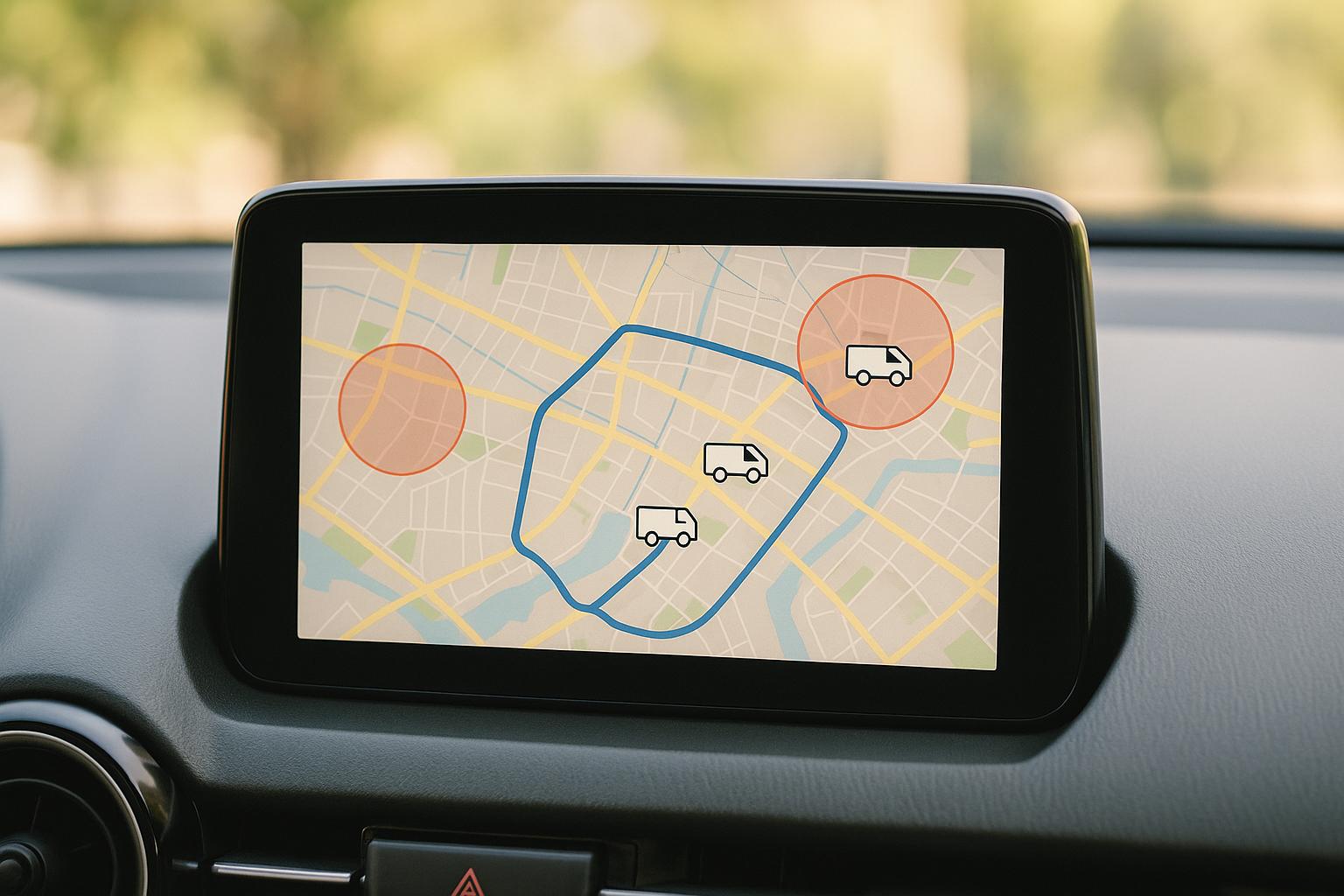
Geofencing around depots can automate entry and exit alerts, which makes shift logging less of a chore. On top of that, regular depot return cycles help operators plan maintenance using actual engine hours and mileage instead of fixed service intervals.
Driver shifts and passenger service data
Bus operations often run on short shifts with frequent driver changes. Without driver ID linkage, it can be hard to tell who was driving during a delay or incident. Linking driver identity to each shift gives managers a clearer record and makes performance tracking and incident traceability across handovers much easier.
That same live data also powers passenger ETAs. On high-frequency urban routes, passengers expect real-time arrival information. When services are disrupted, dispatchers can use that data to update passengers fast.
Security risks and telematics features for bus fleets
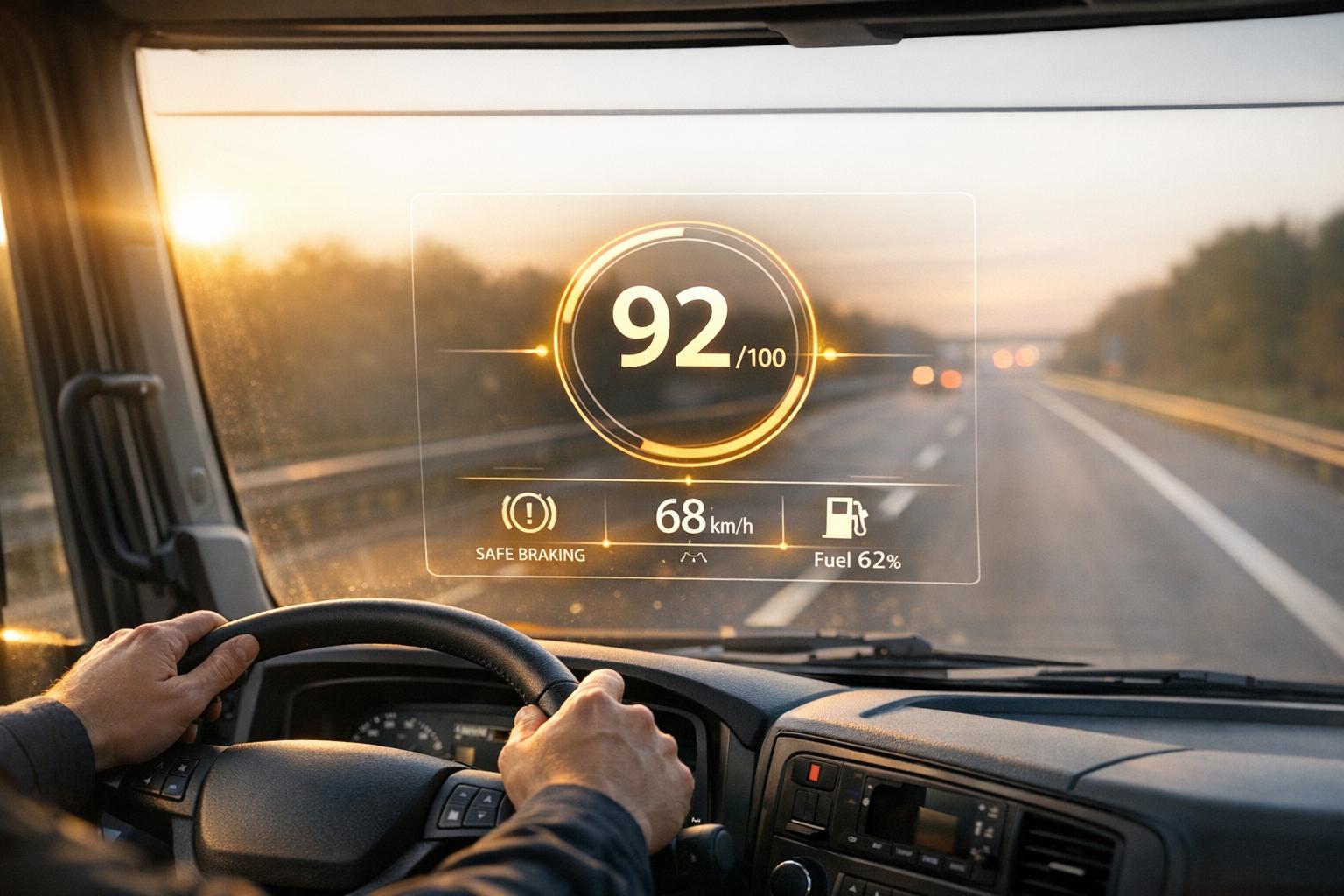
Because buses run in dense traffic and stop often, security and incident monitoring matter just as much as punctuality. Urban routes come with a higher collision and incident risk. Telematics helps cut that exposure with video telematics and driver behaviour scores, giving managers data on harsh braking and speeding.
Coach fleet tracking: long-distance visibility and asset security
Where bus tracking focuses on every stop, coach tracking focuses on the whole journey. The main goal shifts from stop-by-stop updates to ETA accuracy.
Long routes, fewer stops and arrival tracking
On a long-distance service, the key metric is planned versus actual arrival time. A coach may only have a small number of scheduled stops, but even one delay can lead to missed connections, disrupted tour plans or a late airport handover. Journey-level tracking gives managers a live view of location, route progress and updated ETAs.
Motorway service areas can be set as geofences, which lets managers confirm that required rest breaks are happening without ringing the driver. If a coach stays too long at a service stop, the system can flag it before the knock-on delay gets worse. On cross-border routes, multi-network SIM or eSIM trackers help keep coverage steady across mobile networks.
Driver duty management and passenger expectations
Coach drivers often work longer, continuous duties, and early starts, late finishes and overnight runs are common across the sector. UK and EU driving-hours rules place strict limits on how long a driver can stay behind the wheel before a required break. Telematics supports this by linking GPS data with digital tachograph data, then sending alerts when a driver is getting close to their legal limit or when a planned changeover point may be missed.
Behaviour data can also point to fatigue before it turns into a bigger problem. Sustained harsh braking, speed variation and erratic steering may all suggest tiredness on a long motorway leg. Behaviour analytics highlight these patterns so managers can step in by adjusting rosters, arranging relief drivers or giving targeted coaching. Airport transfer clients and tour groups also expect tight arrival windows. Live tracking data can feed into client-facing updates, so a corporate group can see that their coach has left the depot and is approaching the collection point.
Longer parking periods away from depots also increase theft risk.
Theft risk and recovery requirements for coach fleets
That downtime makes security a separate tracking priority. Coaches are high-value assets, and they spend much more time parked away from secure depots - at hotels, tourist attractions, airport car parks and remote layover sites. That creates a clear security risk: unauthorised movement, fuel theft and access to luggage bays are all more likely when a vehicle is left unattended overnight in an unfamiliar place.
Perimeter geofencing around approved parking areas means any out-of-hours movement triggers an immediate alert. Remote immobilisation adds another layer of protection, letting operators disable the ignition or fuel system if a security event is confirmed. The strongest setups use a dual-tracker configuration - two independent devices fitted in separate parts of the coach. If a thief finds and removes one unit, the second unit keeps transmitting. GRS Fleet Telematics offers dual-tracker devices, with hardware from £35 and software from £7.99 per month.
Unauthorised movement, after-hours ignition and tracker loss should trigger immediate security escalation.
Detailed incident logs - showing the time of initial movement, the route taken and any signal interference - give both police and insurers a clear picture of what happened. Over time, operators can use this data to refine parking plans, spot high-risk locations and adjust geofencing rules to cut exposure before an incident happens.
Bus vs coach fleet tracking: side-by-side comparison
When you put the two side by side, the gap is much easier to see. And it has a direct effect on how each tracking system should be set up.
Core differences that shape tracking setup
Bus and coach tracking differ across almost every setup choice. The gap shows up in stop patterns, duty cycles, passenger expectations, and security needs.
| Feature | Bus Fleet | Coach Fleet |
|---|---|---|
| Stop frequency | High - every few hundred metres on urban routes | Low - terminals and service areas |
| Route length | Short, repetitive loops | Long-distance, intercity or bespoke tours |
| Depot return | Usually daily, at the end of the shift | May be away for multiple days or longer |
| Driver shifts | Split shifts and frequent handovers | Long-haul duty cycles, tachograph-regulated |
| Passenger demands | Frequency, reliability and low wait times | Punctuality, comfort and arrival accuracy |
| Security risks | Route deviation, misuse, vandalism and anti-social behaviour | Theft from unsecured overnight parking and asset loss |
The setup logic is different for each fleet type. Buses run short, repetitive routes with constant stops, so tracking has to keep pace with frequent changes. Coaches spend more time on long runs, with fewer stops and more time away from base, so the focus shifts towards trip oversight, driver limits, and vehicle security.
Where each system needs more detail or stronger protection
Bus tracking needs to be fast and granular. Sub-minute GPS updates help record stop arrivals and departures with accuracy in dense urban traffic. Coach tracking can work with a lower update rate, but it needs tighter security settings and deeper journey analytics.
| Requirement | Bus Fleet Setup | Coach Fleet Setup |
|---|---|---|
| GPS update rate | High-frequency - sub-minute updates | Lower-frequency updates |
| Primary alerts | Route deviation, late or early stop arrival, vehicle bunching | Geofence exit, harsh driving, tachograph limit alerts |
| Key KPIs | On-time performance, dwell time and idling | Fuel use, driving behaviour and asset recovery |
| Security focus | Basic AVL and CCTV | Asset recovery tools and vehicle immobilisation |
| Maintenance trigger | Engine hours, door cycles and stop-start wear | Total mileage and long-distance component wear |
| Limitations | High data volume from frequent updates can increase costs | Signal gaps can occur on remote rural routes |
The maintenance split is worth calling out. For buses, engine hours and door cycles often tell you more than raw mileage. That makes sense: a bus may not travel far, but it starts, stops, opens doors, and idles all day. Coaches are different. They cover long distances, so mileage is the main signal for wear.
That’s the heart of it: buses need tracking built around stop cycles, while coaches need tracking built around mileage. If that’s set from day one, the platform is far more likely to fit the job.
Those differences become even more important when one operator runs both fleet types on the same platform.
Choosing the right telematics setup for mixed fleets
How to configure one platform for both fleet types
This split matters most in mixed fleets, where one platform has to handle two very different operating patterns using cross-platform APIs. The right mixed-fleet setup should bring tracking, tachograph, fuel and scheduling data into one hub, while keeping separate rules for buses and coaches - one built for stop-led bus control, the other for journey-led coach control.
Once that data is in one place, the next job is getting it to the right people. Role-based access works well here, so dispatch, maintenance and compliance teams each see only what they need. Then use that same shared data to run bus and coach maintenance rules separately.
Key takeaways for UK fleet operators
The right setup depends on how each vehicle is used from day to day. Use one platform, but split the rules. Buses need stop-level reliability and shift control. Coaches need journey ETAs, driver-hours alerts and theft protection.
For a mixed fleet, one platform doesn't mean one template. It means one system with two ways of working. That gives teams cleaner reporting and helps them make faster decisions across the fleet.
FAQs
Can buses and coaches use the same tracking system?
Yes. Buses and coaches can use the same tracking system because both rely on the same core telematics tools: real-time location, driver behaviour monitoring, and engine diagnostics.
Their day-to-day use isn't the same, of course. A bus fleet may deal with fixed urban routes and frequent stops, while coaches often run longer trips with different scheduling demands. But the base tracking setup still works for both.
With one platform, operators get one clear view across the whole fleet. That makes it easier to manage security, fuel use, and regulatory compliance for both buses and coaches.
What data matters most for a mixed fleet?
For a mixed fleet, focus on data that helps day-to-day efficiency while still covering what each vehicle type needs.
That usually means tracking:
- Real-time location and geofencing for clear route visibility
- Driver behaviour, such as harsh braking, speed and idling
- Engine diagnostics via CAN bus for predictive maintenance
- Compliance data, including driver hours
Put simply, this gives you one shared view across internal combustion and electric vehicles. It can also cut downtime, improve safety and make the fleet easier to manage.
How often should bus and coach trackers update?
It depends on what you need day to day, and how much detail you want compared with battery drain or data use.
For real-time tracking, updates every 10 to 15 seconds are common. If the job is less time-sensitive, 30 seconds to 5 minutes may be enough.
A lot of systems also change the update rate based on what the vehicle is doing. They can send faster updates while the vehicle is moving and switch to slower intervals when it is stopped or idle.