
Tracker for Van: Questions Fleet Buyers Ask
Choose van trackers by theft cover, fitting time, GDPR privacy and full 3‑year costs — compare hard‑wired, OBD and backup options.
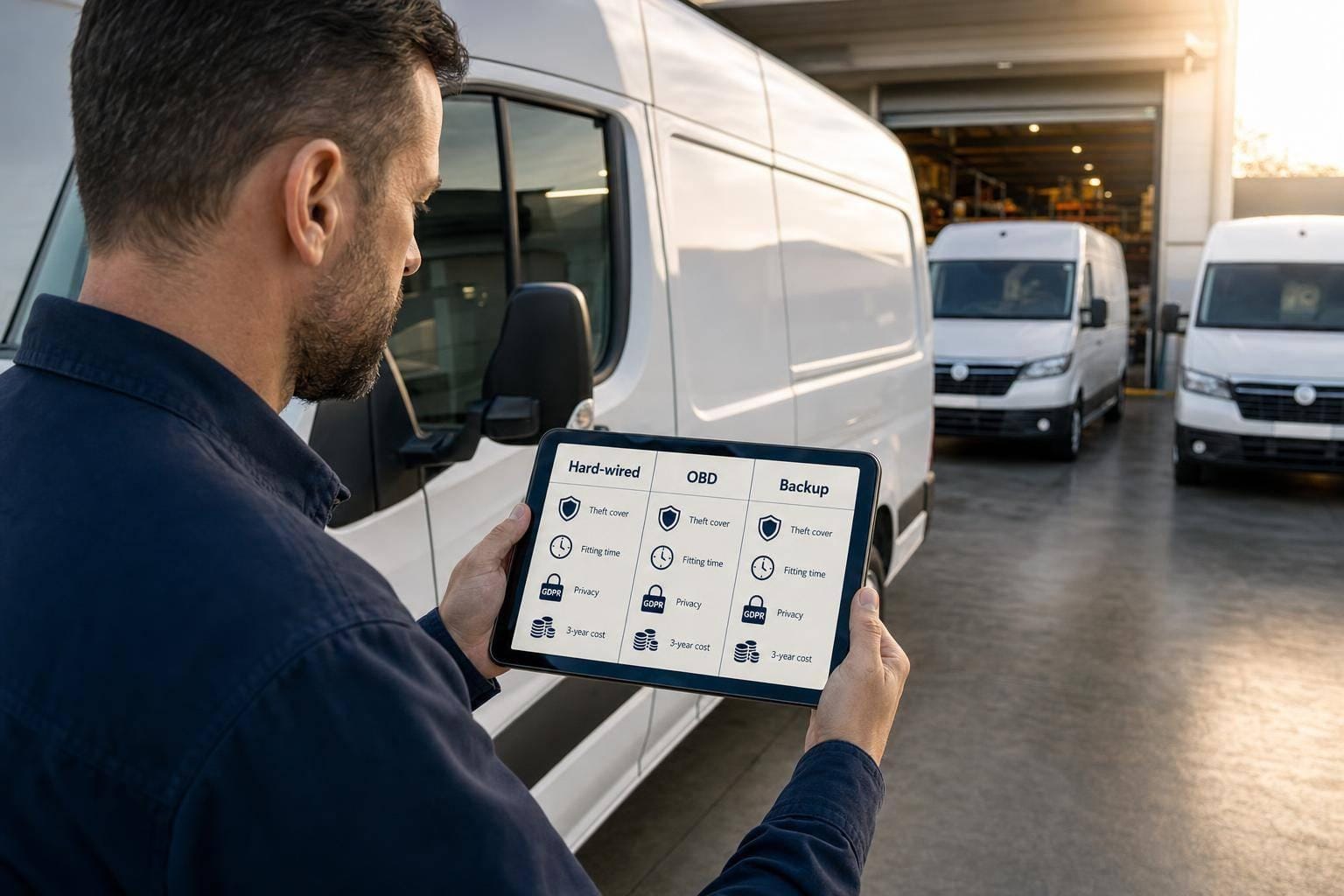
If I were buying van trackers today, I’d focus on four things first: theft cover, fitting time, privacy rules, and the full 3-year cost. With 9,522 vans stolen in the UK in 2025 - about one every 55 minutes - I wouldn’t judge a system by the monthly fee alone.
Here’s the short version:
- Hard-wired trackers suit vans kept long term
- OBD plug-in units are easier to roll out, but easier to remove
- Backup battery or hidden second units matter if theft is the main risk
- Offline storage matters when GPS or mobile signal drops
- UK GDPR means I’d need a clear driver notice, access controls, and rules for private use
- Pricing should include hardware, fitting, SIM, data, support, and theft response
- For the example shown, 50 vans on £79 hardware + £7.99/month comes to about £18,332 before VAT over 3 years
If I were comparing suppliers, I’d ask one simple question: what happens if the van is stolen, the power is cut, and the signal drops at the same time? That one test tells me a lot about the tracker, the install, and the support behind it.
Quick comparison
| Tracker type | Best for | Main downside | What I’d check |
|---|---|---|---|
| Hard-wired | Long-term fleet vans | More install time | Fitting time, hidden location, tamper alerts |
| OBD plug-in | Short-term use, trials, some leased vans | Easy to unplug | Port access, removal risk, driver handling |
| Hard-wired with backup battery | Higher-theft-risk vans | Higher upfront spend | How long backup power lasts, alert speed |
| Dual-tracker setup | Tool vans, high-risk areas | More hardware and install work | Recovery process, second unit reporting |
For me, the article boils down to this: buy for the problem you need to fix, match the hardware to the van and risk level, and compare the total cost and recovery process - not just the headline price.
sbb-itb-499a7f0
How van trackers work and which type suits a fleet
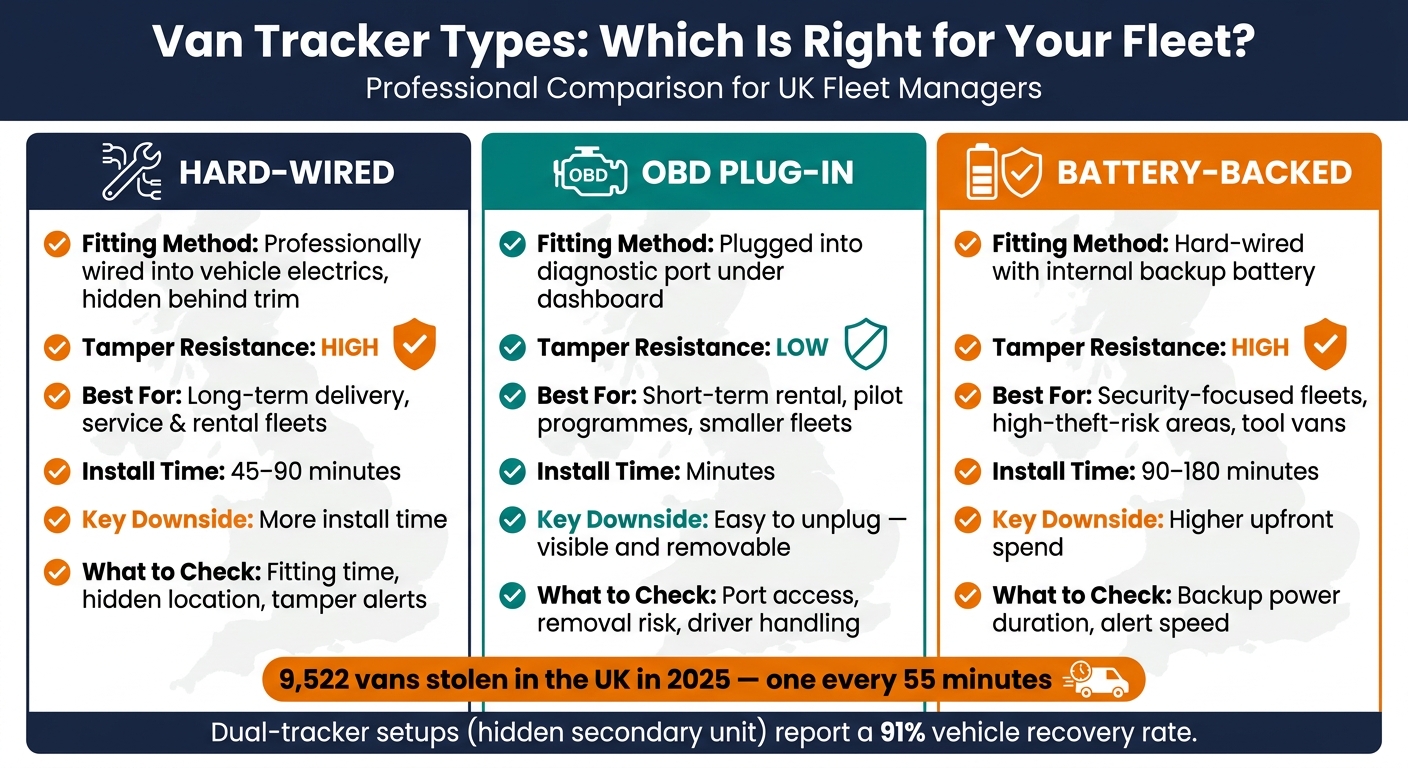
Van Tracker Types Compared: Hard-Wired vs OBD vs Battery-Backed
Every van tracking system needs three parts: a vehicle unit, a mobile data connection, and a platform where you can view the data.
That sounds simple enough, but the detail matters. A lot. It affects how long fitting takes, how hard the device is to tamper with, and whether the tracker still reports if someone cuts the power.
How a van tracker sends location, trip, and alert data
The platform takes GPS points and turns them into live maps, journey history, and mileage summaries.
For a delivery fleet, that gives managers a clear view of route adherence and time spent at each drop. For a service fleet, ignition and location data can show that a technician reached the job site and how long the visit lasted.
Alerts are often the part people use most day to day. Common alerts include:
- ignition on or off
- geofence entry or exit
- speeding above a set limit
- harsh braking
- out-of-hours movement
Many devices handle alerts on the tracker itself. That cuts data use and helps notifications come through faster.
If mobile signal drops, the tracker stores data on the device and uploads it once coverage comes back.
Hard-wired, OBD, and battery-backed trackers compared
That’s why the fitting method matters just as much as the tracker.
| Tracker type | Fitting method | Tamper resistance | Best fit |
|---|---|---|---|
| Hard-wired | Professionally wired into vehicle electrics, hidden behind trim | High - concealed and difficult to remove | Long-term delivery, service, and rental fleets where tamper resistance matters |
| OBD plug-in | Plugged into the diagnostic port under the dashboard | Low - visible and easy to unplug | Short-term rental, pilot programmes, or smaller fleets needing quick roll-out |
| Hard-wired with backup battery | Hard-wired with an internal backup battery | High - continues reporting if main battery is disconnected | Security-focused fleets, high-risk areas, vans carrying valuable tools or equipment |
For most permanent fleet use, hard-wired or battery-backed units tend to be the better fit. OBD trackers work well in short-term setups, such as a rental van that changes hands often or a pilot before a full roll-out. The trade-off is simple: because they’re easy to spot, they’re also easy to unplug.
GRS Fleet Telematics offers a dual-tracker setup, with a hidden secondary unit that keeps reporting if the main device is disconnected. It reports a 91% recovery rate for stolen vehicles.
What installation involves and how reliable the hardware is
How long fitting takes and how to reduce vehicle downtime
Once you’ve picked the right hardware, the next thing most fleet managers want to know is simple: how long will each van be off the road?
For most hard-wired van trackers, a professional installer will need around 45 to 90 minutes per vehicle. If the job is more involved - such as a dual-tracker setup, immobiliser integration, or fitting into older vans with non-standard wiring - that can stretch to two to three hours. That’s why it helps to understand your fleet mix before booking the work.
A staged rollout usually works best. Fit by depot, and schedule work outside core operating hours where you can. Early mornings, evenings, and weekends can all help keep vans available when you need them most. Another smart option is to install trackers during a planned service or MOT visit, which avoids adding extra downtime.
If your fleet includes different vehicle types, ask the provider for model-specific fitting times in advance. Refrigerated vans, coach-built vehicles, and older models with harder-to-reach wiring often take longer. It’s also wise to build in a 30 to 60-minute buffer for these vehicles, so one slow job doesn’t knock the rest of the schedule off course.
What happens if vehicle power is cut or a tracker is tampered with
A basic hard-wired tracker without backup power may stop reporting if the vehicle battery is disconnected. That’s where backup batteries and security features make a big difference. Most professional-grade trackers include a rechargeable internal cell that keeps the unit transmitting for several hours after the main power supply is lost. During a theft or tow-away event, that means core location data and movement alerts can still continue even if the van’s own battery has been cut.
Some features may drop out after a power cut. Driver behaviour scoring, CAN-bus data, and remote immobilisation often rely on a live vehicle connection, so they may no longer work until power is restored. For theft response and insurance claims, though, the main thing is continuous location data, and that’s the job the backup battery is there to do.
Tamper alerts add another line of defence. A well-set system should send an immediate notification - through an app, SMS, or email - if the tracker stops reporting or detects interference. From there, the next question is how the tracker behaves when GPS or mobile signal disappears.
How trackers hold up to vibration, weather, and daily van use
UK roads are hard on vehicle electronics. Potholes, speed bumps, and constant stop-start driving on urban multi-drop routes put hardware under steady strain. Commercial-grade trackers are built with that in mind, using rugged housings and vibration resistance suited to working vehicles.
In day-to-day use, that should mean a properly installed tracker stays dependable whether it sits behind dashboard trim or in a protected chassis position. Fleet hardware also needs a wide operating temperature range so it can deal with UK winter conditions, as well as the heat that builds up inside a parked van on a warm summer day.
The fitting itself matters just as much as the device spec. Loose connections, exposed wiring, or poor mounting points can lead to intermittent faults or early failure. It’s worth asking your provider for installation records, including:
- fitting photos
- device serial numbers
- post-install test results
That gives you a clear paper trail and something solid to refer back to if you need warranty support later on.
Signal loss, mixed fleets, and cross-border use
What a van tracker does when GPS or mobile signal drops
When signal drops, a van tracker should keep logging until coverage comes back. The device stores trip data locally, then sends it once the van reconnects. That means the platform can fill in the missing route instead of leaving gaps on the map. While the tracker is offline, the system should show the last known position with a timestamp.
GRS Fleet Telematics uses multi-network SIMs and local buffering to cut down on drop-outs on UK routes. It also helps to set an offline alert delay, such as 15 minutes. That way, you don't get pinged every time a van goes through a tunnel, but you still spot a real issue without much delay.
The platform also needs to work across mixed fleets, not just one van type.
Running one tracking platform across different van types
One tracking platform can bring different van types into the same view by mapping data to common fields like location, mileage and driver events.
That matters if your fleet isn't neat and uniform. Maybe one branch runs leased vans, another owns its vehicles, and a third uses a mix of both. In those cases, you don't want separate systems fighting each other.
For leased vans, hardwired vs plug-and-play trackers may be a concern; for leased vans, hard-wiring may not be allowed. Plug-in or removable trackers can still send data into the same platform. Multi-branch teams can then use shared dashboards for total fleet use and safety events, while branch managers only see their own vehicles. GRS Fleet Telematics supports this setup, with centrally defined KPIs and alerts applied across depots, whatever the van model or tracker type.
One small admin job makes a big difference here: standardise vehicle, driver and branch IDs early. If naming is messy at the start, reporting gets messy fast.
For vans that cross borders, signal coverage and roaming rules matter just as much as the hardware in the vehicle.
UK and European coverage for fleet vans
For UK fleets, trackers with multi-network SIMs help cut reliance on a single mobile operator. That's especially useful on rural routes in Scotland, Wales and parts of Northern England, where one network may work well and another may not.
If your vans travel into Europe, check that the SIM supports international roaming in the EU countries you use. Also look at any data caps or extra charges. A cheap setup can stop looking cheap once roaming fees start stacking up.
The mapping and reporting tools should also work across European roads without breaking the trip into pieces. A UK–France run should show as one continuous journey, not two separate segments. GRS Fleet Telematics works across the UK and France, with service also available in other EU countries.
How to assess security, privacy, and running costs
How trackers support theft recovery and incident response
Once fitting, signal and fleet coverage are sorted, most buyers move to three practical issues: theft response, privacy, and cost.
For theft recovery, the big test is simple: what happens if someone cuts the power or rips the unit out? The main features to check are live GPS tracking, geofencing, movement and tamper alerts, and remote vehicle immobilisation with insurer and police approval.
That’s where the gap between systems starts to show. If a thief disables the main unit, a backup tracker should keep sending its location. GRS Fleet Telematics supports this with 24/7 recovery support and direct police liaison, which means there’s a set process when a van disappears, not just a dot on a map.
For fleet managers, the sensible move is to agree an incident playbook before anything goes wrong. Set out who gets notified, in what order, who verifies the theft, and who can approve the next step. Police should be brought in at the right stage, and immobilisation should only happen once police confirm it is safe.
After theft response, buyers usually turn to the next issue: who can see the data, and what happens to it.
Data security, GDPR, and driver privacy in UK fleets
UK GDPR allows van tracking for legitimate business purposes, including security and route planning, but fleet managers need to be open about what they collect and why. Drivers should get a written privacy notice and a clear contract clause covering what data is collected, the reason for tracking, and how long the data will be kept.
On the system side, role-based access controls matter. They help make sure only staff with a genuine need can view detailed tracking records. Drivers can also be given access to their own trips through a mobile app, while the rest of the fleet stays private. For out-of-hours use, many UK fleets set tracking to working hours only or switch on a privacy mode that stops location logging during private use. It’s worth testing those settings before rollout. The fleet owner still needs to own the policy and the driver notice.
Audit trails matter as well. A well-set platform records who accessed data, what they viewed or exported, and when settings changed. If there’s ever a compliance check or a misuse claim, that record can do a lot of the heavy lifting.
Once those privacy controls are nailed down, the last thing to check is whether the monthly charge covers the whole service.
Monthly fees, hardware costs, and what is included
Van tracker pricing in the UK usually comes in two parts: a one-off hardware and fitting charge, and a monthly subscription. That monthly fee should cover the software platform, SIM, mobile data, and standard support. If any of those sit outside the price, the headline figure doesn’t tell the whole story.
GRS Fleet Telematics uses an owned hardware model. In plain English, you buy the device outright instead of leasing it. That can cut long-term spend and makes it easier to move units across when a van is replaced. Their pricing is set out like this:
| Package | Hardware Cost (ex. VAT) | Monthly Fee (per van, ex. VAT) | Key Additions |
|---|---|---|---|
| Essential | £35 | £7.99 | Live GPS and geofencing |
| Enhanced | £79 | £7.99 | Everything in Essential + hidden backup tracker |
| Ultimate | £119 | £7.99 | Everything in Enhanced + remote immobilisation |
For a 50-van fleet on the Enhanced package, that works out at about £3,950 in hardware and £399.50 per month in subscription fees. Over three years, the total is around £18,332 before VAT.
When you compare quotes, ask each provider to confirm a few things:
- whether VAT is included
- whether SIM and data charges are bundled in
- whether theft recovery support is part of the standard service or sold as an extra
Those checks help you spot the difference between the full cost and a price that only looks low at first glance.
Key checks before choosing a tracker for van fleets
Once you know the problem you’re trying to fix, compare trackers on a like-for-like basis. Start by listing the outcomes you need from the tracker: fleet size, vehicle mix, user access, and the main result you want - theft recovery, visibility, or compliance. Then split those into must-haves and optional extras. That helps you avoid paying for features you’ll never use, while making sure you don’t miss anything critical.
Pick the fitting method first. For permanent vans, hard-wired units usually make the most sense. For leased or pool vans, OBD trackers are often a better match. And if theft risk is higher, hidden backup units can add another layer of cover.
Installation planning matters more than people think. Book installs in batches, aim for off-peak slots, and send installers the right vehicle details before they arrive. It sounds simple, but it can save a lot of wasted time on the day.
Once the install plan is sorted, look at the data rules just as closely as the device itself. Check for a written driver notice, role-based access, a retention policy, and a private mode for personal use.
Then look at the full cost across the whole contract term. Don’t just compare the headline price. Check the total figure, including hardware, fitting, SIM, data, and recovery support.
FAQs
Which tracker type suits my vans best?
The right tracker setup comes down to how much risk each van faces and where, when, and how it’s used.
- Essential: one wired GPS tracker for lower-risk vans that need a lower-cost way to see live location.
- Enhanced: a hardwired GPS tracker paired with a hidden Bluetooth backup tracker for mixed-use vans and added theft cover.
- Ultimate: this setup adds remote immobilisation for high-risk, high-value vans.
What if a thief cuts power or removes the tracker?
If a thief cuts the power or rips out the main hard-wired tracker, your van still has a second line of defence: a hidden Bluetooth backup tracker.
If the main unit is tampered with or switched off, the backup keeps sending location data on its own. At the same time, the system sends an immediate alert.
That extra layer of protection is a big part of the 91% recovery rate.
How do I stay compliant with driver privacy rules?
To stay compliant with UK driver privacy rules, follow the Data Protection Act 2018 and UK GDPR. Be clear about what you're doing, collect only the data you need for legitimate business purposes, and keep that data secure.
Give drivers a clear privacy notice that explains what is collected, why it's collected, and how it's used. Limit tracking to work use, let monitoring be switched off during personal use, and put safeguards in place such as role-based access, encrypted storage, and data retention policies.