
Waste Fleet Safety Systems for Bin Lorries
360° cameras, telematics and live in-cab alerts reduce blind-spot risk on stop-start bin rounds and provide reviewable footage.
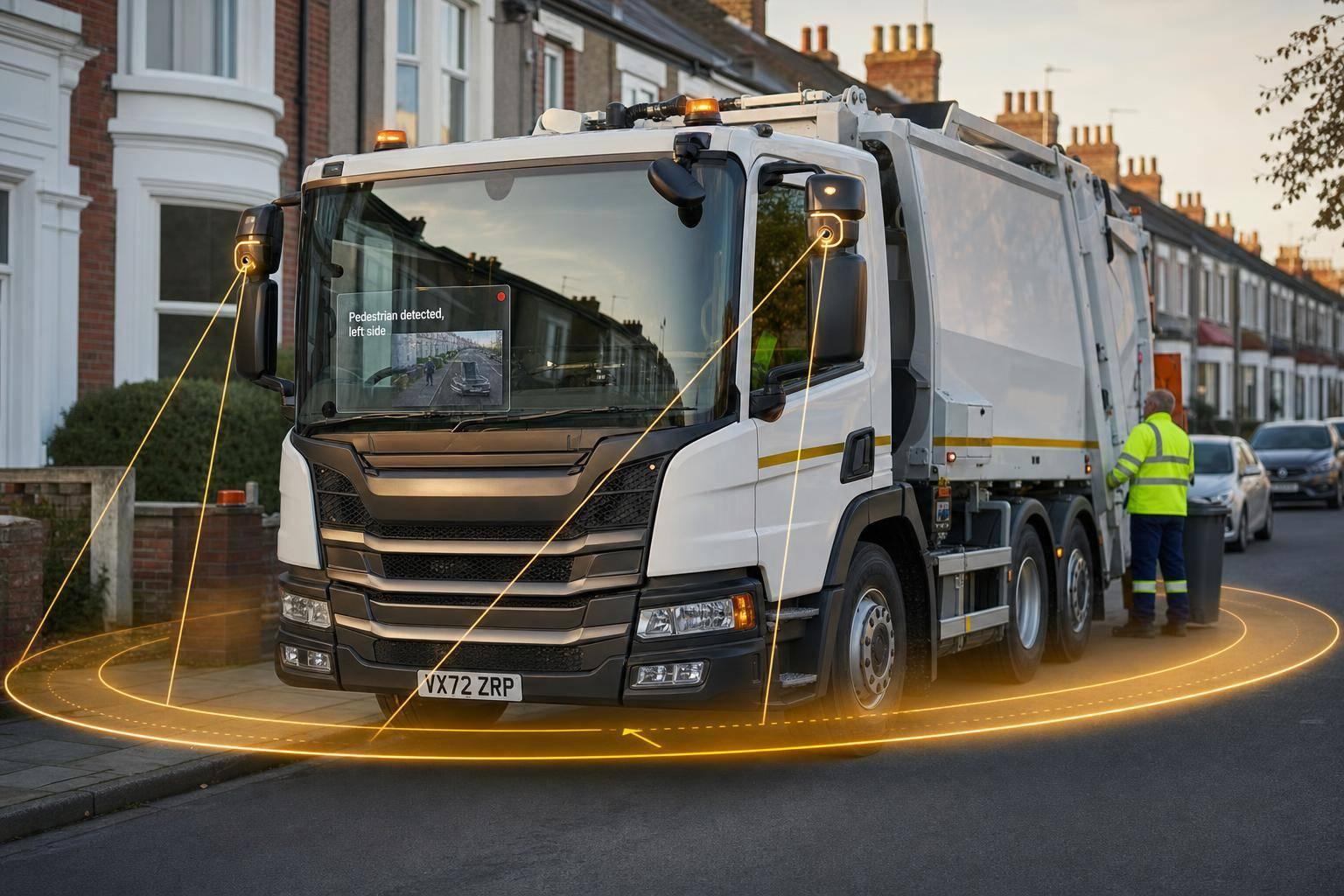
Bin lorry safety comes down to two things: seeing risk as it happens and proving what happened after. On UK collection routes, reversing, kerbside work and pull-away moves carry the most risk, and close contact with vehicles accounts for about two-thirds of reported fatalities in waste collection.
If I had to sum up the article in a few lines, it would be this:
- Use full camera coverage around the vehicle, not just a rear camera
- Pair video with telematics so I can spot repeat trouble points on routes
- Set live driver alerts for speeding, harsh braking and nearby people or cyclists
- Use recorded footage and event data to review incidents with timestamps, route data and camera angles
- Choose kit built for waste work, with weather protection, low-light recording and remote clip access
The article also makes one point very clear: bin lorry risk is not just about speed. Most danger comes from hundreds of short, low-speed movements in tight streets, with crew on foot near the vehicle for much of the day. That is why normal HGV controls on their own do not cover every risk on a waste round.
A short view of what matters most:
| Area | What I need to look for | Why it matters |
|---|---|---|
| Camera coverage | Rear, nearside, offside, front and hopper views | Blind spots shift during the round |
| Live use | In-cab monitor and hazard alerts | Helps the driver during reversing and pull-away |
| Recorded evidence | MDVR, timestamps and remote download | Helps with claims, complaints and incident checks |
| Route data | GPS, speed, braking, dwell time and replay | Shows where the same risk keeps happening |
| Hardware fit | IP67+, low-light support and vibration resistance | Waste vehicles are hard on equipment |
In short: if I want safer waste rounds, I need systems that help the driver now and help the fleet manager later.
Bin Lorry Safety Risks on Stop-Start Urban Routes
Bin lorries face a risk pattern of their own: low speeds, constant stopping, and people working close to the vehicle. Add residents, parked cars and tight streets, and you get hazards that standard HGV controls don't fully cover. On UK rounds, the moments with the most risk are reversing, kerbside collection and pull-away manoeuvres. That's why visibility and movement data matter on every round.
Blind Spots, Reversing and Tight Manoeuvres in Residential Streets
UK waste guidance points to blind spots at the rear, on the nearside and around the cab, where pedestrians and loaders can disappear from view.
On residential streets, three zones create the most danger:
- behind the vehicle
- along the nearside kerb
- in front of the cab
These risks get worse on roads with parked cars, high kerbs and tight bends. In cul-de-sacs and back alleyways, where there is no through route, a driver may need to reverse in a confined space with little room to manoeuvre.
Reversing should be removed wherever possible, or cut to the lowest level possible. If it can't be avoided, extra controls are needed, including reversing aids and trained reversing assistants.
When a lorry has to reverse into a cul-de-sac, the job can't rest on driver judgement alone. Operators need site-specific instructions, such as a set no-reversing point or a loader assigned to manage traffic at a junction. That kind of planning matters because these aren't open-road manoeuvres. They're slow, tight movements with very little margin for error.
Crew Movement Around the Vehicle and Exposure to Live Traffic
Each time a loader steps off the footplate, they become a pedestrian in live traffic. That switch happens again and again during a shift, often on busy roads, school routes and narrow streets where passing drivers get little warning that a crew is working there.
Loaders cross the carriageway, work at the kerb and move behind the vehicle during lifting. Often, they're carrying bins and watching the task, not the traffic. In that setting, hi-vis clothing and reversing alarms on their own are not enough without clear movement rules.
Working behind the tailgate brings its own set of dangers. A crew member can be struck, trapped between the lorry and a wall or parked car, or hidden from motorists trying to pass. Early-morning darkness and rain on camera lenses make those risks worse.
The safer fleets set clear rules on where crews stand, when the vehicle can move and who is in control of the manoeuvre.
How Repeated Stop-Start Rounds Increase Incident Likelihood
A typical UK household waste round can involve hundreds of short vehicle movements in one shift. Every pull-away, kerb stop, slow forward roll and reverse creates another chance for a bad gap judgement, a late brake or a brief lapse in attention. Reversing causes a disproportionately large share of moving-vehicle accidents in the waste and recycling industry, and the sheer number of manoeuvres is a major part of that risk.
The challenge is that crews repeat the same pattern all day. Familiarity can dull attention, and informal shortcuts can start to replace formal procedure. If a round starts running late, the pressure builds fast. Braking may happen later, reversing may happen faster, and people may step out with less care. Loaders under time pressure may work closer to the moving vehicle just to keep things moving.
Standard road safety rules, like keeping safe following distances, indicating and checking mirrors, were built for more predictable traffic flow. They don't directly deal with a vehicle making hundreds of low-speed, high-contact manoeuvres every day, right next to its own crew and the public. Closing that gap calls for waste-specific controls, including route risk assessment, defined safe systems of work, and technology that keeps hazards in view across the whole shift.
Telematics and video matter most where routine manoeuvres create the most exposure. That's where cameras and telematics start to cut risk, not just record what happened.
sbb-itb-499a7f0
Camera Systems That Improve Visibility Around Bin Lorries
Once the main collection risks are clear, attention shifts to two simple things: what the driver can see now and what the fleet can show later.
Bin lorries need camera coverage at the rear, sides, front and load area because blind spots change throughout the round. A driver can have a clear view in one moment, then lose it as the vehicle turns, stops, lifts bins or pulls away. That’s why many fleets use a 360° camera system with an in-cab monitor and a mobile digital video recorder (MDVR).
Rear, Side, Front, Kerbside and Load-Area Camera Coverage
Each camera position deals with a different risk point during collection work.
| Camera View | Coverage Area | Main use |
|---|---|---|
| Rear | Rear working zone and reversing path, with coverage extending at least 5 m behind the vehicle | Reversing in cul-de-sacs; checking the bin-lift zone |
| Nearside (kerbside) | Blind spot along the left side of the vehicle, from cab to tail | Monitoring loaders stepping on and off; checking for cyclists at the kerb |
| Offside | Blind spot along the right side of the vehicle | Checking the offside blind spot when passing parked vehicles or moving through tight streets |
| Front | Area directly ahead of the cab, including the low-level blind spot | Slow turns and manoeuvres on narrow collection streets |
| Load-area (hopper) | Bin-lift mechanism and hopper entry zone | Confirming crew are clear before operating the lift; monitoring bin presentation |
This setup hasn’t appeared out of nowhere. UK rules and vehicle standards have been pushing fleets in this direction for years. BS EN 1501-1 has required CCTV provision on rear-loaded RCVs manufactured since 1999. In London, the Direct Vision Standard (DVS) and Progressive Safe System now mean nearside camera monitoring is, in practice, standard on refuse vehicles over 12 tonnes.
Live Driver Views Versus Recorded Footage
Live video and recorded video do different jobs, and both matter.
Live views help the driver in the moment, especially during reversing, pull-away and bin-lift work. Recorded footage gives the operator a time-stamped record for incident review and false-claim defence. If the in-cab monitor is being used as a rear-view aid, it should show a mirror image so the driver’s expectations match normal mirror use.
Screen placement matters too. The display needs to stay visible in direct sunlight without washing out, and it must not block the driver’s main sightlines. If the screen is hard to read, or badly placed, the system starts to work against the driver instead of helping.
UK councils using multi-camera systems report that they can pull the right clips within minutes to check whether a vehicle was involved in a reported incident. That can help deal with complaints before they turn into costly disputes. Clear, time-stamped footage can also stop false claims from sticking and show that the crew followed the right procedure.
What Video Systems Need to Work Well on Waste Vehicles
Waste collection is rough on equipment. Exterior cameras on a bin lorry deal with rain, road spray, grit, salt, vibration and waste contamination on every shift, in every season. Because of that, the hardware needs a high ingress protection rating - IP67 or better - along with tough housings that protect the lens and keep the unit intact.
Rear and hopper cameras take the worst of it. They’re often exposed to waste residue, so they need to be easy to clean during routine maintenance. If the lens is filthy by mid-morning, the camera may as well not be there.
Low-light recording is just as important. Many UK winter rounds start before dawn on streets with poor lighting. Cameras with low-light sensors, wide dynamic range (WDR) and infrared capability keep footage usable in those conditions. Without those features, images can end up too dark or too washed out to help with review or evidence.
The MDVR has its own job to do. It needs to cope with stop-start vehicle use without dropping recordings. Stable power management helps prevent interruptions each time the ignition cycles, and shock-resistant mounting helps protect the unit from the constant vibration of urban collection routes.
For managers, the system also needs to be practical. They should be able to search footage by vehicle, date, time and camera channel, then download clips remotely. If they have to wait for the lorry to return to the depot every time something happens, the system becomes little more than storage. Remote access is what turns video from a passive record into a working safety tool.
How Telematics and Driver Alerts Reduce Bin Lorry Risk
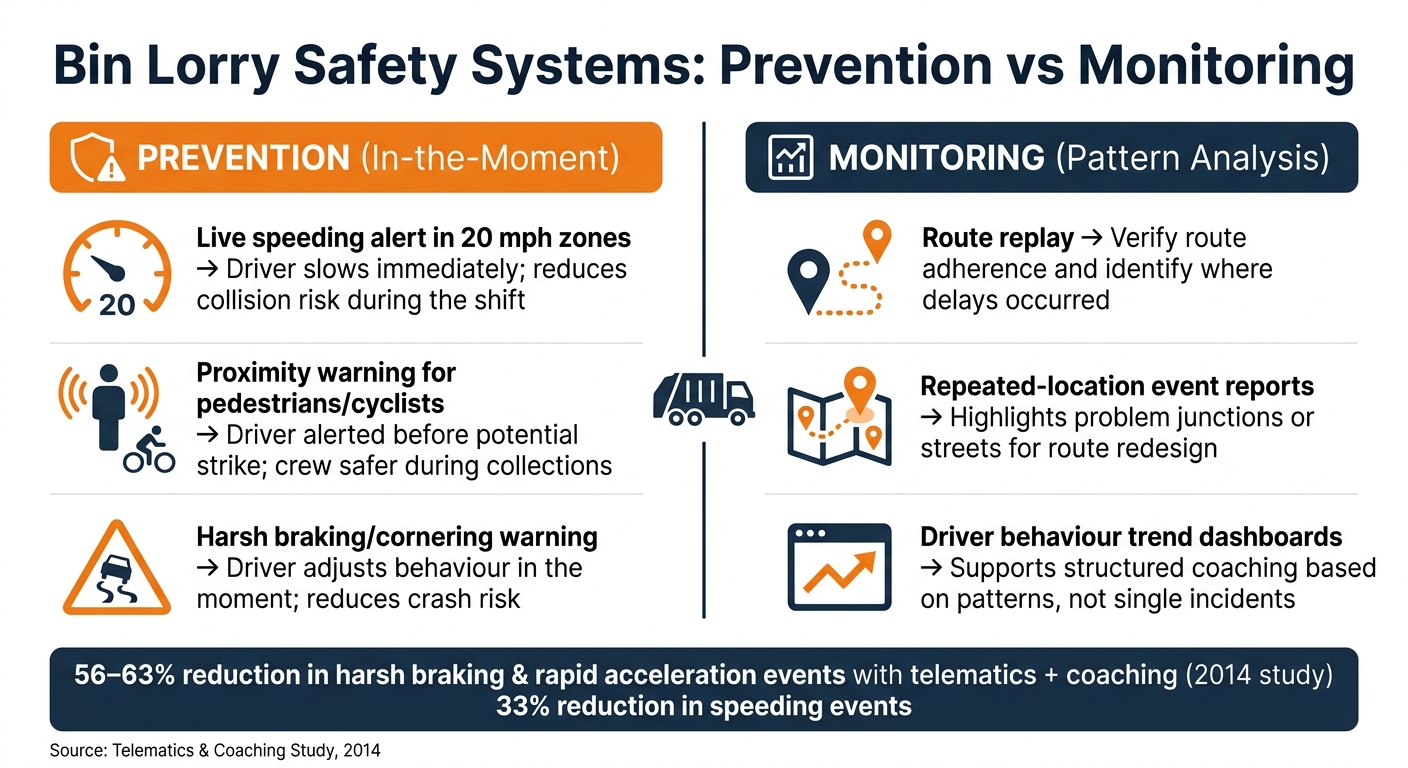
Bin Lorry Safety Systems: Prevention vs Monitoring Tools at a Glance
Where cameras show a single moment, telematics shows the pattern behind it. It adds route history, speed data, manoeuvre data and event alerts, so you can see where risk keeps showing up across a round by analysing driver behaviour with telematics.
Real-Time Tracking, Route Visibility and Event Detection
On repeat collection rounds, telematics brings the same trouble spots into view day after day. The same streets get covered again and again, and the system logs GPS location, route progress, dwell time, speed, harsh braking, rapid acceleration and sharp cornering on every shift. That makes it easier to spot repeat risk points, like junctions linked to harsh braking, cul-de-sacs with long dwell times, or roads where speeding happens over and over.
For waste fleet managers, this matters because it shifts the focus from blame to pattern. If three different drivers trigger harsh braking events at the same residential junction every Tuesday morning, that’s probably a route design issue rather than a driver issue. The answer could be a timing change, a different approach route, or a short briefing for crews working in that area. A 2014 study found telematics plus coaching cut unsafe driving events such as harsh braking and rapid acceleration by 56–63% and speeding by 33%.
In-Cab Alerts for Close Hazards and Unsafe Manoeuvres
Real-time alerts help drivers fix behaviour while the shift is still happening. That’s a big deal on dense urban rounds, where pedestrians, cyclists and crew members are often moving near the vehicle. In that setting, instant feedback is far more useful than hearing about a problem hours later.
The alerts that tend to matter most for bin lorry work include:
- Speeding alerts, especially in 20 mph zones or near schools
- Harsh braking warnings
- Sharp cornering warnings
- Proximity alerts for vulnerable road users
Some systems also use AI-enabled detection to warn drivers when a pedestrian or cyclist enters a set safety zone around the vehicle. That can trigger an audible or visual warning in the cab. For example, an AI video telematics setup can add 360° vision, VRU detection and audible turn warnings.
Alerts usually work best when crews see them as coaching rather than punishment. If drivers and loaders know the warnings are there to protect them and the public, they’re more likely to engage with the system and use it well.
Prevention Features Versus Monitoring Tools
Telematics tools do two different jobs. Some help prevent risk in the cab, in the moment. Others record patterns so managers can review what keeps going wrong and where.
| Feature type | Example | Practical benefit |
|---|---|---|
| Prevention | Live speeding alert in a 20 mph zone | Driver slows immediately; reduces collision risk during the shift |
| Prevention | Proximity warning for a pedestrian or cyclist | Driver is alerted before a potential strike; crew are safer during collections |
| Prevention | Harsh braking/cornering warning | Driver adjusts behaviour in the moment; reduces crash risk |
| Monitoring | Route replay | Managers can verify route adherence and identify where delays occurred |
| Monitoring | Repeated-location event reports | Highlights problem junctions or streets for route redesign or targeted briefing |
| Monitoring | Driver behaviour trend dashboards | Supports structured coaching conversations based on patterns, not single incidents |
Those records then feed incident reviews, route changes and driver coaching.
Incident Review, System Fit and Next Steps for Waste Fleets
Using Video and Telematics Data to Review Incidents Properly
Once cameras and telematics are in place, the next job is simple: use the data to understand incidents and run the round better.
When something happens on a collection round, the first question is usually the most basic one: what actually happened? Camera and telematics data make that much easier to answer. A proper review starts by pulling the event window, usually two to five minutes before and after the incident, and matching it to timestamped footage from every relevant camera angle. In a collision, the GPS trail shows speed, direction and manoeuvre. The cameras show crew position, reversing path and kerbside access at that exact moment. Timestamped footage and metadata also help insurers and investigators check what happened and confirm whether the recording is complete.
The same records that settle a claim can also point to something else: where routes, timings or crew practice need to change.
Turning Incident Records into Driver Coaching and Route Improvements
Evidence only matters if it leads to action. If the same type of incident keeps showing up on the same street, there’s often a route issue behind it. That might mean harsh braking at a school-run junction, long dwell times in a cul-de-sac, or kerbside obstruction leading to late pull-aways. In cases like that, the route may be the weak point, not the driver.
That gives managers something practical to work with. They can:
- adjust the collection sequence
- move timings to avoid school drop-off traffic
- flag a section of road as high risk and cover it in a pre-shift briefing
For driver coaching, the best approach is usually the simplest one: treat footage reviews as driver training sessions, not disciplinary meetings. A supervisor can ask the driver to talk through what they saw first, then review the multi-camera footage together. That links the driver’s judgement to objective evidence, which tends to make the conversation fairer and more useful.
It also helps to share team-level progress. If harsh braking events drop across the morning rounds, say so. That sends a clear message that the system is there to protect crews and tighten up the operation, not catch people out.
Choosing a System That Fits Mixed Waste Fleets
Mixed fleets bring extra moving parts. RCVs, narrow access vehicles and sweepers do not all work in the same way, so one-size-fits-all buying decisions can fall flat.
The main points worth putting first are dependable recording in harsh conditions, with cameras and DVRs rated for vibration, water and dust, plus multi-angle coverage with overlapping fields of view. Access matters too. Managers should be able to search footage by date, time, vehicle or event type without needing specialist IT support. For waste fleets working across varied UK terrain, route-visibility tools such as historical round playback, geofencing and exception reporting can make day-to-day review much easier.
Put plainly, the best system is the one crews can use every day and managers can check without wasting half the morning.
FAQs
Why isn’t a rear camera enough on a bin lorry?
A rear camera on its own isn’t enough for a bin lorry. It only shows a narrow view straight behind the vehicle, and that leaves too much unseen. On tight streets and busy urban junctions, risks can come from the nearside, offside, and front as well.
There’s another issue too: one lens can be blocked or weakened by rain, road spray, fog, glare, or dirt. That means the driver may lose sight just when it matters most. A multi-camera setup gives much better coverage across those blind spots and helps the driver see more of what’s happening around the vehicle.
How do telematics help make waste collection routes safer?
Telematics help make waste collection routes safer by tracking driver behaviour and nearby risks in real time. Drivers can get alerts for issues like speeding, harsh braking, lane departures, mobile-phone distraction, and blind-spot hazards.
It also logs every event with a timestamp, GPS location, vehicle or driver ID, speed, and linked video. That gives managers a clear record to review incidents, spot repeat trouble areas, and adjust coaching or route plans where needed.
What should I look for in a safety system for bin lorries?
Prioritise technology that deals with day-to-day urban risks like blind spots, crew movement, and constant stop-start driving. In busy town and city settings, those are the moments when things can go wrong fast.
Look for AI-powered cameras that can tell the difference between vulnerable road users and static objects. That matters because fewer false alarms means drivers are more likely to trust the system instead of tuning it out.
The system should also give real-time in-cab visual and audio alerts, especially when reversing or turning. On top of that, it should link with telematics so you can review GPS data, speed, and video after an incident. It’s also worth checking that the equipment meets current UK regulatory requirements.